Cooking has always been a hobby that I am passionate about. It brought creativity, comfort and joy into my home. But after I got Coorg The Cookbook (CTC) by Kaveri Ponnapa, I discovered that cooking could also be a journey into one’s roots. I did not simply learn to prepare Kodava dishes – I began to understand the soul behind every recipe.
Before I delve into my experiences on cooking at home, along with my daughter after having read CTC, I would urge all of you to please read my interview with this down-to-earth Kodavathi for CLN: Interview with Kaveri Ponnapa – CoffeeLand News
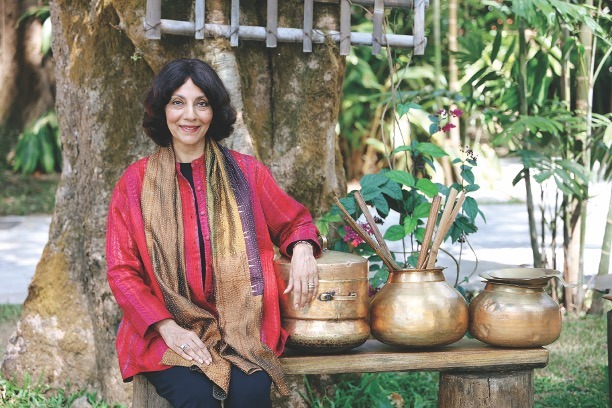
In this detailed interview, I had carefully chosen 7 questions for discussion with Kaveri Ponnapa, which touches many important aspects of the author’s painstaking research, eye for details, food styling and photography and her vision for this outstanding book.
In the words of the author:
“It has taken a tribe to make this book. And people have contributed their time, recipes, knowledge and life stories. And trusted me to write about them. She quotes from Robin Wall Kimmerer, where she calls her own writing an “act of reciprocity with the living land”. My relationship with Kodagu has been one of reciprocity -for the enormous work I put in, I met with an equal measure of generosity, trust and support across communities, and quite literally, from the land itself.”
Although I had read several articles about her, including in CLN, I met this quietly elegant and self-effacing writer for the first time at the launch of CTC at the Coorg Wilderness Resort. The setting was just perfect and the event was exceptional – the manner it was conducted, the involvement of the audience, the interaction between the Editor/Owner of UpperCrust Ms Contractor and Kaveri and extraordinary spread of Coorg food carefully curated and served by Adengada Rajesh Achaiah of Papera Restaurant. Apparently, there were equally attractive book launches in Bangalore, Cochin, Chennai…with the book making its successful presence in leading food circles in New York, Canada, London, Paris, Australia, Japan, Portugal and South Africa to name a few cities and countries that it has travelled. A few representative feedback/comments after reading CTC are at the end of my article.
Back to my personal experience. Every page of the precious book took me beyond the kitchen and into the heritage, history, culture, traditions and ingredients that made up the extraordinary cuisine of Kodagu. It reminded me that food is never just about ingredients or recipes. It is about the land that nurtures them, the people who cultivate them and the generations who preserve them.
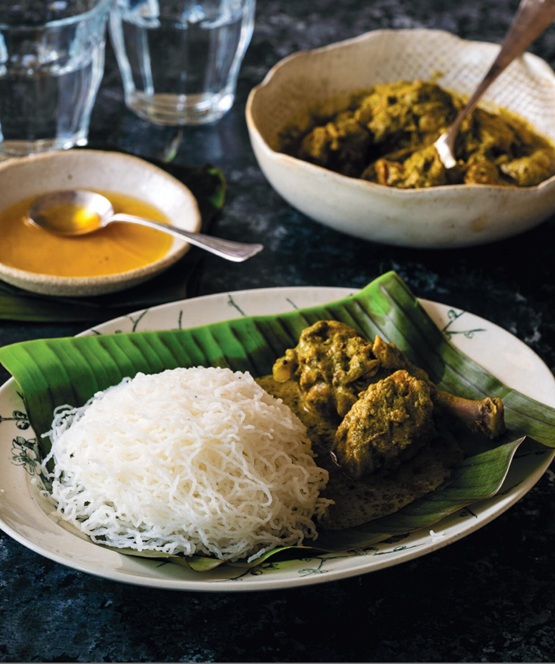
As I prepared the traditional Kodava recipes, I found myself thinking about our ancestors – their deep bond with the paddy fields, their respect for nature and the values they passed on through food. Every grain of rice tells the story of countless hands that tilled the soil, nurtured the land and collected the harvest, ensuring that both the land and its traditions were passed on to future generations.
The cook book taught me that every recipe carries a memory. It captures the aroma of our festivals, our many wood-fired cooking spaces in our Ainmanes, our legendary hospitality and the simple joys of families gathering around for a meal. In a world of fast food and instant cooking, it gently reminds us that the finest dishes are made with patience, love and a deep respect for tradition.
My hobby has now become a passion. Cooking is no longer just about following a recipe – it is about preserving a legacy. Every dish I prepare feels like a tribute to my ancestors and a celebration of Kodagu’s rich cultural heritage. I must add here that each and every recipe was tried and tested several times by the author, whose flair for cooking is respected amongst the most celebrated chefs of the land. The detailed recipes are remarkably accurate and precise and leaves just about enough space for individual creativity, which every home cook cherishes. And the photography is out of this world – it almost feels like the pictures are edible!
My heartfelt gratitude to the author Kaveri Ponnapa, whose dedication has given us far more than a cook book. She has preserved the flavours, stories and spirit of Kodagu for generations to come. “Coorg The Cookbook” is not merely a collection of Kodava recipes, it is a priceless record of our identity, our history and our way of life. This is not a book to be kept as a trophy in the book cupboard, it is a constant reassuring companion for amateurs and the expert cooks in our households.
I find myself falling in love all over again – this time with the author whose passion has transformed recipes into stories and food into a living heritage.
For some, books teach us how to cook, but Coorg The Cookbook shows us who we are. Because every recipe is a chapter of our Culinary and Cultural History, served on a plate and preserved for generations to come. Our quintessential harvest festival is just round the corner – so I chose this article as one of my favourites to publish just before Puthari. With my sincere best wishes to all Kodavas and those who celebrate Puthari with us – let us continue to grow paddy, as my family has done from time immemorial without a break to sustain the integrity of our food sources, water management and unbounded respect for our ancestors and Kaveramme, who provided us this sacred bounty.
I understand from the author that the first print run is almost sold out – which is not surprising. This is a book, like her previous masterpiece The Vanishing Kodavas, which has become a collector’s dream. The book is self-published and can be ordered at… – Order – Coorg: The Cookbook – Kaveri Ponnapa
Visit the website – Coorg: The Cookbook – Kaveri Ponnapa
Some select Comments from Readers:
Through this book, you’ve done far more than document cuisine-you’ve safeguarded memory, ritual, landscape, and lineage. Your scholarship gives Kodava food its rightful place as history on a plate, layered with lived experience, oral tradition, and rigorous research. The literary world is richer for it, and so is our understanding of how deeply culture is carried through kitchens and hearths. This is not just a book to be read, but one to be preserved.
Truly grateful for your work. – Maayankraj Singh
**********************
The event was truly one of its kind – the location was magnificent, attendees were mostly from those who had contributed to the book and everyone was fully focussed on the event. It was conducted with utmost grace and dignity.
The book itself is marvellous, like the previous two – The Vanishing Kodavas and A Place Apart. As it so happens, I am proudly associated with all three and the affection and respect shown by the Author and her family is commendable – humility personified. She always gives credit to all involved with meticulous care.
The afternoon lunch was truly a veritable feast of authentic Kodava fare and complementary neighbouring food. The non-alcoholic drinks were extremely good too and nectarial in content.
In summary, I would like to state the following:
“Na Bhuto Na Bhavishyati” (न भूतो न भविष्यति), which means “never happened before and will never happen in the future” or “unprecedented”. It was something truly unique, exceptional and extraordinary.
Our best wishes and blessings to Kaveri, always looking forward to more books! – Bacharanianda Appanna
**********************
Kaveri Ponnapa will certainly find her way into the hearts of her readers through the pages of her excellent book “Coorg :The Cookbook ”. Extensively and excellently researched and documented this book brings out Kodagu’s culinary history in all its glory.
Leaves, herbs, and vegetables blend deliciously with poultry, mutton,fish and the staple meat of Kodava’s – pork, all in a cauldron of proper proportion, description, and pictures.
The readers, and the certainly to be connoisseurs of Kodagu’s vast culinary heritage have merely to follow the black and white to the grain, to delight their palates with the flavours that were born centuries ago on the lush green slopes of the Western Ghats.
A testimonial in time to the skill, wisdom, and passion of the Kodava people who had a meal for every season, function and ritual whilst living among the harsh climes, this collection of colourful and flavourful pages is a true tribute to the Kodava people. This book brings back all the visual, olfactory and palatal memories of a tasty and happy childhood.
To readers, it will be a satisfying journey that will build layer upon layer of pleasant and satisfying experiences from plate to palate. Mere words cannot bring praise to Kaveri’s new masterpiece, for its contents must be prepared and savoured to know the true value of her latest creation. One looks forward to many more such works of wonder from Kaveramme’s own author daughter. – Dr. Codanda Ravin Chengappa.
**********************
Coorg: The Cookbook – Recipes and Stories from a Golden Land by Kaveri Ponnapa is a treasure trove of recipes, photographs, illustrations, and fascinating insights into the flora, fauna, culture, and food traditions of Coorg. Beautifully written and thoughtfully curated, the book brings together all these elements seamlessly, capturing the true essence of this unique land.
It is not only a collector’s item and a stunning coffee table book, but also one that Kodavas can proudly call their own. More importantly, it allows Kodava readers to experience and recreate the recipes that were an integral part of their mothers’ and grandmothers’ daily lives. For those unfamiliar with Coorg, the book offers a rich and detailed introduction to its culture, heritage, and cuisine.
I truly loved the layout of the book, the quality of the paper, the choice of fonts, and the beautiful photographs and illustrations, not to forget the extraordinarily well-written content. In fact, I loved everything about it. It is a book to be treasured, enjoyed, and revisited time and again. – Machimanda Cauvery Ponnappa
**********************
Coorg – The Cookbook by Kaveri Ponnapa is not just a cookbook—it’s what I would call a “Slow Cookbook,” in the spirit of the Slow Food movement. Built over years of research and lived experience, it goes far beyond recipes into the history, culture, people, and produce of Coorg. Years of lived experience, not quick content!
What stood out for me was the diversity-especially the lesser-known vegetarian dishes with seasonal ingredients—so often overshadowed by the over-publicized Pandi Curry (a popular Coorg Pork dish), heavily promoted by home cooks, influencers, and even at Coorg-themed food festivals in hotels across India.
This narrow representation does a disservice to the region’s true culinary diversity.
Having travelled across Coorg, I’ve rarely found restaurants that truly represent its cuisine (barring a few homestays), which makes documentation like this invaluable.
We need more regional cookbooks written from within— by those who live the culture, not just interpret it.
Regional cookbooks of this nature-written by those who belong to the region, who have lived its culture, and who understand its nuances-are the need of the hour, not just in India but globally. Meaningful documentation must come from lived experience; it cannot be assembled purely through observation or second-hand interpretation.
In an age where digital platforms have enabled anyone to position themselves as an expert or food historian, we often see superficial narratives and commentary on culinary traditions. This, more often than not, borders on cultural appropriation rather than preservation. Books like this remind us of the difference.
Will be trying many of the vegetarian recipes from Coorg shared by her. – Chinmaya Raja, Entrepreneur, Wine Educator, Chennai.
**********************
It’s only once in a long while that a cookbook as elegant and meaningful comes along. But then you don’t expect anything less from a woman like Kaveri Ponnapa. Highly educated, intelligent, knowledgeable, sensitive and quietly driven. One who exudes subtle sophistication, is immensely committed to whatever the cause and totally dedicated to the subject of food. In all forms, be it cooking, eating, researching or writing about it. She will meet farmers and planters, in her beloved Coorg, understand their stories, pick out nuances, patiently, mull upon all the facts and only then put pen to paper. Yes, literally, she still writes in longhand. “It helps me think better,” says the author of Coorg: The Cookbook, with her typical, gentle smile. – Farzana Contractor, UpperCrust Magazine, Mumbai.
Kaveri Ponnapa- Coorg in her Blood
Join our WhatsApp Group for News and Article Alerts