

CLN representation at the launch of Coorg the cookbook at Madikeri enabled a proper understanding of the dynamics of what went into writing of this outstanding treatise. Our star contributor, Mamatha Subbaiah has already written about the event and done a review of the cookbook, which was published in CLN.
In this detailed interview, she has carefully chosen 7 questions that she discusses with the author, Kaveri Ponnapa, which touches many important aspects of the author’s painstaking research, eye for details, food styling and photography and her vision for this outstanding book.
In the words of the author:
“It has taken a tribe to make this book. And people have contributed their time, recipes, knowledge and life stories. And trusted me to write about them. She quotes from Robin Wall Kimmerer, where she calls her own writing “act of reciprocity with the living land”. My relationship with Kodagu has been one of reciprocity-for the enormous work I put on, I met with an equal measure of generosity, trust and support across communities, and quite literally, from the land itself.”
From what we understand, the demand for the book has been extraordinary. Book lovers have returned in droves to buy multiple copies for sharing with friends and family – both from the the community and others. – CLN Newsdesk
To pre-order:
MS: What went into making this book? What inspired you to write it?
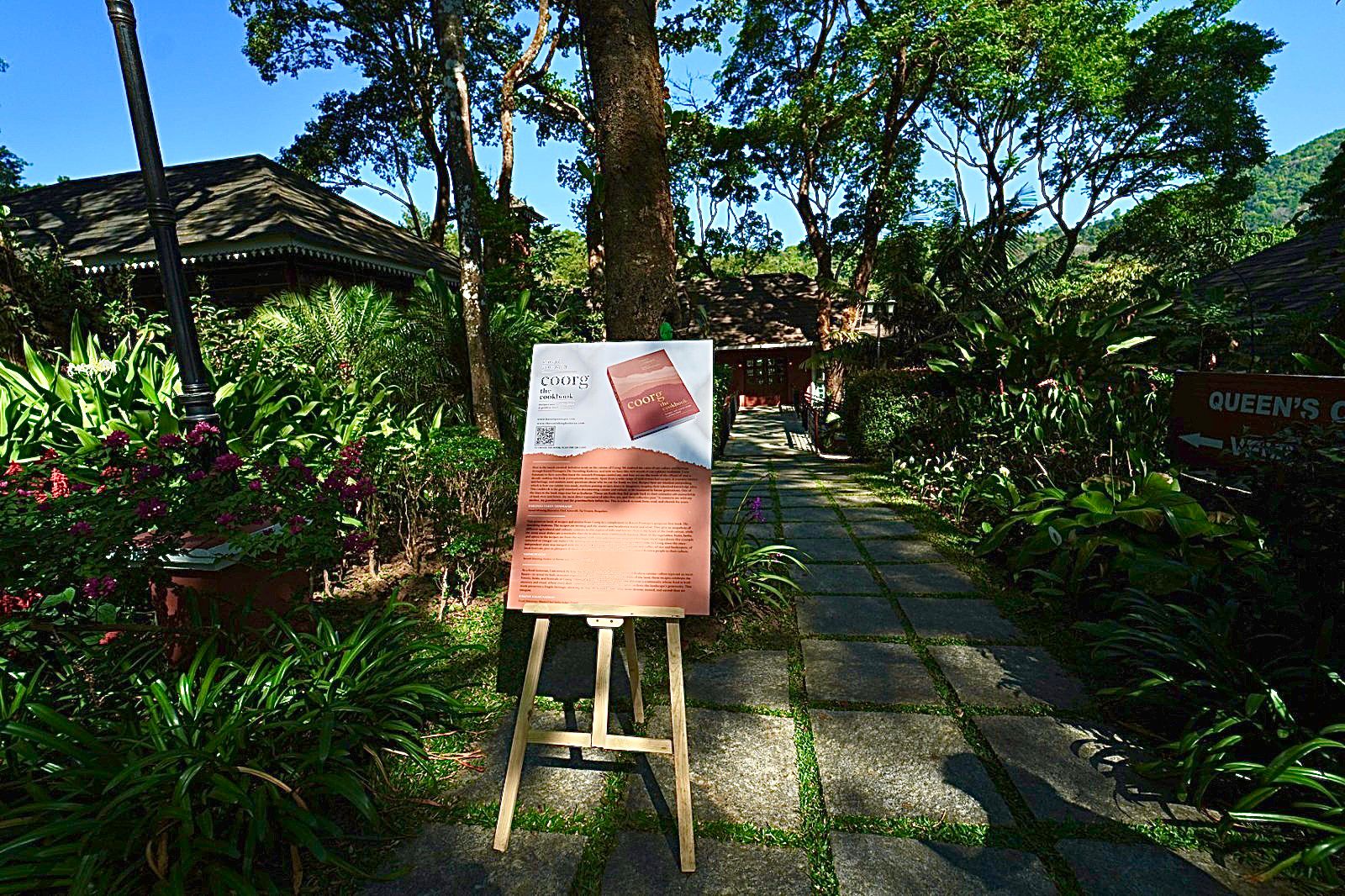
KP: CTC is in essence a cookbook, with over one hundred recipes, a book to cook from. But it is much more than a cookbook. It places the food described within its pages in context; through a dish we enter not just the cuisine, but the history, geography and culture of Coorg. Writing it has been a long, slow journey, full of multiple beginnings, and invaluable experiences and learnings. I wrote my first article on Coorg food in 1989 for The India Magazine, a publication about the culture and heritage of India. It attracted a lot of interest, but I did not write more about food again for a long time—at the time food was not my primary interest. I was a graduate student at SOAS, London, pursuing a MA in Social Anthropology, and that was where my focus lay. However, the academic training I received, and the research methodologies learnt served me well—they were the basis of the writing of The Vanishing Kodavas (TVK) and have now been extended to this cookbook.
The next food article came 20 years later; in 2009, I wrote an article called Coorg Modern for Food Lovers Magazine. It was a beautifully produced publication and article; the team came home and styled and photographed the Kodava food I had cooked. For the first time I saw what both food styling and food photography were about, both distinct, specialized fields.
In Coorg Modern, I introduced the idea of the landscape of Coorg as the backdrop to all we hold dear, including our cuisine. It was very well received and aroused a lot of interest in Coorg cuisine through the family recipes I had included with the article. This prompted me to start writing a blog in late 2011, which I renamed The Coorg Table in 2012. Through The Coorg Table, I reached out to an online community of people in India and across the world. I saw how food triggered memories of different cultural experiences for people from different communities.
My writings became a template—often generously acknowledged, sometimes otherwise—for many people to make their own forays into traditional foods. Many interesting comments poured in which are still up on the website.
The blog became very popular and I had innumerable requests to write a cookbook— but it took many years to gather my thoughts to be able to present the cuisine in its full context, not merely as a set of recipes, but as a cultural inheritance, and I believe that is how it has finally come through in this book.
There was also a parallel journey that unfolded while I was doing the research for TVK which fed into this book. For the first time I saw how the food I had grown up eating, and which I loved, had evolved. So this book is a journey on multiple levels. It is a journey into the heart of a community, a tribute to the many generations of incredible cooks, mostly women, as well as the farmers and hunters who created this wonderful cuisine for us, as well my own, personal understanding of my culinary heritage, and its relevance in the modern world. The wider context is highlighted through essays on history, geography, heritage foods and crops, rice cultivation, environmental issues, cultural commentaries, and stories about farmers, coffee planters and home cooks.
The bulk of the recipes are from my own, extended family. But it has taken a tribe to make this book, and people have contributed their time, recipes, knowledge and life stories, and trusted me to write about them. Here, I must add something about all of my writing on Kodagu, with a quote from a writer I greatly admire, Robin Wall Kimmerer, where she calls her own writing “an act of reciprocity with the living land.” These words describe exactly my own writing on Kodagu. My relationship with Kodagu has been one of reciprocity—for the enormous work that I put in, I met with an equal measure of generosity, trust and support across communities, and quite literally, from the land itself.
MS: There is a large collection of recipes in this book, and in your talk, you mentioned you had to leave many more out due to space constraints. What were the challenges of writing the recipes?
KP: To begin with, I must mention that all the recipes in the book are either my own family recipes that have been cooked by me over decades and also cooked and loved by friends, and thousands of readers of my blog or, in the case of recipes from friends, tested in my kitchen until I was satisfied with the results. I was sorry to have had to leave out so many dishes, several of which we had already finished photographing, but the book had touched 480 pages, and we had to take a call and cap the number of pages.
Recipes are more than a set of instructions, they carry a cultural inheritance—nowhere was this more apparent to me than when I was in conversation with women like Mrs. Barianda Lalu Uthappa, featured in my book—there was so much happening around each recipe, the recipes she shared are the lived experiences of those who went before us, a world that has now disappeared. Each dish and recipe contains rich food knowledge and, until very recently, this knowledge was passed down orally. This way of passing on food knowledge has changed forever. We no longer live in the same place as our grandparents, often not even with our parents, as hostels for school and college are almost the norm, so watching and learning is often not an option.
There is a stamp of identity on these recipes, the human element comes into it strongly. Dishes may be common, but recipes are not. For instance, the recipes I have for Coorg pulao from my mother-in-law and one of my aunts are both very different. Well known cookbook authors such as the late, great Diana Kennedy and many others have pointed out, when the recipe is yours, you recognize it if someone has used it. By changing an ingredient here and there, or measurements from ounces to spoons, it does not become yours. It’s important to respect and credit the person who created that recipe.
I grew up watching some very talented cooks at work, so I was fortunate to have imbibed a lot. But by the time I began to cook myself, I depended on writing down recipes—it took many years of experience to leave that behind and be able to cook the way my grandmother used to.
Writing a recipe is a process, a form of communication. I have a collection of about 2000 cookbooks that I love to read, and from which I cook. The real pleasure lies in the reading; the text should bring a whole world alive and inspire you to try a dish. The instructions should be clear, without being complicated. You need a clear, individual voice, as though someone is talking you through the cooking. Translating some of the recipes that came to me from older people was not easy, because they all cooked with approximations, measurements of eye and hand. For instance, I have a whole set of recipes in letters my mother-in-law wrote to me when I lived abroad. She was a superb cook, but my daughter, while typing them out, found them incomprehensible! I worked hard over the years to make those instructions easy to follow, to make them work to give the results and flavours of what she cooked.
Many such wonderful recipes in this book needed a lot of trials. A lot of young Kodavathi women wrote to me on my blog, asking for recipes and instructions for dishes that I took for granted.
So you will find a certain amount of detail in the instructions I have given to guide the cook along. My guest in conversation with me at the Bengaluru launch put it very nicely when he said this book is like an older person talking and passing on a legacy to a younger woman.
MS: Each section of the book has a set of essays and stories about people. What made you write about them and put them into the book?
KP: The stories in each section are in the voices of ordinary people, yet they are the people who make this place what it is. Their voices are often not heard. They give us important insights into agricultural practices, social histories, changes in land usage and much more. There is so much valuable knowledge in individual stories: seed security, or seed saving, for instance, which is very much a current topic of concern. These are stories of men and women whose ways of farming and cooking define our culture. I think they demonstrate how food sustains and carries forward this culture. While this began as a cookbook—I have a very rich culinary inheritance from my own family and from the one into which I married—the book was shaped into something beyond that by the people I met, who feature in these stories. I felt, as with TVK, a sense of urgency to set down stories, techniques and food knowledge because the world was changing far too quickly.
MS: How did you choose the title of the book?
KP: Coorg the Cookbook: Recipes and Stories from a Golden Land is my personal tribute to the magnificent land of Kodagu that has nurtured us for millennia and made us the people we are. The words in the title, A Golden Land’, pommalæ kodage, are taken from our folk songs, where they are sung repeatedly in praise of the land, and also used frequently in conversation to describe the place we call home. When I first went out into the field in 1998, these were the words that captured my attention when I heard them in open air settings and forest shrines, sung from the heart and from memory. I feel as deeply about this land of ours as our ancestors who composed these songs and sang these words centuries ago. Our culture, heritage, identity and indeed food, are all embedded in this landscape, something I have highlighted in all my written and published work on Coorg. The cover references the red earth, the hills, the skies and the land we love.
MS: What are some of the challenges you faced while writing this book?
KP: Drawing the many different threads into an engaging, accessible whole was not easy. Once someone has written the concepts into shape, it becomes easy to replicate. But to see into the heart of things, to capture the intangible, to be able to articulate it as it exists and add your own, unique perspective takes a lot of thought. I have been writing on food and wine since 2009— I’m happy to say I am on UpperCrust Magazine’s list of 25 Food Wine and Travel Writers of Repute, and named as one of the “Culinary Influencers of Karnataka” by the Indian Hotel Management Institute, Bengaluru—and over this period, I think I have developed my own, distinctive voice which is there in the book.
The other real challenge was production standards. Typically, a book like this, when published in the West, requires teams of up to thirty or more people, all of them specialists in their field. We were a team of three, four including the photographer!
Like TVK (which won a design and printing excellence award out of about 2000 entries), I wanted a book produced to world class standards, something that would speak for us all, and represent and showcase our heritage the way it deserves to be presented.
Unfortunately, I have had so many complaints about cost, and a push for a cheaper version of TVK. If you want a less expensive book, a cheaper quality production is what you will get, from paper, to printing, to the number of images in the book, and the quality of image reproduction. Is that what we really want for our priceless heritage? I have had dozens of people from other communities come and tell me how much they love the book, and how sorry they are they don’t have something similar. We spend so much money on social and other events, surely a book that showcases your heritage is worth the price for the quality it brings you. I recently had an extremely well-known non-Kodava chef call me to congratulate me on the incredible production standards of CTC which, he said, was on par with books from a top international publishing house which specializes in cookbooks—it was heartening indeed. He wanted to know how we had held to these publishing standards, and who had published the book.
Photography was both challenging and expensive. All the food in the book was what I cooked at home, which I also styled—food styling is a specialized profession, I just learned on the job. Seasonal ingredients had to be transported quickly, by bus, from Kodagu. Fortunately, I have wonderful friends who were always alert and willing to send me whatever I needed. Indian food is not easy to photograph, there was a lot of learning, plenty of mistakes. We had to photograph some of the dishes four or five times to get it right. So yes, lots of challenges, but worth it in the end.
MS: Coorg food has become very popular in hotels, restaurants, and pop-ups, what do you feel about this?
KP: I’m not sure. It’s a complex issue. At my Bengaluru launch, I was in conversation with a highly respected and prominent personality in the food world, who travels to Coorg frequently. He stressed that it was impossible to get a good Coorg meal outside of a home. My own experience confirms his observation. Tourism now drives this district, yet all the restaurants and resorts I visit offer food that does not even remotely resemble Coorg cuisine. It’s quite dismal. If we don’t take ownership of our cuisine, which is as much a part of our identity as anything else, it will continue to be misrepresented and soon be transformed into something else. Ideally, I would like to see it presented at its best.
He also observed, and I agree, that our wonderfully diverse, seasonal cuisine is being typecast as pork centric. No doubt we all love pork in many forms, but if you look at my book, the biggest section is dedicated to delicious vegetable dishes. We are narrowing our cuisine to what works for the tourist or a person attending a pop-up lunch or dinner. There is an erosion that takes place when we allow this to happen, and over time, the compromises will begin to show.
I also get anxious when seasonal, wild foods like wild mangoes, tender bamboo shoots and wild mushrooms are offered on restaurant menus. Unlike many other parts of the country, our geography is very small and historically, supported an extremely small population. I think we really need to review what kind of pressures this is putting on our land. Tourism has reached a crushing level in more ways than one.
MS: Having spent so much time around different parts of Kodagu for these books, what is the biggest change you see?
KP: Without any doubt, the visible devastation to the environment. In TVK, I have a chapter titled The Sacred Landscape—this is how we historically viewed our land, and the people I met in the early days of research and travel carried this reverence within them. If you look at Kodava culture, one of the most powerful concepts that has sustained this land over centuries is the idea of stewardship—the belief that we farm the land on behalf of the goddess Kaveri, reflected in how we worship at Kaveri Changrandi, inviting her to see if her fields are well-tended. The tradition of sacred groves played a powerful role in shaping our cultural values, and relationship with the environment, as did rice cultivation and the practices associated with it, all practices that nurtured equilibrium and sustainability in the truest sense of the word.
Since the late 1980s, the landscape itself has been transformed into something almost unrecognizable. The gaping spaces and open skies in plantations, monocultures of trees that are not conducive to sustaining other forms of life instead of the beautiful canopies of mixed native tree cover we grew up seeing, disappearing environments, and with them, disappearing foods, such a wild fruit and berries, freshwater fish and crabs, and the tremendous drop in rice cultivation which is the heart of our culture and cuisine. With the loss of specific environments comes the loss of food diversity and food knowledge. I cannot offer easy solutions here, but I will conclude with a quote, again from Robin Wall Kimmerer: “to love a place is not enough. We must find ways to heal it.”
Join our WhatsApp Group for News and Article Alerts



The essence of Pommale Kodagu … Golden Land is beautifully captured in the entire flow of the interview. The author’s love for the land, hills, and skies of Kodagu shines through in every single word.
The book is a source of nourishment for “thought” and not just food.
In many ways CTC is a continuum with the author’s previous work, The Vanishing Kodavas (TVK). Identity is retained by staying connected to our roots. The words of the author are exceptional and CTC provides a blend of the unique cuisine derived out of Kodagu’s sacred landscape, that adds a very special flavour to the distinctive culture of the Kodavas and those who follow the Kodava way of life.
The interview as reported in CLN between Mamatha Subbaiah and Kaveri Ponnapa is excellent. I would like to repeat what I have written as a comment for the Book Review reproduced below.
This is a sincere opinion from an elderly reader.
It is not uncommon for scholars to write and publish various types of books and dissertations for their own satisfaction or to transfer their knowledge acquired to society at large. This happens a lot in the academic field. Some books deserve just a glance and be shelved forever. Some are written for occasional reference when the need arises. Some others are to read, digest and quietly enrich the general knowledge of the reader.
The recently published book of Kaveri Ponnapa is a special one of its kind – it combines Coorg (Kodag) history, geography, anthropology, culture, tradition, language and revival of the forgotten way of life!
The impact of modern education, steady urbanisation of the people of Coorg and the somewhat disturbing settlement of people from neighbouring states are the main reasons for forsaking the traditional food habits and way of life. Kaveri’s pioneering and painstaking new treatise is a very important link in rejuvenating the vanishing culture, traditions and food habits of our ancestors. Most of the people of Kodagu have forgotten the names of the dishes of yore – for example – Thiri Payasa, Kumbala Payasa, Berambutt, Gummate Jam, Chippli Pann Jam, etc.
The author has personally visited rural households to collect information, cross-check it for veracity, prepare each of them several times, discuss the findings with elders and write recipes in a very comprehensible manner. This is a very arduous exercise, especially in the modern era. The collection of photographs of rare edible leaves, wild mushrooms, wild fruits, village festivities…are truly praiseworthy. The author has not only visited people of the Kodava community, but also of those who speak Kodava Thakk and follow the Kodava way of life.
This book is certainly not to be kept under lock and key on the bookshelf – it must find a permanent safe place in every Kodava kitchen and as a guide for chefs who want to prepare Kodava food. I have an important suggestion to the parents of brides to give a copy of the book together with traditional vessels and clothes as part of the trousseau.
THIS BOOK WILL NEVER GROW OLD AS LONG AS THERE IS HUNGER AND HUMAN BEINGS EXIST!
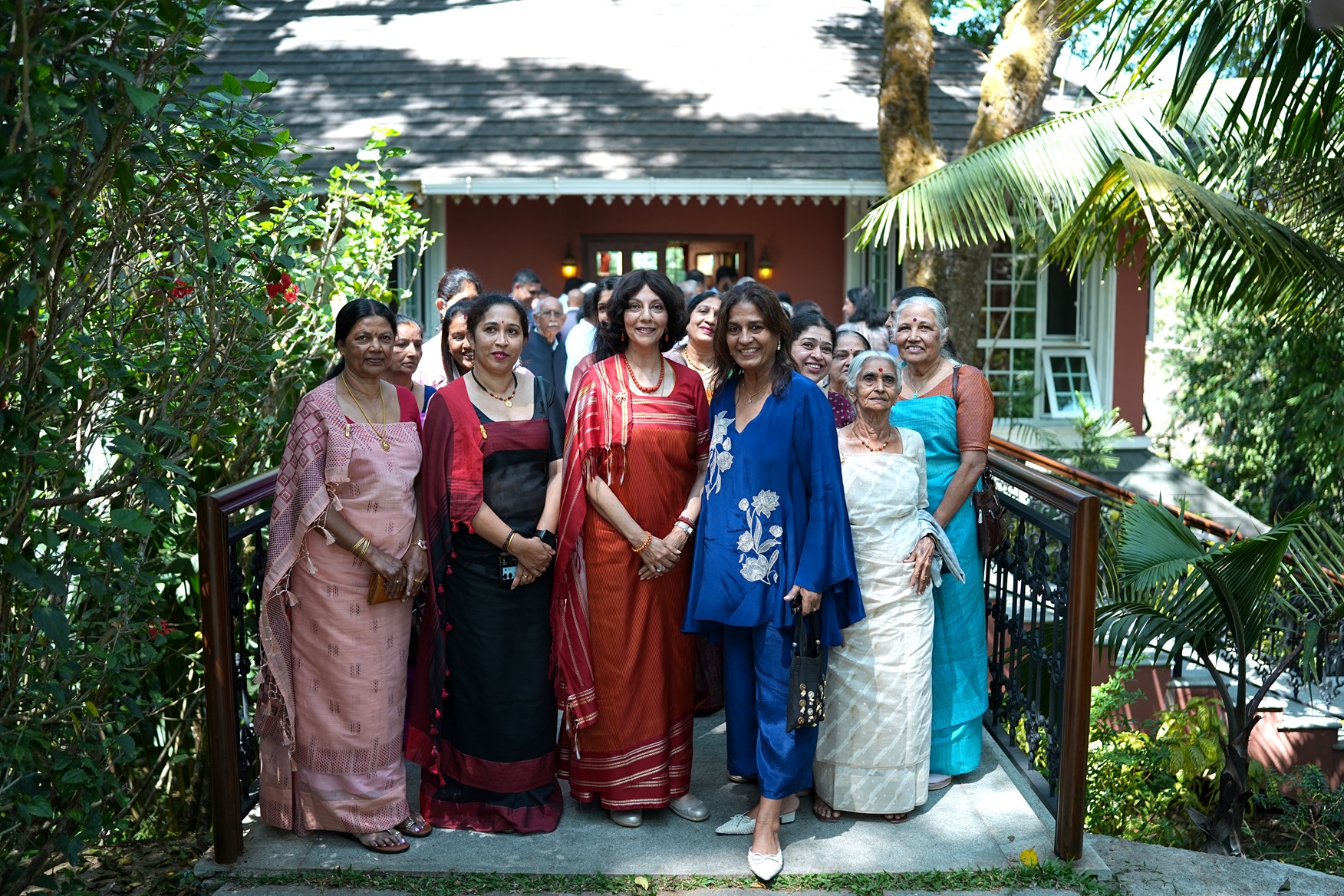
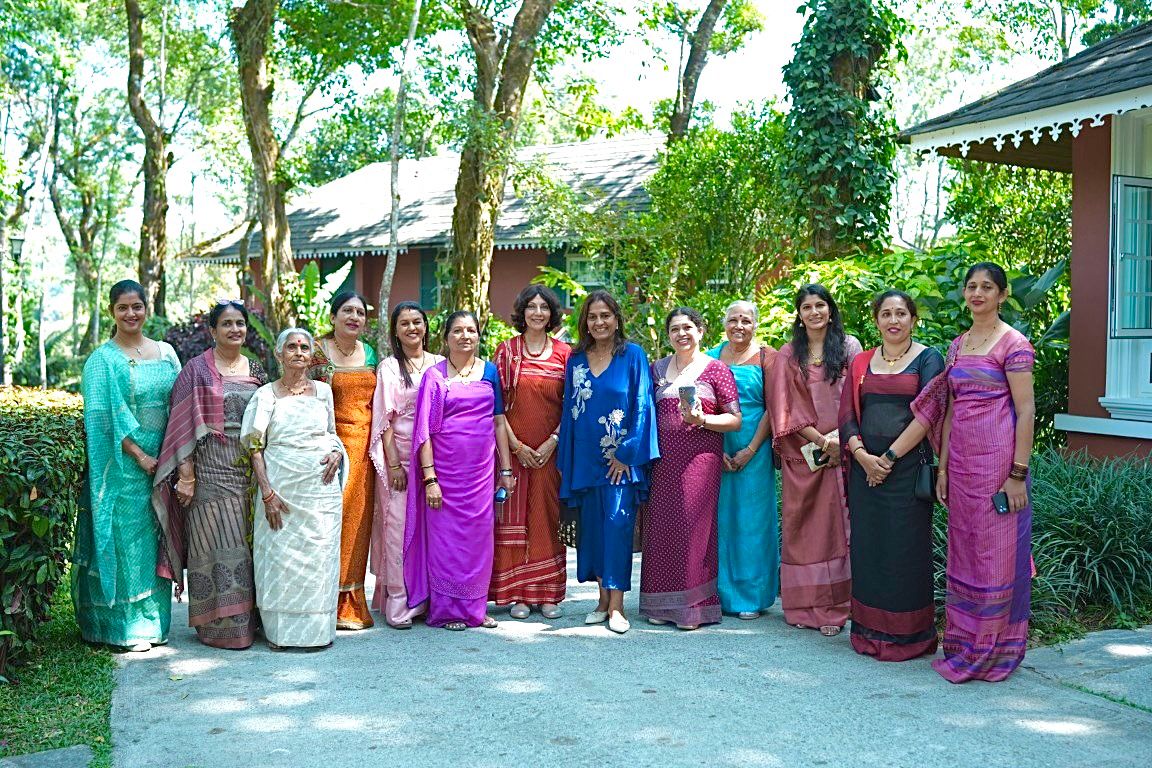
Congratulations to Kaveri Ponnapa on launching “Coorg – the Cookbook”. I attended the recent Kodagu launch event and witnessed a fascinating weave of culture, heritage and history interlocking the main thread of recipes. Owing to Kaveri’s scholarly background of anthropology, juxtaposing her passion for cooking, textiles and culture, the event itself was a stand out, with carefully curated conversation and an exquisite culinary fare replete with traditional Kodava cuisine and neighbouring lip smackers.
Upon returning home, my curiosity bested me as I began devouring the pages of this cookbook. Barely halfway through I realised, this is not just a cookbook. Or rather, if this book must be termed a cookbook, the benchmark is incredulously high for others trying their hand at writing one.
What Kaveri has done is beyond just a mere collection of well preserved recipes (a herculean task in itself). She has interwoven stories of the land, the heartbeat of our ancestors, the rhythm of the Kodava tribe, the fragrance of the hills, the richness of its simplicity, all in a style exquisitely hers. Every page feels like a hug, every recipe ignites a core memory and the book feels like one grand thing – ‘a legacy’.
Kodava people often begin collecting and gathering sentimental and meaningful objecting for their daughter’s ‘Potti’ (bridal trousseau) many years in advance. This book is a perfect fit into every family’s trousseau preparation, to carry forth from one generation to the next.
Thank you, Kaveri Akka, for years of your hard work, dedication and passion that is clearly visible in this labour of love. May you be blessed with strength and good health by Kaveramme and Igguthappa to continue adding indelible gems to the tapestry of documenting Kodava culture and heritage.
What a wonderful interview! – it left me with a deep sense of admiration — not just for the book Radhika (that’s how I know Kaveri Ponnapa) has written, but for the purpose and care behind it.
I am eagerly awaiting my copy of Coorg: The Cookbook, which is already on its way. Now I know it will be far more than a collection of recipes. It feels like her effort to document and preserve something precious — memories, traditions, and a way of life that deserves to be recorded with authenticity and respect.
I have been following her writings on The Coorg Table for several years now. I always found her essays fascinating — the way she would explore a single dish and, through it, gently uncover layers of history, geography, and culture. What stayed with me most was how her writing helped me see the subtle connections between Kodava cuisine and other South Indian culinary traditions — the shared ingredients, the techniques, and the underlying philosophy of food itself. It made me realize how interconnected our food cultures really are.
Reading this interview, I am reminded again that her work is not just about food. It is about preserving identity and giving something meaningful back to the community she comes from. What a beautiful and thoughtful way to reciprocate to one’s roots and to society.
Thank you Radhika, for showing us there are different ways one can give back to the society.
A great Interview and everlasting legacy for future generations. This is the quality of research and integrity of writing that should be followed by others in future. Mere repetition is not “knowledge”. Research, validation, interpretation, language and expression …. all present in abundance in Coorg the Cookbook.
I read this interview from the first word to the last without a single distraction — something that’s rare today when when there is so many things vying for our attention.
The conversation offered wonderful insight into your writing process, your thoughtful approach to research and storytelling, and above all, your deep love for your homeland. Credit also to the interviewer for asking such thoughtful questions that brought out the depth of your journey and your work.
Through your two books, your essays, and the Coorg Table, you have carefully documented the food, stories, and traditions of Coorg with depth, honesty, and grace. Coorg: The Cookbook is more than a collection of recipes — it is a thoughtful record of a living culture.
Work like this doesn’t just inform or delight — it preserves a heritage for future generations.
This is a very poignant and touching interview which brings out the deep emotional bonding abd love for coorg by the author KAVERI PONNAPA.
When the author quotes Robin Wall Kimmerer, “TO love the place is not enough, we must find ways to heal it”, shows how much of concern Kaveri ponnapa has for her homeland. But what comes immediately to my mind is whether at all we are too late to heal our land after the humongous beating it has taken in the past couple of decades. The question now is, ARE WE TOO LATE IN PROTECTING, PRESERVING, HEALING AND RETAINING OUR HOMELAND THE WAY WE SAW IT AS CHILDREN???
Finally Mamatha has once again through her succint interview succeeded beautifully in bringing out the best from Kaveri Ponnapa. Congrats Mamatha. Keep it coming.