

Featured Image: Mandetira Ainmane
Despite the tremendous changes that have swept through Kodava society, veneration of ancestors still lies at the heart of Kodava worship and several times a year, these beautiful old AineMane (AinMane) and Kaimadas come alive again. Families gather to make offerings of food, alcohol and animal sacrifices at the Karanang Kodupo in the ten days after the Kaveri festival, around mid-October. They seek the blessings of their ancestors, their guidance and give thanks on this occasion when the river-goddess renews herself. The more dramatic and colourful ceremonies are the karona teres, which generally take place a week before the harvest festival, or into the early weeks of March. These are elaborate affairs, with members of the clan converging on the AinMane from across the district and further. There will be another occasion to write about this elaborate ceremony which includes the Banna community (washer-folk) who have had long associations with the Kodava clans with whom they interact, stretching back hundreds of years. These are spectacular, all-night events deserving a separate article by itself.
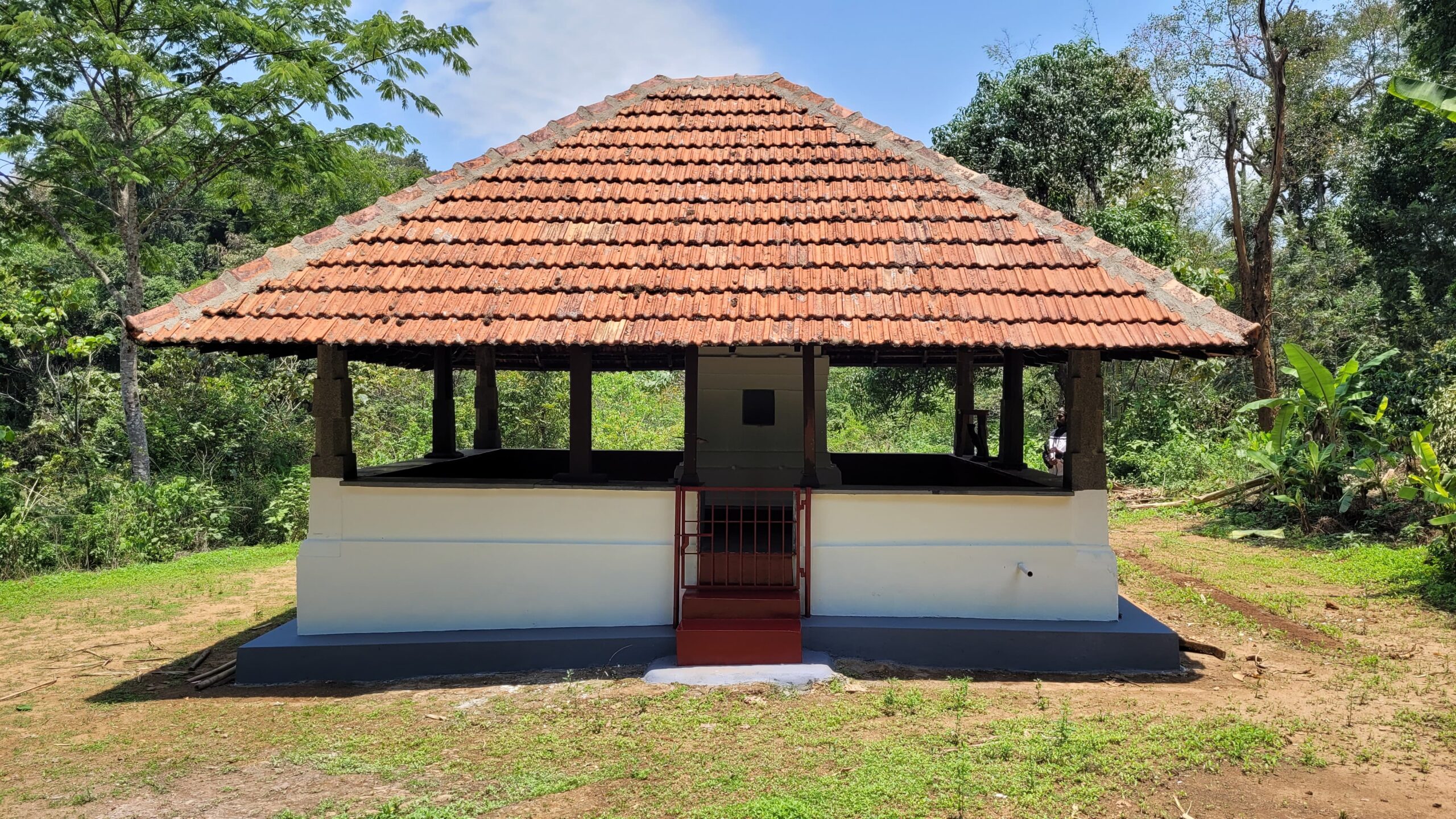
Having asked many elders and custodians of Kodava culture as to what constitutes the most important event, deity, occasion or gathering for the Kodavas – the responses were varied and it was a little bit tricky. The consensus was the harvest festival, because everyone voiced the importance of Puthari festival because paddy/rice is associated with our legacy prosperity, which enabled our ancestors to build the AinMane. Of equal significance is the Kaimada which always was built between the paddy fields and a stone’s throw away from the entrance of the AinManes…our ancestral homes. The first offering of the sheaves of paddy is placed at the Kaimada, then the local spirits (Choundi, Guliga and so on), then taken to the AinMane for further celebration and rituals.
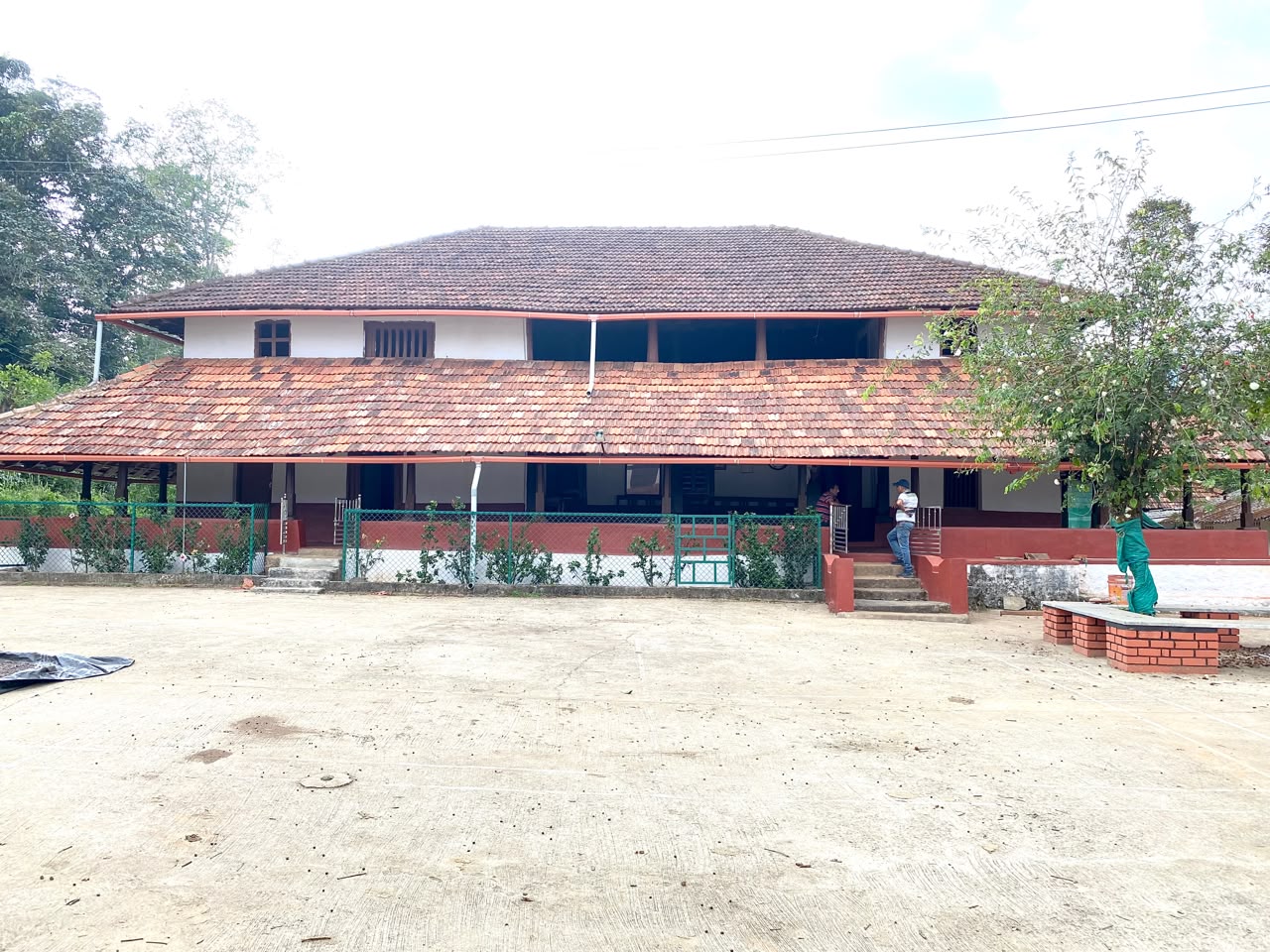
This makes immense sense as our Ancestors toiled hard day and night, under excruciating circumstances to ensure we live a comfortable life today. The paddy fields were always developed in the valleys or in the plains. In the rare instance, there was step-cultivation. Much later in the development of agricultural activity, Coffee estates were cleared and planted at higher slopes, as distinct from baane land (traditional grazing ground – which was the genesis of Jamma rights) – all because of the foresight and hard work of our ancestors. If we just brood over this for a while we realise how very scientifically our Ancestors planned the Paddy fields and coffee estates in terms of location. And remember, the AinManes were always built on lower ground closer to the wetlands. Even today their location is so perfect that if we try to interchange their location it could spell a disaster.
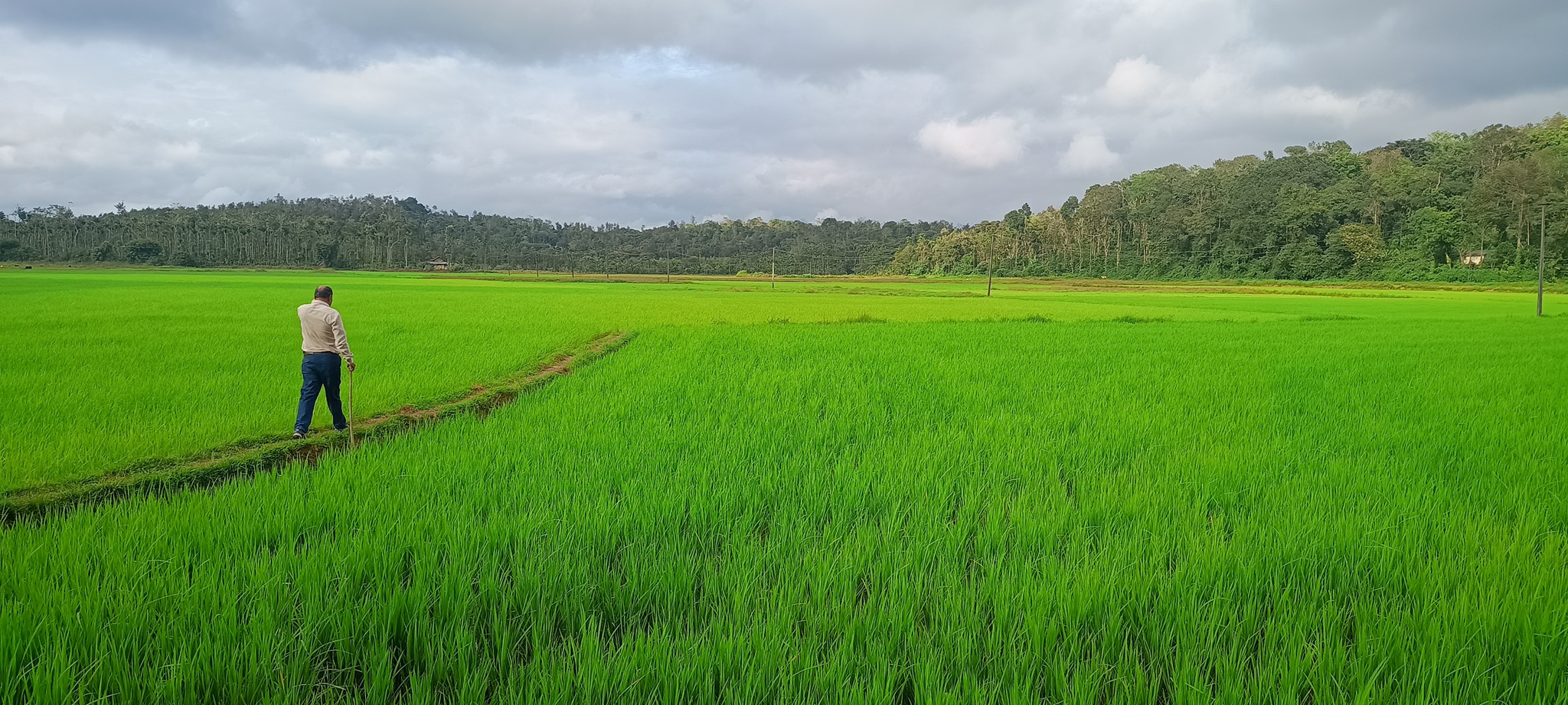
Of late many have tried to convert paddy fields to lessen the burden of growing paddy, which is highly labour intensive. Coffee grown in paddy fields aren’t as productive as compared to when it is grown on higher (gently) sloped terrain. Moreover, changing land use pattern what our ancestors devised has already shown disastrous results, because paddy fields being converted into coffee and commercial layouts have hugely reduced the essential water logging and holding capacity of our land, which in turn has gradually depleted the ground water levels all over Kodagu.
Rains have become erratic in Kodagu and slowly we are witnessing a Kodagu which is reeling under the scorching sun, a result of changed land use and denudation of our precious forests along the Western Ghats, which were the main cloud saturating hills, bringing rains to Kodagu. Tampering with our age-old tried and tested methods followed by our ancestors has started bearing disastrous results, which is there for all of us to see. What our Ancestors did was robust and now scientifically corroborated, but most of all they respected Nature and there was humongous balance in everything they did during their times.
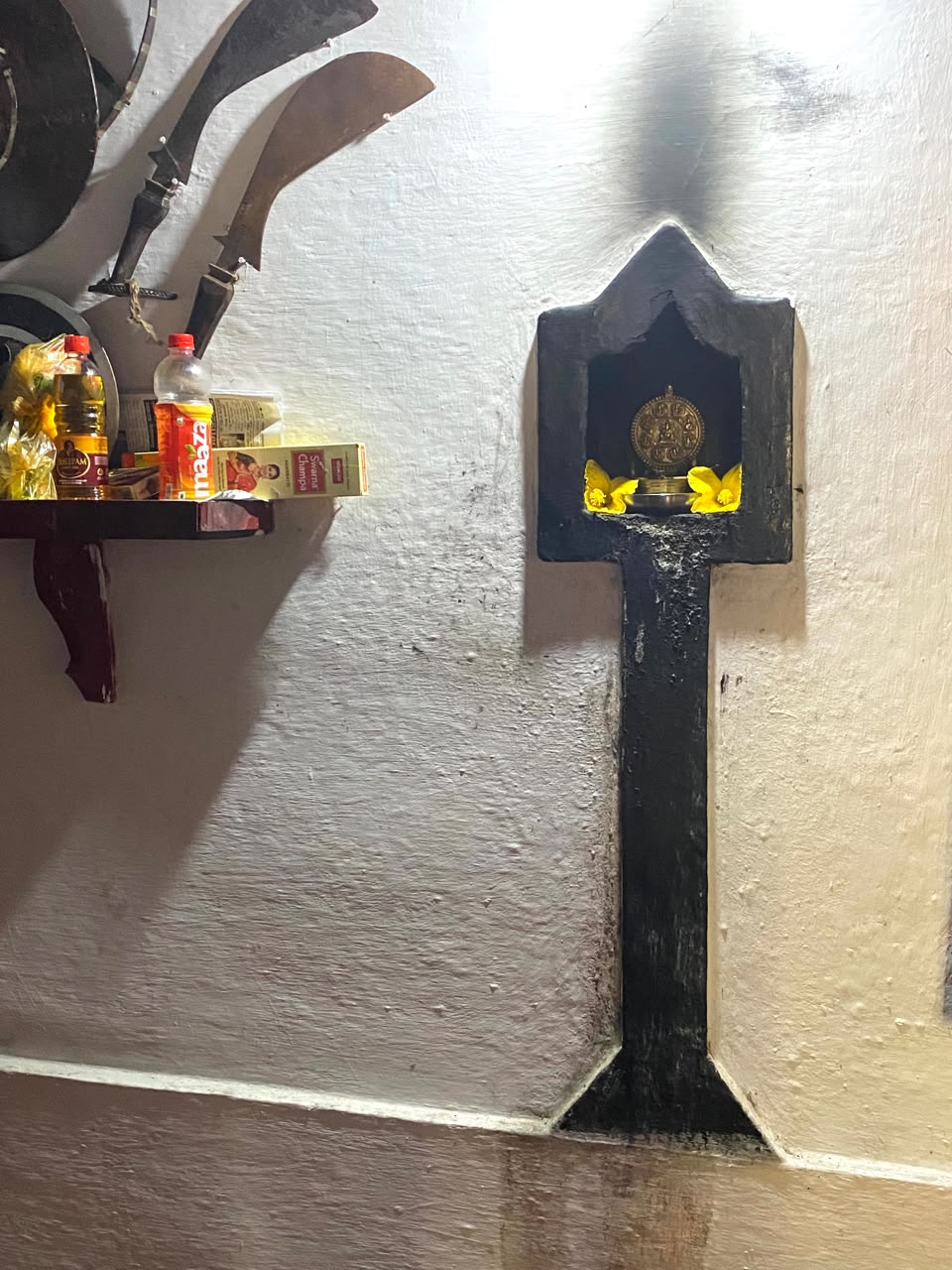
Coming back to basics – Kodavas are essentially ancestor worshippers from time immemorial and our KARONA was our primary deity. All our AinManes and Balyamanes had the photos of our ancestors decorating the walls, in recognition of the importance Kodavas ascribed to our KARONA. Unfortunately, somewhere down the line, over a few decades brahminical influence caught up with Kodavas and we started replacing our KARONAS’ PHOTOGRAPHS with other images like Ganapathy, Lakshmi, Saraswathi, Cauveriamme, Igguthappa etc. Our NELAKKI NADUBAADE and KANI KOMBRE in all our AinManes is an exclusive area where only our KARONA is meant to be revered and worshipped. The Gejje Thand is conspicuously placed near the Thook Bolacha. No other image of any other Gods had the privilege of occupying this SANCTUM SANTORUM OF KODAVAS – The Nellakki Nadubaade and the emptiness of the Kani Kombre.
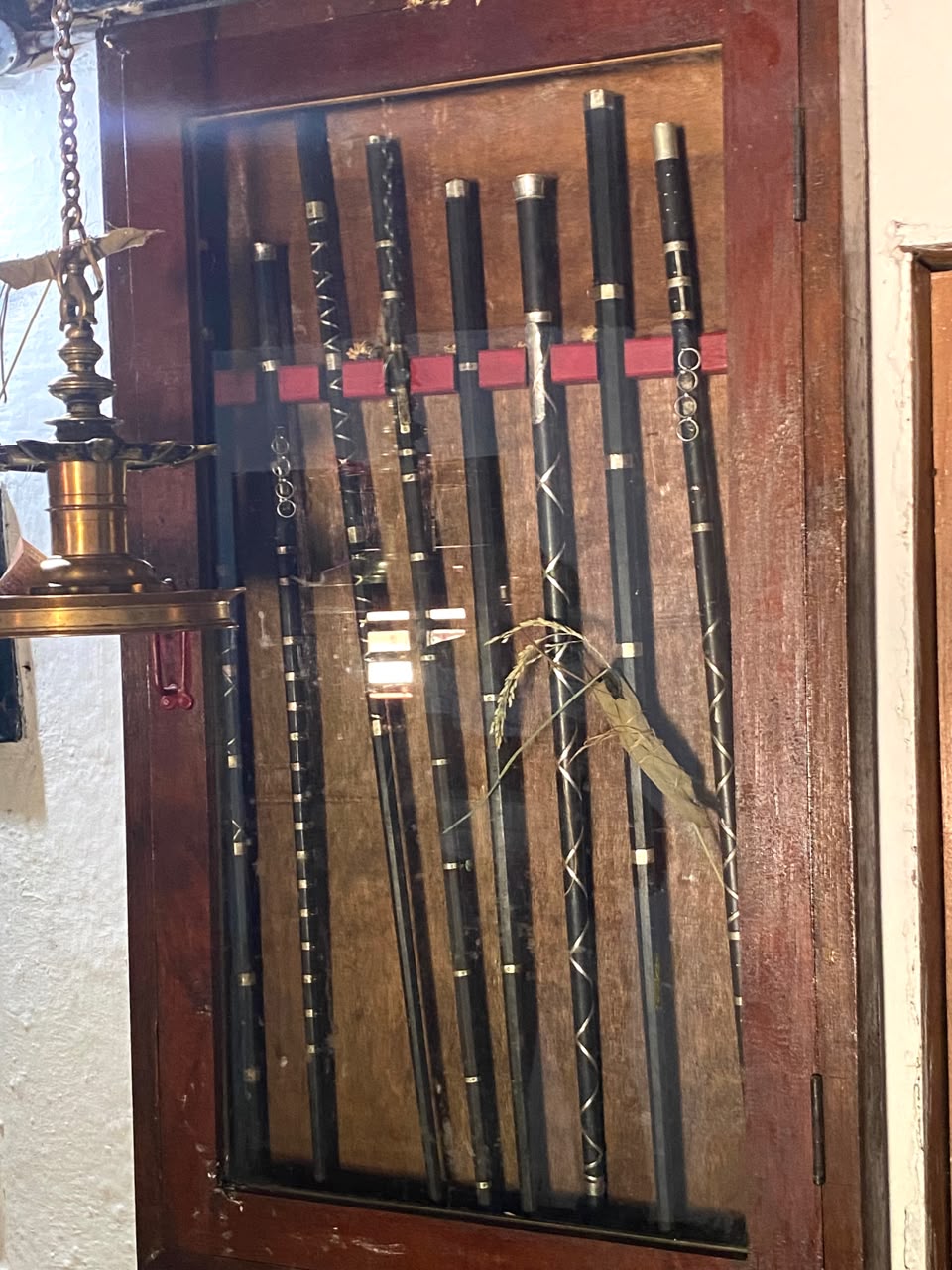
Sadly since a few decades our BALYAMANE has slowly changed with brahminical influence, so much so that many BALYAMANES have started performing brahminical rituals like HOMA and other poojas which was never ever done in any of our AINMANES across Kodagu. There are many AINMANES in Kodagu which have only the photograph of their Karona and ancestors like the Apparanda AinMane which has their revered ancestor Bopu’s (who built the AinMane) photograph adorning the wall. Moreover, Kodavas have their unique food habits and customs, influenced by the rugged terrain they lived in and offer meat and alcohol to our Karona during our Meedhi Beppo ceremonies. In fact, on every festive occasion Kodavas offer alcohol, mutton, chicken, pork as offerings to our ancestors and Karona during Meedhi Beppo ritual. Such being the case how can a brahminical pooja like homa be performed in our Balyamanes where we offer meat to our ancestors and which is inauspicious and sacrilegious to other deities.
In summary, retain the intrinsic character and relevance of our Karonas abode at the AinManes and Kaimada. All other Gods and spirits have their sthaana (respective places of worship), which is not mixed up with our Karonas veneration. What we do in our individual homes is our prerogative. As Kodavas we must make every endeavour to attend our Karonang Kodupo ceremony – especially youngsters. It is the opportune moment for intense interaction, sharing of knowledge and networking amongst the clan members of the Okka. Cultural organisations cannot replace the AinMane and Kaimada for this important event.
JAMMADA GANESH AIYANNA., Treasurer, Jabhoomi Charitable Trust
(* with due acknowledgement of the significant reference material from The Vanishing Kodavas written by Kaveri Ponnapa for the introductory lines)
The facts, views and opinions expressed are solely those of the author and do not necessarily reflect the views of Coffeeland News.
Join our WhatsApp Group for News and Article Alerts



I completely agree with Jammada Ganesh – How can a Vedic ritual such as Homa(Havan) be performed in our Ainmanes/Balyamanes, where offerings of meat and alcohol are made to our ancestors and Guru Karona – offerings that would be considered inauspicious or sacrilegious in Brahmanical ritual traditions associated with other deities? Indeed, on festive occasions, offerings such as alcohol, mutton, chicken and pork have traditionally formed and is still a part of the other Kodava rituals and customs, be it naming ceremony, marraige or death.
Kodavas are free to practise Vedic rituals; that is a matter of personal choice. However, such practices should not be introduced into our Ainmanes/Balyamanes, or other traditional spaces where they were never part of our ancestral customs and where such practices were traditionally forbidden. We must respect individual freedom while also preserving the distinctive traditions and cultural identity that our ancestors entrusted to us.
The question is not merely about the performance of a particular ritual. It is about whether, by introducing practices that were never traditionally part of our Balyamane traditions, we are gradually losing the distinctive ritual practices and cultural identity of the Kodavas that our ancestors entrusted to us, in the hope that we would preserve and continue their time-tested traditions.
Nice one Ganesh Anna. A truly wonderful and thought provoking writeup on our Kodava ancestral worship, Ainmanes and Kaimadas, and their immense cultural and spiritual significance. 🙏
It is concerning to see how external influences, including Brahminical practices, are gradually changing our age-old rituals and traditions. Our ancestral practices are the very foundation of Kodava identity, and preserving their original essence is our collective responsibility.
Getting back to our roots and reviving our age old traditional practices is the need of the hour for every Kodava clan.
Let us honour our ancestors by preserving their customs, protecting our Ainmanes and Kaimadas, and passing on our authentic heritage to the next generation with pride. Our roots are our identity, and our traditions are our legacy.
A vivid, reverent tribute to Kodava heritage, this article beautifully shows how ancestral worship, land wisdom, and ritual tradition remain the community’s living heartbeat.
It powerfully warns that straying from age‑old ecological practices risks unraveling the very balance our ancestors once safeguarded.
Ancestor worship lies at the heart of Kodava culture, with the AinMane and Kaimada serving as sacred links between generations. Our ancestors not only shaped our traditions and customs but also demonstrated a remarkable understanding of the land, agriculture and nature. Today, changing land-use patterns and outside influences threaten both our natural environment and the distinctive character of our ancestral worship. The Karona, revered as our ancestral spirit, must retain its rightful place in the Nellakki Nadubaade and Kaimada. While personal beliefs may evolve, our traditional practices deserve respect and preservation. The younger generation must reconnect with its roots by participating in Karonang Kodupo and other ancestral ceremonies. Preserving our AinMane, Kaimada and Karona worship is not merely about protecting the past; it is about safeguarding the identity and heritage of future generations of Kodavas.
Many thanks for this write up that gently cautions, without histrionics, the sleeping community of Kodavas, Ganesh!
The many responses thrown up shows that the kodava/thi, besides being a warrior and clansman, is a thinking person as well!
Good write up. Nice to see okkas renovating their aiynmanes and getting back to their roots.
Well written. The future of Kodagu lies in retaining young Kodavas in their ancestral homeland. Our focus must shift from merely preserving our heritage to creating opportunities that allow the next generation to live, work and prosper in Kodagu.
A homeland cannot survive on memories alone, it needs its next generation to build its future.
The future of Kodagu should not merely be about Kodavas returning to their roots, but about ensuring they never have to leave out of necessity.
The point you make is very valid, equally we have to ask ourselves whether we have become complacent by the affluence that coffee bestowed upon us.
They say necessity is the mother of invention — and rightly so. No invention ever truly arises without a necessity behind it. One can live their entire life with the knowledge they currently possess, as long as no new necessity pushes them to learn more. All the inventions made by humankind so far have always been linked to some form of necessity. The time is NOW – no point worrying that we are perhaps late in imbibing the entrepreneurial spirit. Look at the massive demographic shift that has taken place in Kodagu in the past two decades – what are these people doing that we cannot accomplish?
Year after year, the Kodava Hockey Festival has infrastructure sourced from non- Kodavas. So also all the trade, wedding related activities- just about everything. The resorts are built by outsiders who do not have any “connect” with our land. Why can’t we do it?
And the worst scenario is that we have found ways to sell our inherited Jamma land, which is downright unacceptable.
When I saw 28 comments yesterday I decided that I shall reply individually to each and then started doing so. But today it has grown to over 40 comments which is tough to catch pace with. I am simply overwhelmed by the comments and also response by my fellow members. Much as I would love to reply and address each comment it’s becoming tough to do so. Please do not think otherwise that I haven’t replied to all individually but your response shall motivate me to write more such articles in future. Thanks a Ton to all
Prosperity breeds “selfishness” and the “individual’s personality” comes to the fore. It’s the same with us Kodavas. We need to reinvent ourselves without diluting the essence or core of our culture, identity and underlying Kodavaame. Instead of lamenting the lack of strong leadership post 1956, we ought to create community platforms that have a common agenda to protect the future of Kodagu. We provided “inclusive” leadership of a high caliber and everyone in Kodagu spoke Kodava Thakk and followed our way of life and celebrated our festivals. Sadly, other festivals have taken precedence over Puthari which was the main festival before the merger with then Mysore State in 1956.
Every Ainmane and adjacent Kaimada is precious and somehow we need to generate resources as a community to preserve them. It is an essential part of our identity. Growing paddy is a commitment to our ancestors and in the present context, a safe source of chemical laden food on our tables. Everything cannot be reduced to commerce. Where there is a will there is a way.
Excellent and timely article Mr Ganesh Ayanna.
Timely article as I understand that Kaveri Changrandi and Karanang Kodupo are round the corner. Interestingly the Badagas also venerate (as distinct from worship) their ancestors during their ceremonies, here in the Nilgiris. If I am not mistaken this happens with many tribal communities in the North East (one has heard of large sacred forests in Meghalaya) and in Ladakh.
An interesting comment that was received by a Kodava friend from the plantations:
“Great article. I feel that in the days gone by our paddy cultivation was everything and rituals, social customs revolved around it. Coffee is relatively a very recent arrival with major commercial impact in the past one hundred years only. Barter with paddy was the norm and usage of currency was minimal. The Ainmane was a wonderful joint family living as a cohesive unit. Central open space gated inside – the kids were left for one of the elder lady to take care. Kitchens were different for each family, but when any guests arrived, potluck would be automatically sent to that household hosting, however humble the food item could be.
Thakkame prevailed in the old way of life”.
Ganesh Anna, I feel that along with educating our younger generation about our rituals, customs and traditions, it is equally important to preserve, restore and refurbish our Ainmanes. They are the foundation of our Okka, bringing generations together and keeping our ancestral legacy alive. We must make a collective effort to protect these precious heritage structures, as preserving our Ainmanes is essential to preserving our identity, strengthening family bonds and ensuring that our traditions continue to flourish for generations to come. 🙏💐
Excellent write-up, Ganesh Anna! 👏💐 A very insightful and thought-provoking article that beautifully brings out the richness of our Kodava heritage, ancestral traditions and the significance of Karona worship. Your knowledge and efforts in highlighting these invaluable customs are truly appreciated. A wonderful reminder of our roots and the importance of passing our traditions on to the younger generation. 🙏💐
A good thorough researched article which is very enlightening and informative…Kudos to Ganesh, keep it up & enlighten all the more , thank you.👍
Faith is personal, but I think reverence also calls for an understanding of the traditions and beliefs associated with each deity.
We must have the photographs of our thathas’ and thaies’ put up at our Ainmane, for sure! I agree with you.
Yes, we must understand and respect the fact that each deity has its own traditions, rituals, and forms of worship. If I have reverence and faith in other deities, I must also be mindful not to disrespect them by worshipping them in our ainmane, where meat and liquor are offered as part of our traditional practices.
Very well researched and written, this is an eye-opener. Thanks to Ganesh.
Strongly written and strongly felt this article highlights a crucial issue within our community.
As a people who began as purely ancestor worshippers our Ainmane’s are the last bastion of our core belief syestem.
The Guru Karana though not venerated as a deity is the very source of our existence and thus should be the focus of our supreme worship.
Complicating or contaminating the sacred space of our Karana is sacrilegious.
The custodians of the Ainmane and family members should reserve this place of pride to our ancestors alone.
Kodagu, like the rest of India is open to the practice of all forms of worship all over its lands. Temples, mosques and churches dot the beautiful countryside without any inhibition or prohibition.
Thus, it is only up to the Kodava community to retain and worship our ancestors in their designated sanctum santorum.
May we find the harmony within ourselves to do so.
OMG. I just saw the 28 comments. Have been very busy and will leisurely reply to all of you. Thanks for your response and comments
A well-articulated and informative write-up that enriches our knowledge, particularly that of the younger generation. The narratives on Ainmane, Kaimada, our traditional practices, faith, and beliefs will undoubtedly enlighten readers and elevate their understanding of our rich Kodava heritage.
At the same time, the influence of Brahmanical traditions on our customary practices deserves thoughtful contemplation. A large number of temples in Kodagu, including the revered Igguthappa Temple, have traditionally followed Brahmanical rituals, with the Pooja performed by Brahmin priests under the guidance of the Deva Thakka or Oore Thakka. These practices have been followed since the inception of the temples, and we cannot disregard them, as our elders have accepted and upheld these rituals over generations.
Similarly, even at the sacred Cauvery Kshethra, we observe several Brahmanical rituals inherited from our forefathers. These traditions have become part of our religious and cultural practices and deserve to be understood in their proper historical and social context.
Ultimately, whatever changes may take place in our understanding of traditions and beliefs, our Ainmane and Gurukaruna should forever remain deeply rooted in our hearts and souls. They represent the enduring essence of our Kodava identity, heritage, and collective consciousness.
Your observations are valid, Sir, and I feel that the entire purpose of this online platform is precisely to encourage such engagement and discussion.
We are addressing two separate issues. The first concerns the introduction of external religious practices into our Ainmanes, which were never part of our traditions and were never intended to be.
Coming to temples, at Talakaveri and later at the Igguthappa Temple, Amma Kodavas officiated as priests. When they eventually gave up this responsibility or were removed from their positions, Brahmin priests were brought in from Dakshina Kannada district. There is historical documentary evidence to support this. This practice subsequently extended to the Igguthappa Temple and other temples.
Over time, temples dedicated to other deities also came up as several Nadkaras sought a Vedic spiritual connection, leading to a growing demand for Vedic priests and chants.
Interestingly, the priest at the Igguthappa Temple continues to maintain that if Kodavas do not visit the temple in their traditional attire and make offerings, its sanctity would be lost. I tend to agree with his sentiment.
In many temples in North Kodagu, such as those at Mukkodlu, and in forest shrines dedicated primarily to Botekara Aiyappa, whose traditional abodes were the Devarakadus (sacred groves), local communities continue to manage their religious practices independently. Many Deva Thakkas and those responsible for officiating and administering temple affairs are still Amma Kodavas or members of other communities who speak the Kodava language and follow Kodava customs and traditions.
However, one thing is clear to me: Brahmin priests and tantriks had no role in our Balyamanes. I believe this should remain so, as a mark of respect for our Karonas – the ancestors of our Okka.
For me, the sound of Mane Paat and Balo Paat creates a much deeper spiritual connection than Vedic chants performed in or near our Balyamanes. These traditional songs resonate with our ancestral roots, cultural identity, and the spiritual heritage passed down through generations.
One final point: anyone familiar with the history of Kodagu should know that our ancestors fought the migthy Tipu Sultan even when the situation appeared hopeless. Hundreds, if not thousands, fought his forces and laid down their lives for Kodagu. Yet, they persevered and ultimately prevailed. In doing so, they safeguarded not only their land and jungles, but also the scared places, language, beliefs, religious systems, and traditions they had inherited, all in the name of their ancestors, for the future generations.
We revere our Karonas as gods in remembrance of their sacrifices, courage and glory, and in gratitude for the distinctive cultural practices they bequeathed to us. Preserving these these traditions is not merely about upholding the past; it is about respecting our ancestors and ensuring that that their legacy lives on for future generations.
Excellent article by Jammada Ganesh Ayanna. Sharp and to the point. Our ancestors had tremendous respect for Nature and therein lies the answer. The “seed” determines the quality of the sapling that then grows into a strong tree.
Respect the source – as we do with our Karona, our Mother – Cauveramma and the various deities that protect the environment that we live in. Be cautious about religion; politicians and priests – they are usually only interested in gathering their flock to feel powerful in their lifetimes.
I fully endorse the views expressed by Mr. Kuttaiah. The introduction of Vedic rituals, such as poojas and homas in a Kodava Balyamane, dilutes and contradicts the fundamental principles of traditional Kodava culture. Brahmin priests have no traditional role in Kodava life-cycle ceremonies, including birth, marriage and death, or in rituals performed at ancestral homes. These customary practices at a Balyamane are traditionally meant to be conducted entirely by Kodava elders, in keeping with the customs and traditions passed down by our ancestors.
Furthermore, the sacred space surrounding the traditional hanging lamp, the Nellakki Bolcha, must remain completely clear and be preserved as a sanctified space dedicated to our Ajjas (ancestors and elders). No idols, framed pictures of gods or religious calendars should be hung or placed in this area. Preserving the sanctity of this space is essential to safeguarding the distinctive customs, spiritual traditions and cultural identity of the Kodavas.
Heartfelt appreciation to Jammada Ganesh Ayanna for this wonderful, thought-provoking, and culturally enriching article. Your deep understanding of Kodava traditions and your commitment to preserving the true essence of our ancestral worship are truly commendable. You have beautifully highlighted the significance of our Karona, Ainmane, Kaimada, and the invaluable wisdom of our ancestors. Such articles are essential to awaken younger generations and inspire them to protect and carry forward our unique Kodava heritage.
Congratulations, Jammada Ganesh Ayanna, for this excellent piece of writing. May your efforts to preserve the identity, traditions, and cultural legacy of Kodagu continue to inspire generations to come.
Very enlightening. Provides a clear understanding of the culture and spirituality of the Kodavas that seem to be changing over time. I find this unique. Thank you for sharing.
Thank you for articulating this so clearly Mr. Ganesh Aiyanna.
Cultural organisation’s help people to promote and preserve Kodava culture, but they cannot replace the special bond felt with the ancestors at the Ainmane and Balyamanes. Its the responsibility of every family member to keep this traditions alive. They should encourage the younger generation to take part in the ceremonies so that the customs and heritage continue for years to come.
Karuna Kodupo is far more than ritual observance, it strengthens family bonds, preserves collective memory, and provides an invaluable opportunity for younger generations to understand their lineage, traditions and responsibilities. In an era when families are increasingly dispersed, such gatherings become even more significant.
Great and thoughtful article, good to know even though lifestyle has substantially changed during the course of life, still the belief system on our forefathers are still intact and we keep continuing the practice… Lot of power to Kodava okka. May Mahathayi Kaveramme and Gurukarana bless all their tribe members to have good health and bring glory in thier life…
Excellent and timely article. I strongly support the author’s view that we must maintain the sanctity of the inherited practices of the AinMane from our ancestors. There should not be any transgression of the sacredness of the place by the introduction of other Gods and unrelated religious practices. In many Okkas they have stopped such “external” influences with appropriate explanations to individuals who object, to undertake their personal practices within the precincts of their homes.
The AinMane belongs to the Karonas of the Okka with primary obeisance to the founder – Guru Karona. This view is firmly validated by the Ajjappa Tere’s that is commonly viewed at the functions held at the AineMane, at the Nellaki Nadubode. The auspicious storage of the Gejje Thand, Odi Kathi and at times firearms near the Thook Bolacha bears further testimony to our distinct culture. Let’s preserve it as it was meant to be.
Very illuminating and informative article armed with which we can explain many of our customs to our non-kodava (and many kodava?) friends and relatives. I for one did not know that some of our rituals involved animal sacrifice; I did not see it in the few functions I attended. If it is widespread I think we should stop it. Customs and rituals need to be flexible to some extent because they were not written in stone. If new knowledge and mores deem something as wrong we should be broad-minded enough to discard the old and adopt the change while retaining the sanctity of the original intent.
Agreed that respect for tradition does not mean that customs can never change. Equally, the desire for becoming flexible, does not give anyone the moral authority to disparage or dictate changes to the traditions of others.
Yes, our traditional customs do involve animal sacrifice, and this has been practised since time immemorial. Even today, during many Kodava functions, particularly those held around the Kaimada, pigs and fowl are sacrificed for Karona as part of the customary practices. The meat is then cooked and offered to Guru Karona, also. These practices must be understood in the context of our ancestral traditions and cultural beliefs, rather than judged solely through contemporary notions of morality and be discarded.
Any Kodava who wishes to become a strict vegetarian is perfectly entitled to do so. One of my own cousins is a vegetarian, and I respect her choice. Whenever she is invited to a function at my place, I make sure a vegetarian spread is available for her, specially. And I know perfectly well that whenever I visit her home, she will treat me to a wonderful vegetarian spread. That is what mutual respect and accommodation should look like.
Being broad-minded should mean respecting different perspectives and personal choices, not discarding our traditions to conform to changing notions of morality.
Nobody is forcing anyone to eat meat or participate in a ritual that conflicts with their personal beliefs. However, personal choices should not become a moral yardstick by which the customs and traditions of an entire community are judged or changed. Respecting an individual’s right to choose also means respecting the right of others to preserve and practice their inherited traditions without being subjected to moral lectures or condemnation.
It is sad to see the unfortunate disappearance of many precious Ainemanes merely because they could not be maintained. Where is the collective strength of the community that professes pride and dignity in our culture and yet we cannot get together and keep what we have inherited?
Also, we need to have architectural and cultural integrity in the renovations taking place. Ghastly ceramic tiles that are used in unmentionable quarters of homes are used profusely. This is awful preservation of a sacred heritage. Wish eminent architects and custodians of culture (anthropologists?) would step forward – but where is the platform? Akhila Kodava Samaja; Federation; Political Leadership; District Administration; large organisations like Tata Coffee/Taj Hotels/EvolveBack/Coromandel Group/Banks and many more could promote the sustainability of this unique culture. If we benefit in commerce from the district, learn to participate in its upkeep.
A very insightful article by Jammada Ganesh, which clearly highlights the authors pain in the lands around Kodagu being converted and our wonderful environment being destroyed.
Kodavas performing Hindu rituals is actually not part of our culture and sad to see temples of various deities coming up when we are supposed to be ANCESTOR WORSHIPPERS.
I know my comment will raise a storm in a tea cup – is it a coincidence that at numerous Thereys – The Spirits have asked for temples to be built. Has something like this happened in previous decades??
We are an intelligent people, or so we claim, then why are we falling for such guidance and constructing temples for other deities.
AWAKEN, KODAVAS! AND REMEMBER YOUR TRADITIONS AND HISTORY.
DO NOT LET THE LEGACY OF OUR ANCESTORS VANISH FROM THE SACRED LAND OF IGGUTHAPPA AND KAVERAMME.
A beautiful article that reminds us of the richness of Kodava culture and the wisdom of our ancestors. A wonderful reminder to stay connected to our roots and preserve our unique heritage for generations to come. Our Ainmanes, Kaimadas, and Karona worship are not just traditions but the very roots of our identity. We need to Preserve these age-old customs and pass them on to the generation next.
Your words carry a lot of warmth and pride, and they beautifully reflect the spirit of the Kodava community. It’s heartening to see how traditions are kept alive, not just in coorg but also by those who live away for their livelihood yet return with enthusiasm for festivals. That continuity across generations is what keeps culture vibrant.
Anna’s efforts in documenting and sharing these details are indeed invaluable, they serve as both reminder and a guide for the younger generation. When heritage is written down and celebrated, it becomes harder for it to fade away.
An insightful article by Jammada Ganesh Ayanna. It beautifully captures the essence of who we are as Kodavas our reverence for Guru Karona, the sacredness of our AinMane and Kaimada, and the enduring bond with the Banna community during Karona Teres.
At a time when modern lifestyles are gradually distancing us from our ancestral traditions and cultural values, posts like these are not just meaningful but truly necessary. They serve as a wake-up call, reminding us that no matter how much the world changes, our cultural identity and values remain an integral part of who we are.
Such articles do more than inform; they rekindle cultural awareness, inspire reflection, and help ensure that our rich heritage and ancestral wisdom are understood, cherished, and passed on to the next generation. Thank you for this wonderful initiative!
Beautifully articulated. This is why Kodava culture has survived for millennia – we don’t worship in fear, we worship in gratitude. Gratitude to our Karona who gave us life, to Kaveramma who gives us water, to Igguthappa who protects us, and to the soil that feeds us. Meedhi is not a ritual, it is remembrance. Kodavaame Baalo!
Essence is simple – Ancestor is God, Nature is Temple. Ainmane & Kaimada are our true places of worship. 🙏
Splendid article from Mr Jammada Ganesh Aiyanna..
Just when the festive fervour is round the corner for Kodavas and the people of Kodagu as whole, who follow the kodava tradition, Kodava Thakk and adore aadishakti, Maathe Kaveri, Patthalodhi or “tholiyaar path” is observed after the 10th consecutive suryodayas after the kani poojuva ceremony or Kaveri changrandhi which is celebrated in each Kodava households..which is of utmost importance and reverence .This day is auspicious for house warming events and marking of plots for new construction etc…and also for offerings to gurukaronas at each respective ainmanes of okkas and especially thamane moodiyas will visit with their offerings and gifts with utmost faith..
It’s also refersing to hear the fact that many ainmanes in Kodagu are refraining away from performing homas and coming to an understanding that its improper to perform such brahminical influences when the ainmane and aarwada are revered to be our worshipping places of our Guru Karonas..the aatmas of our forefathers are believed to be eternal and worshipped even today at kannimoole or kannikombare which happens to be at the south west corner of the ainmane not to mention the fact that we offer wine and meat as offerings .
The Nellakki Nadubaade in each households will face the direction of the suryodaya or the east and placed in the western wall..normally all the auspicious happenings will take place here ..before the commencement of each event the okka pattedhara will address the family gathering and while each member holds hand full of rice which will be showered three times towards the holy lamp..
While in conversation with a elder in Ketolira family who is also well versed with manysacred aspects of ainamanes pointed out-
The lamp or bolcha should be lit towards west in Kanni Kombare or Kanni Moole in order to invoke the blessings of our ancestors or karonas on the day of Karonang Kodpa ceremony.
In nutshell-
All the auspicious offerings of ainmane be it the start of marriage, lagnapatti, Kaveri Changrandhi, kailpoudh etc will have the address by okka pattedhara known as thappadka and the lamp faces east and placed on the west wall..
The offerings on the day of karonang kodpo will be different as we invoke the blessings of karonas and forefathers and this will be observed in a different room other than nellakki which is known as kannikombare on the southwest side and the lamp will be lit towards west placed on the east wall of the room..as wine meat and special cuisine are prepared and ordered before consumption and a elaborate prayer which also is known as thappadka.
It’s interesting and a proper reason behind it in my opinion..
But placement of lamps could also be different but that’s the way it should be as a ancestoral and ancient practice.
Beautifully articulated and deeply eye-opening. This piece cuts straight to the heart of what it means to be a Kodava, reminding us that our identity is inextricably linked to our AinManes, Kaimadas, and the reverence of our Karona.
The author brilliantly bridges culture with ecology; the modern environmental crises in Kodagu are a direct consequence of discarding the scientific land-use wisdom of our ancestors. Equally crucial is the warning against external Brahminical influences. Introducing homas and removing ancestral photos from the Nellakki Nadubaade dilutes the sacred essence of our unique customs, like Meedhi Beppo, which define our heritage.
This is a vital wake-up call, especially for the younger generation. No external organization can replace the sacred experience of gathering at our AinMane for Karonang Kodupo. We must actively protect the distinct character of our Balyamanes and carry our traditions forward in their purest form. A must-read for every Kodava today!
A brilliant writeup by Mr. Jammada Ganesh Ayanna. The connection drawn between ancestral foresight, environmental balance, and the sanctity of the Ainmane is spot on. Our Karonas engineered Ainmanes thoughtfully so the entire family would remain safe, creating a sustainable way of life deeply connected to the distinct topography of Kodagu. Preserving our unique rituals, without diluting them through outside influences.
As generations shifted to compete in a globalized world, Kodavas began moving to urban centers for higher education and professional opportunities. Demanding work schedules often forced them away from ancestral traditions, and many fell under Brahminical influences, gradually drifting from core Kodava practices: a shift that has been observed and discussed widely.
However, the COVID19 pandemic brought about a notable turning point. It wasn’t all negative; it prompted our younger generation to pause and reflect on what truly defines the uniqueness of an Okka. We are now seeing young Kodavas actively returning to their Ainmanes and taking part in Karana Kodupo. While some Ainmanes have been modernized over time, it is encouraging to see the youth re-engaging with our sacred rituals.
While cultural organizations certainly serve a purpose, nothing can truly replicate the living heritage, identity, and deep sense of unity fostered within the walls of an Ainmane and around the Kaimada.
Thank you, CLN, for educating everyone with these write ups.
Thanks Rajesh, Kodavas cannot separate nature and ancestor worship at all. They both are intrinsically connected.
Congratulations to Ganesh Ayanna for bringing out thus much-needed article on our Ainmanes, kaimadas and the significance of Karanang kodpo. The beautiful photographs and meaningful documentation make it even more special. At a time when our traditions need to be understood, preserved and passed on to future generations, such documentation us truly invaluable.
Among the many festivals and ceremonies that from the cultural landscape of kodagu, there is one occasion that to my understanding deserves a place of exceptional importance in the life of every kodava- KARANANG KODPO. Which is not just a ceremony. It is the living soul of kodava heritage, our bond with our ancestors and the foundation of out cultural identity. Our Ainmanes and kaimadas are sacred links between generations, carrying stories, values and memories that no modern influence can replace. If we fail to understand and honour our roots today, what will we pass on to our children tomorrow? Such meaningful documentation is invaluable, for a community that forgets its past slowly loses its identity.
Thanks, Mamtha. Indeed, many of our festivals are an integral part of our identity. We must start documenting and preserving our traditions before they are gradually forgotten and our children lose touch with their cultural heritage.
A deeply meaningful and thought-provoking article. Seeing a reference to my Balyamane in this piece makes it especially personal and heartwarming. Our ancestral homes are not merely structures; they hold our history, identity, and the wisdom of generations before us. Preserving the essence of Kodava worship and passing these traditions on to the next generation is a responsibility we must all take pride in. Happy to see our heritage being remembered and discussed.
A deeply meaningful article that reminds us that Kodava worship is not merely about rituals, but about honouring our ancestors, respecting nature, and preserving the traditions that define our identity. Our AinManes, Kaimadas and ancestral customs are living links to our roots, and it is our responsibility to ensure that we understand and carry this legacy forward.
Thanks Janan. Yes our ancestors are responsible for who we are and what kodagu is today.
Yes, our Balyamanes resonate with the memories of our past. They are vibrant spaces, alive with the legacy of our ancestors, our traditions and our cultural identity. We must revere, protect and preserve them, ensuring that their sanctity and significance are respected and passed on to future generations.
CLN is making it a habit to present exceptionally relevant and timely articles on their Online platform which encourages meaningful interaction amongst the readers. This message by Jammada Ganesh Aiyanna is a bold and correct message.
Our AineManes are exclusively meant for our Okka Karonas. Inevitably the Kaimada is built between the AineMane and paddy fields – both facing the Eastern direction. Let us have the respect, conviction and integrity not to display either deities and religious activities which are irrelevant and in a manner of speaking, disrespectful to our ancestors and Guru Karonas.
We must make every effort to attend the Karonang Kodupa function – it is indeed the most important event that shouldn’t be missed. AND thankfully our Kodava Samajas cannot replace the AineMane/Kaimada for this function.
Well done Mr Aiyanna.
Many of us who have grown and lived outside Kodagu don’t know the importance of many rituals, customs and practices we follow in Kodagu. The book – THE VANISHING KODAVAS has brought in a whole new perspective to all things Kodava and also Kodavaame.
Thank you, Ganesh Ayanna, for this thoughtful and deeply felt piece. What moved me most is the connection you draw between remembering one’s ancestors and caring for the land they left behind. The AinMane, the Kaimada and the paddy fields emerge as parts of one living inheritance.
For a community so small in numbers, the Kodavas carry an extraordinary cultural richness. Your appeal to the younger generation is especially important: a heritage survives through participation, through gathering, listening and understanding why these customs matter.
To honour the ancestors by caring for both their legacy and their land—what a beautiful responsibility to pass on.
I’m not a Kodava, but one of my dearest friends is. And Kaveri Ponnapa’s seminal work “The Vanishing Kodava”; opened up a whole new world for me.
🙏🏽
I am happy to know that, although you aren’t a Kodava, you chose to respond to my article. I had thought it would be of interest mainly to Kodavas and perhaps best understood by them. Thank you for taking the time to read it and share your thoughts.
Being a Kodava, I feel our traditions are something we should never take for granted. The way our ancestors lived, worshipped, and respected nature is a part of who we are. It is our responsibility to understand these traditions ourselves and ensure we the children of this unique and fascinating community grow up knowing the true essence of being Kodava.
Very well said Tushar. We have a humongous responsibility to safeguard our heritage and legacy.
We should teach our children what our ancestors understood deeply: rivers, mountains, forests and trees existed long before human beings.
Our ancestors respected nature not merely as a resource, but as something sacred. They considered certain rivers, mountains, forests and trees as living shrines..something to be protected, respected and revered, rather than exploited. For them, nature itself was a temple, and the divine was not confined within four walls.
Over time, mythology, fear of the unknown and manmade interpretations of religion sometimes took us away from this simple and beautiful understanding. We began creating images, rituals and enclosed places of worship, while forgetting that the greatest creation- the natural world was already here, sustaining and protecting us.
Let us teach our children this ancient wisdom:
Before we built temples for God, nature was already here to sustain us.
1. Respect the river.
2. Respect the mountain.
3. Respect the forest.
4. Respect the trees.
Nature was our first temple. Let us protect what our ancestors revered.
At one level what you’ve written us absolutely correct. Nature provides everything and more to mankind and our ancestors demonstrated this by creating Devarkadus (which we have shamelessly encroached), revered the Goddess Kaveramma, whom they cleverly gave the ownership of the land (we are meant to be mere custodians during our lifetimes – which we have now started selling to meet our unsatiated greed) and made the cultivation of rice the basis for all our everyday lifes (festivals, social commitments and so on).
Having said all of this, with progressive prosperity they build joint family homes with great foresight. And a token Kaimada in honour of the Karonas. In that context, what Mr Ayanna has written is absolutely relevant. Let us cherish the essence of our heritage and yet not destroy the verdant forests, and everything associated with them – because it is this sacred landscape that drew them to live on this precious land. Only those “outsiders” who understand this inherent philosophy should dare to take abode here.
Sadly what I can’t understand is primarily how can we sell what doesn’t belong to us. Majority of our land holding wasn’t bought by us but came to us on a platter without sweat or toil. So I still cannot understand how one sells something which he hasnt bought himself.
Sagar you have hit the nail on its head. Being nature and ancestor worshippers how can we think of something we daily worship. AIR WATER, RIVERS, TREES, FORESTS, MOUNTAINS, DEVARAKAADUS etc. Greed has crept into entire nervous system of our body.