

The moment I read Yeshwant Kalappa’s comprehensive note on HEC, I felt the people of Kodagu and the various departments would benefit from the consolidated thoughts. Issues like HEC, Sale of Jamma properties (including the recent Malma imbroglio), over/uncontrolled tourism including the menace of garbage, wetland cultivation, inadequate infrastructure, change in demographics leading to a threat in cultural identity, lack of proactive/decisive leadership of our community organizations… should be debated openly and solutions implemented on public-private platforms. Else the tendency is for momentary sensational announcements and a days media coverage with life moving on to the next distraction.
CLN has to be complimented for raising such issues, inviting knowledgeable subject matter experts to contribute and promote public debate. Compliments are particularly due to the Online edition for the quality of comments – many worthy of being published as an independent article. Readers and those who receive the widely circulated articles in community WhatsApp Groups should encourage comments to be posted and also support CLN as an independent voice of the residents of Kodagu.
– Jammada Ganesh Aiyanna.
Beneath the scenic beauty of Kodagu (Coorg) lies a highly volatile problem of Human-Elephant Conflict (HEC). What was once a seasonal migration has transformed into a year-round struggle for space, devastating the economy and claiming human and animal lives.
##1 Understanding Elephant Migration
Elephants are wide-ranging herbivores that must migrate to survive, but human infrastructure has severely disrupted these natural cycles.
Why They Migrate
Driven primarily by dietary needs and climate. They move to access water, find diverse high-calorie forage, escape insect swarms, maintain genetic flow between distinct populations, and locate mates.
When Do They Migrate:
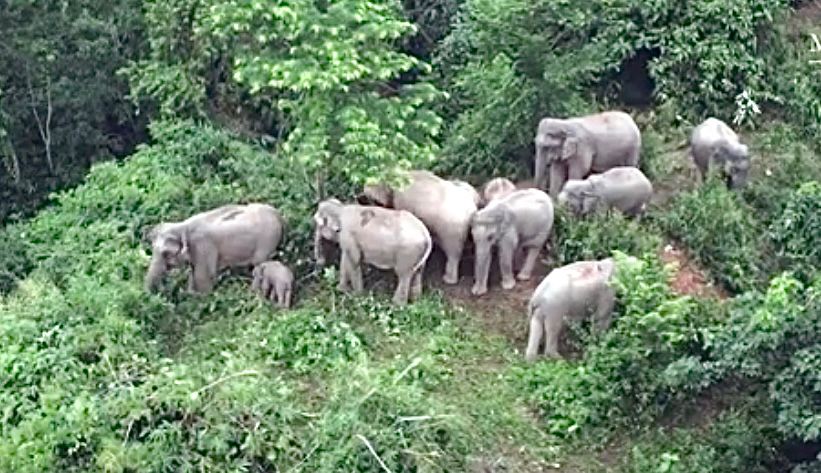
Deeply tied to seasonal environmental cues. In the Western Ghats, elephants typically move from wet evergreen forests to deciduous ones during the monsoon. Crop-raiding peaks temporally during the jackfruit/mango season (May–September) and the paddy harvest (September–December).
How They Migrate:
Led by the oldest, most experienced matriarch who uses her extensive long-term spatial memory (stored in a highly developed hippocampus) to navigate to water and food across hundreds of kilometers. They navigate via an exceptional sense of smell (detecting water up to 19 km away), infrasound communication, and physical trails carved over generations.
## 2. Core Drivers of the Local Crisis
Habitat Fragmentation: Major roads, power lines, and expanding settlements have severed traditional migratory corridors, boxing wild animals into isolated forest patches surrounded by farms.
The Attraction of Agroforestry
Private coffee estates mirror natural forests with canopy shade and irrigation ponds, but offer vastly more nutrient-dense, high-calorie food sources like paddy, bananas, and jackfruit.
Behavioural Adaptation
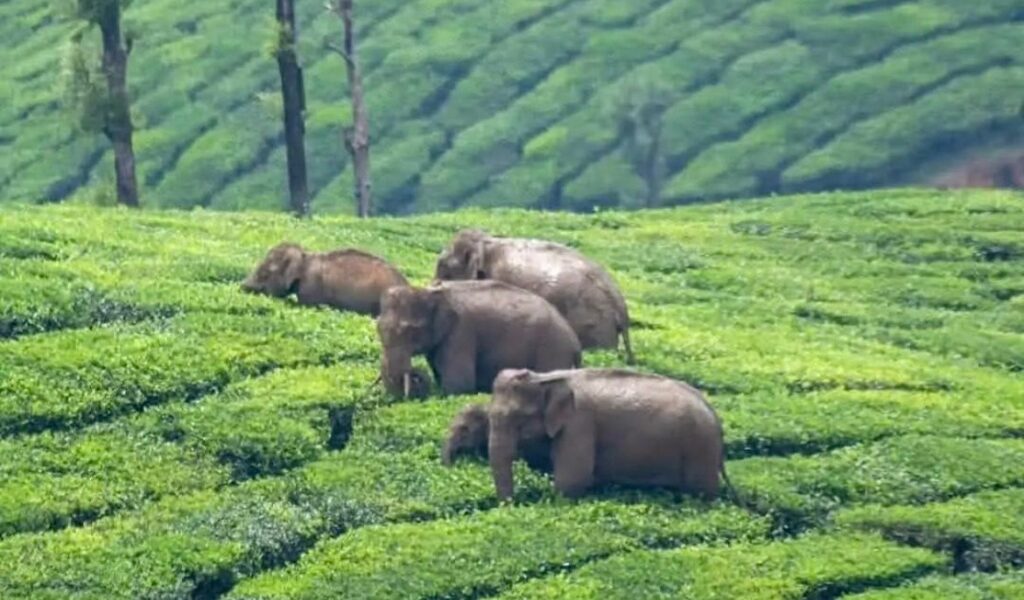
To avoid humans, intelligent herds have shifted to nocturnal foraging, using dense coffee estates as daytime “refuge.” This creates an invisible, high-risk overlap where laborers and elephants cross paths unexpectedly.
## 3. The Human Toll & Institutional Failures
The crisis causes an average of 5 to 6 human deaths annually in Kodagu, primarily involving estate laborers encountering elephants during poor visibility hours (6:00 AM–10:00 AM and late evenings). This fuels deep community trauma and retaliatory hostility. Public anger is compounded by specific systemic failures within the Forest Department.
Flawed Physical Barriers Elephant Proof Trenches (EPTs) silt up during monsoons and are rarely maintained. Solar fences are left broken for months, and intelligent elephants easily bypass them by pushing non-conductive logs onto live wires.
Commercial Timber Monocultures
For decades, the department promoted revenue-generating teak and eucalyptus plantations. These block sunlight, suppress undergrowth, and offer zero forage value, effectively engineering a food shortage inside reserves like Nagarahole.
Resource and Frontline Crunches
Rapid Response Teams (RRTs) and forest guards are severely depleted, overworked, and crippled by budget delays—even struggling to secure immediate funds to feed captured elephants or pay handlers (mahouts).
Bureaucratic Red Tape Cumbersome processes mean ex-gratia crop and property compensation is slow and pays out a fraction of market value, breaking down community trust.
## 4. The Political Nexus & The Double Standards
The structural breakdown of the ecosystem is accelerated by a highly influential political-bureaucratic nexus treating critical wildlife corridors as real estate assets:
Eco-Tourism Proliferation
Well-connected individuals systematically convert land bordering protected reserves into luxury resorts and commercial homestays. Heavy concrete walls, electric fencing, and high-intensity night lighting act as dams that force migrating herds sideways into small farmlands and worker colonies.
Throttling Critical Corridors
Over 5,500 acres of forest land across Somwarpet, Madikeri, and Kushalnagar are locked in legal disputes. Wealthy encroachers use financial resources to stall eviction orders for decades and exploit state “regularization” schemes to legitimize massive holdings.
The Enforcement Double Standard
The Forest Department descends with swift eviction notices on small-scale farmers or tribal families who build minor structures. Conversely, enforcement machinery grinds to a halt via administrative delays and political phone calls when massive commercial plantations block historical migration tracks.
## 5. Paths Toward a Landscape Solution
| Initiative | Implementation Strategy |
Early Warning Systems (EWS)
Expand the Elephant Information Network (EIN) using local tracking teams, automated SMS/voice alerts, and mobile-operated flashing LED warning lights at known crossing points to eliminate fatal blind spots.
Upgraded Rail-Barricades Invest in fortified, permanent barriers constructed from discarded railway tracks along forest boundaries. While expensive, they are corruption-resistant and highly effective at stopping herds.
Habitat Enrichment
Restore inner forest ecosystems by aggressively clearing invasive weeds (like Lantana camara) that choke out native forage, planting wild fruit-bearing trees, and legally buying back narrow land corridors.
Direct Digital Compensation Streamline the ex-gratia payment system through direct digital transfers to eliminate bureaucratic delays, ensuring affected families do not bear the economic brunt of us conservation alone.
Yeshwant Kalappa is a member of Jabhoomi Charitable Trust.
Join our WhatsApp Group for News and Article Alerts



It was indeed an eye-opener for many who may not be aware of the seriousness of the human-elephant conflict. Those who have lost their loved ones would understand the pain and impact of this issue much better. I sincerely hope the government takes this matter seriously and takes appropriate action.
It is easy for people in cities to talk about encroachment, but for those of us who have had our properties for generations, the reality is very different. The issues have been presented very well, and I’m glad Yeshwanth has brought this to everyone’s attention so that common people can read, understand, and appreciate the need for a proper solution.
I have written many times on the growing Human- Animal conflict in kodagu, and it is encouraging to see CLN bringing this critical issue into the spotlight once again.
Kodagu has always been a land where people and nature co-existed with mutual respect. It is time to restore that balance through science, responsible governance and community participation rather than allowing this conflict to intensify further. Congratulations to CoffeeLand News for initiating this important conversation. I hope this series inspires authorities to act and encourages readers to become part of the solution rather than mere spectators.
The above link will be of interest to all residents of HEC areas.
𝘼𝙣 𝙖𝙣𝙘𝙞𝙚𝙣𝙩 𝙢𝙞𝙜𝙧𝙖𝙩𝙞𝙤𝙣… 𝙬𝙖𝙡𝙠𝙞𝙣𝙜 𝙨𝙩𝙧𝙖𝙞𝙜𝙝𝙩 𝙞𝙣𝙩𝙤 𝙤𝙪𝙧 𝙬𝙤𝙧𝙡𝙙… ”
I’m sharing one of the most moving stories —elephants journeying from 𝙈𝙖𝙣𝙖𝙨 𝙉𝙖𝙩𝙞𝙤𝙣𝙖𝙡 𝙋𝙖𝙧𝙠 juxtaposed against, elephants crossing the streets of 𝙎𝙖𝙣𝙠𝙖𝙡𝙚𝙨𝙝𝙥𝙪𝙧𝙖 in 𝙆𝙖𝙧𝙣𝙖𝙩𝙖𝙠𝙖, a bustling city now encroaching into the forest.
It’s beautiful, emotional, and a reminder of how urgently we need to protect their paths.
Reproducing an interesting insight from the Coorg Wildlife Society website:
CWS has taken up the responsibility for HEC mitigation. The organization is also part of the core committee on HEC formed on the directions of the Govt of Karnataka. Several recommendations have been made to the committee and field visits to conflict areas have been made with concerned officials.
Subsequently a number of discussions have been held to find practical solutions to the issue.
A proposal on Project Elephant for Kodagu has been made by the CWS. This will look at both HEC mitigation as well as conservation measures. We are under discussions with PCCF, Tata Coffee Limited and WWF to assist us to implement this project.
On the recommendation of CWS, a pilot project has been initiated by the Forestry College, Ponnampet to phase out Teak Monoculture.
There are so many matters in the Planet that we are yet to understand and take corrective action. The good news is that it is possible and absolutely necessary for humans to survive.
The use of simple though robust technology can be used to avoid human animal conflict if AI tools are used to track adequacy of food in animal habitats and constructively monitor their movement to minimise the risk of confrontation.
A garbage dump yard in the middle of an elephant corridor near Mudhumalai attracts elephants and other animals from the nearby forests in search for food. The dump yard has plastics and broken glass waste of an entire town of a population of about 50,000 people.
It is located on the Ooty highway in the Gudalur Municipality in Nilgiris district of Tamil Nadu. The land is privately owned and leased to the Municipality as a dump yard attracting wild boars, bears, bison and leopards from the adjacent Mudhumalai Tiger Reserve.
Now this is not an uncommon sight in townships bordering forests in Coorg – Sidapur, Kushalnagar and so on. How can humans not feel responsible for this mess??
Highly appreciate the article, “The point about ‘habitat enrichment’ and clearing invasive species is crucial. It’s frustrating to see how monocultures in reserves have backfired. If we want to move toward true coexistence, the focus must shift to restoring the biodiversity of our forests. This article provides a very clear roadmap for what that restoration needs to look like.”
Everyone glossed over the encroachment into our (once) sacred Devarkadus. These should be restored as they were safe havens along the elephant corridors.
Veneration of the gods and spirits has certainly not protected the forests they reside in. According to Jeevan Chinnappa, then Kodagu correspondent for the national daily, The Hindu, “Influential people encroached the sacred grove lands 15-20 years ago and converted them into coffee plantations. Today these lands have been regularised.” But this is not a recent phenomenon. Before 1956, when Kodagu became part of Karnataka state, sacred groves were often declared Paisari land, de-notified for plantation or housing. A survey conducted by the Department of Ecology, Environment and Forests, Government of Karnataka, in the early 1990s found that 45 per cent of the groves had been reduced to less than one acre. A more acceptable figure would be 2,550 ha or 2 per cent of the total forest cover of the state.
What Subbaiah has written is true – equally are the Forest Department equipped in terms of financial and Human Resources to manage a scattered number of Devarkadus?
It would ideally have been the responsibility of the Thakkas in the Ur, Keri, Nad to look after them – but for that the tenets of the Thakkame system should be accepted and respected. Not a tall order as these Devarkadus were invariably linked to a temple of worship with strict rules for entry,etc.
The biggest encroachers have been in Madikeri and Virajpet Taluks. How can “order” be restored?
It is wrong to think that the biggest encroachers are only in Madikeri and Virajpet Taluks. Even in Somwarpet Taluk encroachment has been rampant. Just last year the Forest Department recovered 18 Acres, which was encroached and planted with coffee in “1970” – https://timesofindia.indiatimes.com/city/mysuru/18-40-acres-encroached-land-recovered-in-tholurshettalli/articleshow/120738830.cms. Also, as per the Supreme and High Court Order the Government has to reclaim all the C and D Forest lands, but some organizations are creating hurdles and are not allowing the forest department to do their job, even threatening the government with "Naxalism" –https://www.newindianexpress.com/states/karnataka/2025/Nov/03/kodagu-farmers-protest-conversion-of-farmland-into-reserve-forests
Received this as a forward without any credit; great content – hence circulating excerpts:
– Available data further illustrate the scale of the challenge. India supports nearly 60% of the world’s wild Asian elephant population, with an estimated 30,000 elephants. On average, more than 500 people and around 100 elephants lose their lives annually due to human–elephant conflict across the country. These figures highlight that the issue is not simply about crop attraction but about managing shared landscapes where both people and elephants are under increasing pressure.
– Human–elephant conflict is fundamentally linked to habitat fragmentation, loss of traditional migration corridors, expansion of infrastructure, changing land-use patterns, invasive plant species, and declining availability of natural forage and water within forests. Scientific evidence from across India indicates that elephants often leave forests not because they prefer crops alone, but because ecological conditions increasingly compel them to seek food and resources outside their natural habitats.
– Any mitigation strategy must balance wildlife conservation objectives with the rights and livelihoods of local communities, who already bear a disproportionate share of conservation-related costs.
– Long-term success will depend on strengthening forest habitats, restoring elephant corridors, improving the availability of food and water within forests, implementing scientifically informed conflict-management strategies, enhancing early-warning systems, ensuring timely compensation to affected communities, and integrating conservation concerns into land-use planning.
– Ultimately, the debate is about creating a landscape where farmers can protect their livelihoods and safety, while elephants retain access to the habitat, food, water, and movement pathways necessary for their survival. Sustainable coexistence will be achieved not by addressing a single attractant, but by tackling the ecological and social factors that drive conflict in the first place.
In my view, elephant-related conflicts in Coorg have increased significantly since 2021. It is believed by many that the release of many captive elephants into the Jammamale forest area in Kerala following a court order may have influenced elephant movement patterns.
Earlier, it was uncommon to see wild elephants frequently entering and surrounding human habitations in Coorg. Today, such incidents have become increasingly common, posing serious challenges to the safety of people and their livelihoods.
As Coorg is already surrounded by reserve forests, it is time to consider long-term, science…based solutions. Establishing a protected elephant conservation area on the lines of the Bannerghatta Reserve Forest model could help manage elephant populations, reduce human..elephant conflict, and improve coexistence between wildlife and local communities.
Very valid observation about the release of elephants. This applies to the monkey menace too – from Mangalore and Kerala. This has already become a real problem.
A very thought provoking article. The answer probably lies in coexistence rather than conflict. Along with restoring elephant corridors and improving forest habitats, it may be worthwhile to study some of the nature based solutions that have shown promise elsewhere, such as beehive fences or buffer crops that elephants tend to avoid. They may or may not suit Kodagu, but they remind us that there are ways to gently reduce conflict without harming wildlife. On a different note, Indian Railways has shown how innovation and AI technology can help reduce elephant deaths on railway tracks. While that is a different challenge, it reminds us that keeping an open mind to ideas from elsewhere can sometimes lead to meaningful local solutions.
Perhaps the bigger lesson is that no single solution will work. Habitat restoration, scientific planning, community participation and learning from successful experiments elsewhere must all come together. These are just my thoughts, perhaps more from the heart than from expertise, and I am sure there are many better ideas waiting to be explored.
Well written and clear on issues thats leading to the conflict
Very well articulated. All issues are systematically covered. Need of the hour article for key actions!
I have two points to add:
1. Embed a chip in the body or ear of the elephant so that their movements are collated and displayed in key towns for the citizens to remain alert. It is like central traffic dashboard of elephant movement.
2. Educated all estate owners to plant lemon trees along the fence. Research says elephants do not like the smell of lemon and thorny plants. Also, lemon is a value added fruit for farmers.
Great write up!!
So well written. The elephants are in their own habitat the first place and we all know for the fact that we humans have encroached in to their territory.
Agree with Nanda Kishore – its the shrinking place and food in the forest which has driven them in to human habitats. And yet we still blame these pachyderms for all the mess created. The Forest department should create a win win situation such that human- animal conflicts reduce over a period of time.
A beautifully written and deeply humane piece.
What struck me most is that this is not really a story about elephants—it is a story about shrinking space. As forests become fragmented and ancient migration corridors disappear, both people and elephants are forced into impossible choices. Farmers lose livelihoods; elephants lose the memory routes their herds have followed for generations. Neither side truly wins.
Kodagu has always represented a remarkable coexistence of coffee estates, shola forests, wildlife, and people. Preserving that balance will require more than compensation after tragedy. It calls for restoring wildlife corridors, thoughtful land-use planning, and treating coexistence as a long-term commitment rather than simply reacting to the next crisis.
Thank you for bringing nuance, empathy, and dignity to a subject that is too often reduced to headlines. The future of Kodagu may well depend on whether we can protect both human lives and the elephant’s ancient right to roam.