

The shelving of the proposed 87.2 km Mysuru–Belagola–Kushalnagar railway line project marks the end of an ill-conceived and commercially unviable infrastructure plan; a defining chapter of people’s resistance, unity and unwavering love for the land. It was a time when the hills found their voice through the people, when men and women walked the streets together, repeatedly and tirelessly to protect what generations before them had nurtured.

The project was apparently sanctioned in Feb 2019 by the Ministry of Railways at an estimated cost of Rs 1854 Crs. The Union Budget 2022-23 had allocated Rs 1000 Crs for the project. Significantly, location survey, land acquisition and rail alignment surveys were conducted with the project appeared all set to be given the green signal. The history of this project suggests that it was conceived over a century ago to extend the line up to Madikeri, much like what happened in many hill stations like Ooty for the single-minded convenience of the colonial rulers.
The tension ridden days remain etched in memory – Coffee planters, daily wage workers, elders, students, homemakers, professionals walked with determined resistance. Women stood firmly at the forefront, carrying handwritten placards and purposeful resolve. Political identities dissolved, differences faded and Kodagu walked as one driven not by confrontation, but by conscience.
What began as concern soon grew into a relentless resistance. This was not an isolated protest or a momentary outcry, but sustained course of action built on repeated marches, meetings, memorandums and appeals. Despite fatigue and uncertainty, people returned to the streets again and again, refusing to let the issue fade to silence.
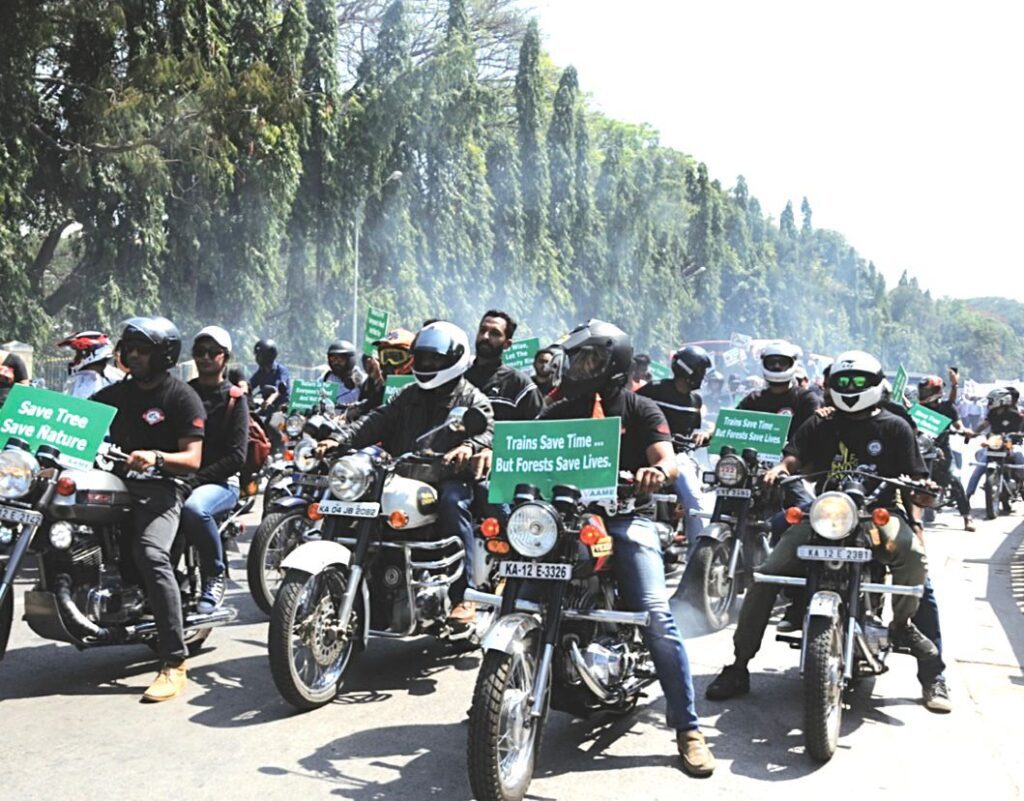
At the heart of the movement was a deep environmental concern. The proposed railway lines were designed to cut through dense forests, disrupt birds nesting habitats, fracture wildlife corridors used by Elephants and other wild Animals and weaken the fragile western Ghats ecosystem. Equally alarming were fears surrounding the Cauvery River basin and the obstruction to the natural flow of the sacred river. Residents and environmentalists warned that tunnelling, earth cutting, and vibrations could damage catchment areas, disturb groundwater flow and endanger the river that sustains not just Kodagu, but millions downstream. For the people, this was not an abstract fear, it was a question of survival, heritage and responsibility.
The struggle however was not without hurdles. Many protestors faced police scrutiny, legal notices and prolonged court proceedings. Ordinary citizens found themselves entangled in legal processes simply for raising their voices. The emotional and financial strain was heavy, yet the movement did not vapourise. Instead, these hardships strengthened the people’s resolve. The willingness to endure legal pressure for the sake of the land became one of the most powerful statements of the protest.
Environmentalists, activists, legal experts, elders, journalists and conscientious public representatives stood as protectors, lending strength, clarity and courage to the movement. Their support ensured that ecological truth and public interest were not overshadowed by haste or power. Their role deserves recognition and appreciation.
There are many prominent personalities who were involved in the opposition to this project, but if I have to single out the voice of one self-effacing personality, Jammada Ganesh Aiyanna, an earnest and dedicated son of Kodagu from my village who relentlessly joins in causes that affect the present and future of issues affecting Kodagu…”February 18th 2018 will always be etched in my memory for long. That was the day we organised the massive KODAGU AGAINST RAILWAYS rally in Mysore exhibition grounds. A mammoth and unprecedented crowd of 15000 protestors from Kodagu, Bengaluru and Mysuru congregated in protest against the Railway project. Now to see this protest derailing the Railway line to Kodagu brings immense joy to me for being a small catalyst in ensuring destructive and mindless projects are stopped entering my beloved homeland Kodagu.”
With the railway proposal now officially scrapped, the decision stands as a rare acknowledgement of public conscience. This is a firm reminder that development must respect geography, ecology and environmental realities. The streets have returned to the familiar calm but they remember the tireless walks, legal battles, and the unity forged through shared sacrifice.
At the same time, this moment serves as a clear warning for the future. Kodagu is not an open ground for unnecessary, ill-conceived proposals that threaten forests, river, wildlife and livelihoods…. In short, the Kodava identity. If such plans return, so will the people’s strength, wiser and united. We, the people of Kodagu, have shown that we will not relent when the land calls – Kodagu will always rise as one.
Join our WhatsApp Group for News and Article Alerts



This article took me back to those days through which we fought for the railway lines. Thank you Mamatha your article took me back to those days. Admire your passion for writing.
In addition to the protests and more importantly is articles such as this which gave wide publicity to the agitation and environmental damage that opened the eyes of the government. Thank you Mamatha, as usual the facts are beautifully projected.