The fact that people here have built their lives on the principles of brotherhood, harmony and equality is a model for the country. Children should understand these values during their school years and shape their future accordingly. With this objective, the Karnataka Kodava Sahitya Academy is introducing ‘Kodava Pusthaka Pattaya’, a new initiative to be established in educational institutions, private residences, associations and societies. The initiative will help keep Kodava literature alive and popular, said Ajjinikanda C. Mahesh Nachaiah, President of the Karnataka Kodava Sahitya Academy. He was speaking after inaugurating the Academy’s 17th Kodava Book Depository at Sri Shantamalla Swamiji Educational Institution at Shree Arameri Kalancheri Matha on the occasion of the 29th Gurusmarana Day of the institution’s founder, Shantamalla Swamiji.
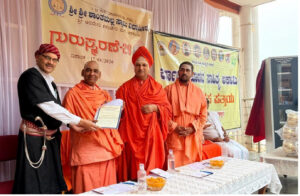
The Book Depository was unveiled by Mathadhish Sri Shantamallikarjuna Swamiji. On the occasion, the Academy presented a registration certificate to the Principal of the institution, Ballachanda Kusum Tito. The educational institution also presented a cheque for Rs. 10,000 to the Academy on the occasion of the establishment of the depository.
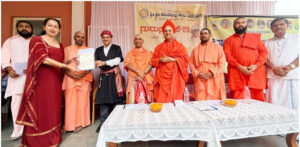
The Academy also handed over its works to the families of Allappira and Mandetiri through the Mathadhish.
Righteous thinking is the beginning of a developed India: Shantamallikarjuna Swamiji
Speaking later, the head of the educational institution and Mathadhish, Sri Shantamallikarjuna Swamiji, said the Kodava language serves as a means of social communication and makes it easier for people to integrate with society. It has also enabled people to earn the love and affection of everyone. He said the Kodava language is ancient and that the important festivals of Kodagu, which has an agriculture-based culture, stand as a testament to the region’s rich culture and traditions.
Education must go hand in hand with culture: Mallesh Swamiji
Mallesh Swamiji of Torenuru Math said education should not be limited to marks alone. While teachers appreciate children who score high marks, he said, it was equally important to develop good values and culture among them.
Children may score high marks, secure good jobs, leave the country, attain high positions abroad and earn substantial amounts of money. But what is the use of such education if they remain disconnected from the culture of their homeland and are unable to be with the parents who educated them during their final days? he lamented.
He said there were monastery properties in several parts of Kodagu and that efforts needed to be made to preserve them. He praised the Swamiji of Arameri Math as a ‘Kodava Swamiji’ and said that he was aware of the Kodava language and the lives of the people of the region.
Children should understand the different cultures and ways of life of the regions to which they belong, he said. Parents should teach them about these traditions, while teachers should explain their importance. Such education would help ensure that children developed an unwavering love and devotion towards their hometown, land and country.
Mahant Shivalinga, Basavalinga Shivayogi Swamiji, Nischal Niranjan Deshikendra, Muttinakante Swamiji, Academy members Napanda Ganesh, Panikuttira K. Kuttappa, Kambeyanda Deena Bojanna, Chotteyanda Sanju Kaaverappa, Ponnira U. Gagan, Kudiyara Kaaverappa and others were present on the stage.
Join our WhatsApp Group for News and Article Alerts