

Rigid Aerides

Date:

Comments:

Rigid Aerides (Aerides Ringens), also known as the Open-Mouthed Aerides is a miniature to small orchid growing on trees native to the Western Ghats and Eastern Ghats of India, S. Lanka and the Andamans. It has a short stem carrying rigidly leathery narrow leaves. The plant blooms in the spring and summer on an axillary, stout, erect to ascending, rarely branched, dull purple, furrowed inflorescence, up to 20 cm long. The inflorescence is densely many flowered, carrying fragrant flowers white to pink to pale purple flowers.
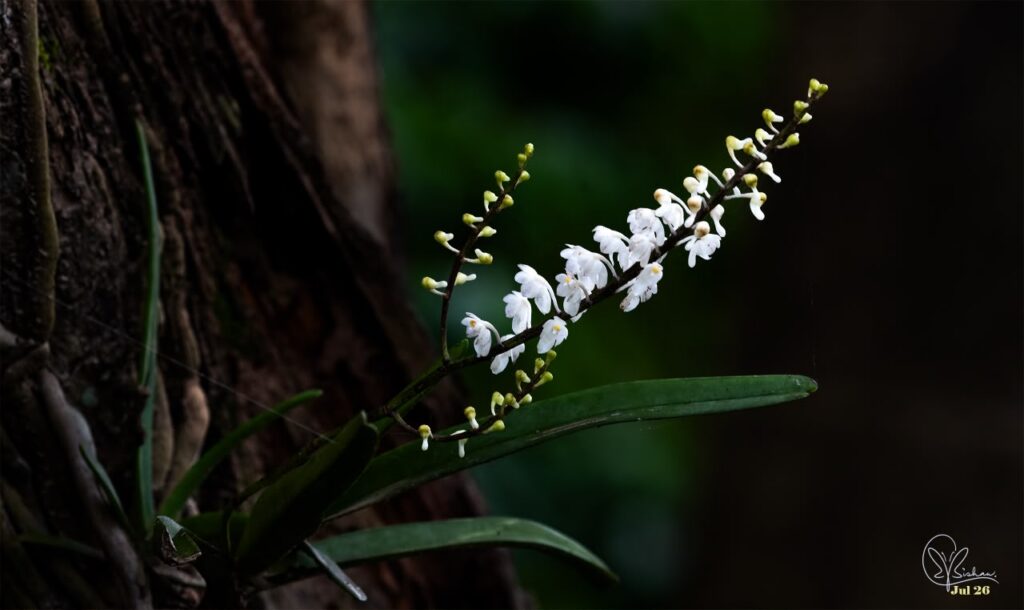
The genus name Aerides comes from the Greek word aer (air/wind), pointing out the epiphytic growth habit. The specific epithet ringens means “open-mouthed”, describing the distinct shape of its flowers.

It thrives naturally in tropical moist deciduous forests, semi-evergreen forests, and savannah areas at elevations ranging from 100 to 600 meters, often anchored high on tree branches.


Shot in Coorg Nikon Gears, July 2026 © Dr.Bishan Monnappa

Join our WhatsApp Group for News and Article Alerts

CLN Policy on Comments:

CLN reserves the right to edit or not publish any comment, especially if it contains offensive or inappropriate language.

LEAVE A REPLY

Please enter your comment!
Please enter your name here

The maximum upload file size: 100 MB. You can upload: image, audio, video, document, spreadsheet, interactive, text, archive, code, other. Links to YouTube, Facebook, Twitter and other services inserted in the comment text will be automatically embedded. Drop files here

Recent Comments

Subscribe to CLN Print Edition

spot_img

More Posts
Related

The Pilibhit Raja

Pilibhit, a magical place at the foothills of the...

CPA Pushes for Elephant Sanctuary as Karnataka Approves funding for 53.20 Crore Project

Karnataka to Establish 20 Sq Km Centre for Conflict-Prone...

Operation Elephant continues; another wild elephant captured in Yadur 

More than 200 personnel led by Sugreeva participated in...

Mr. Mini

The crimson-backed sunbird or small sunbird (Leptocoma minima) is...