

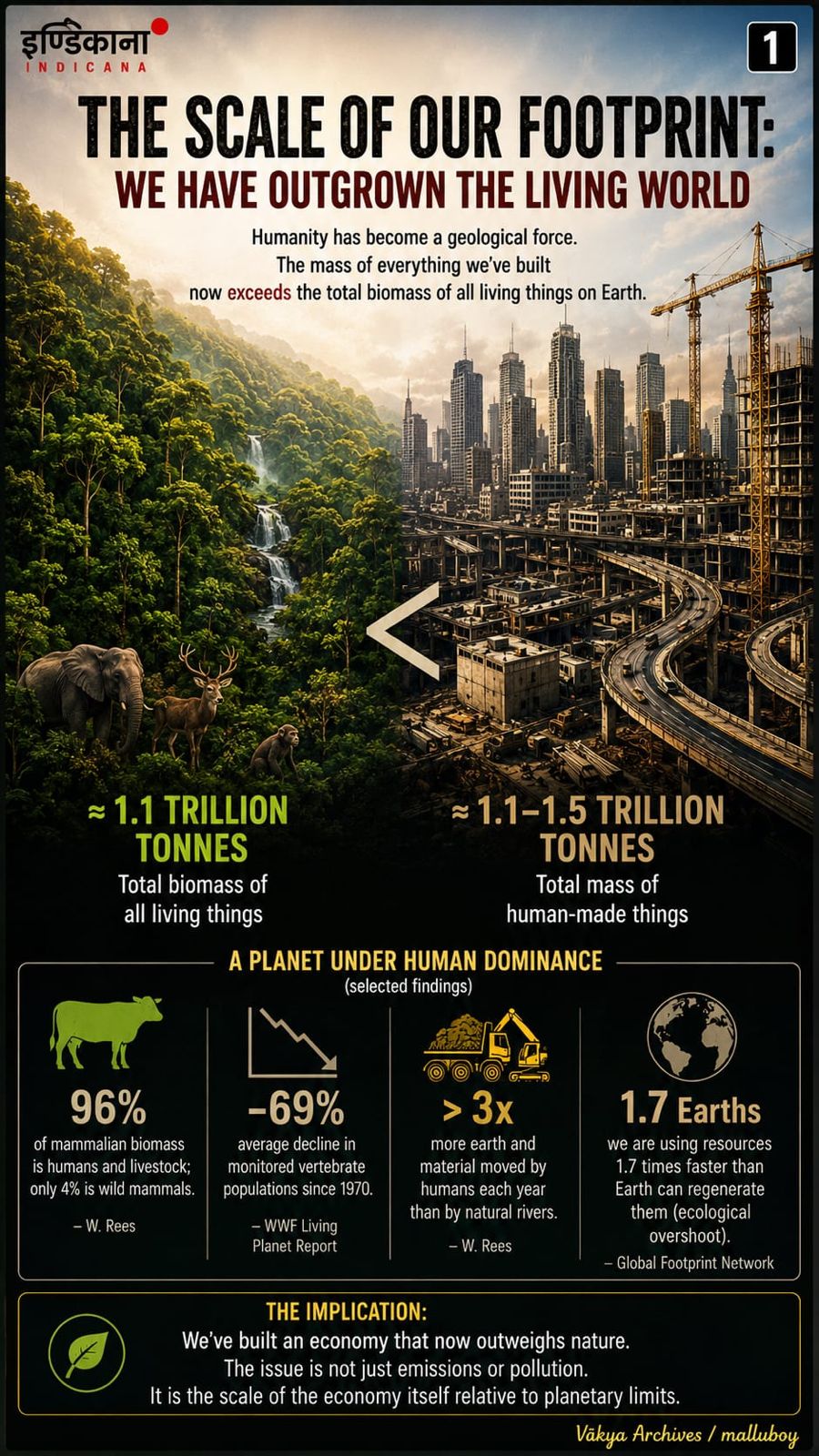
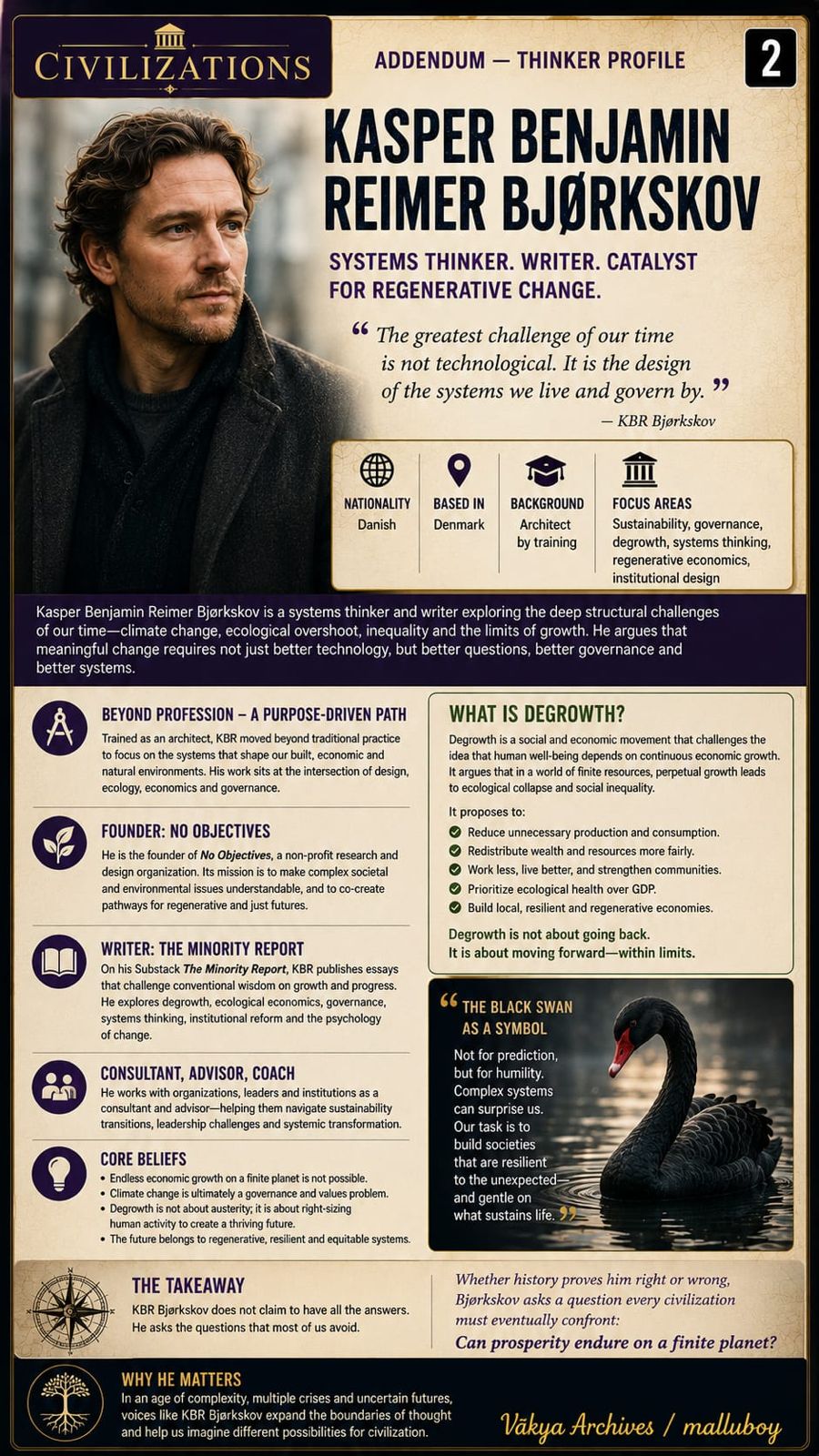
A hugely talented world citizen and avid contributor to CLN, Kishore has converted the topic of humans having outgrown the living world and it’s consequences in the ensuing two visuals. The crisis we face today is well beyond a dreaded inflection point and if we do not act, Nature is likely to press the reset button with devastating consequences.
In our own District, we need to urgently address the impact of climate change, environmental degradation, uncontrolled tourism and seriously depleting resources (especially water). There is no point in complaining what the government has to do – it is best that action is taken on a private public partnership basis. The Swacha Kodagu Sundara Kodagu Abhiyana coordinated through COHERA with full involvement by the District Administration was a vindication that similar projects with a more detailed agenda can also executed. It is upto the various community institutions to come forward and take the initiative. – CLN Newsdesk
N. Kishore — Private Banker, JPMorgan Chase. Numbers by day, Narratives by Night. History buff and restless wanderer, mapping old empires onto new journeys.
Devoted husband, grandfather. Practitioner of tactical silence. Quiet fortitude in reserve.
Join our WhatsApp Group for News and Article Alerts



A timely and thought- provoking article. It rightly reminds us that climate change, environmental degradation, reckless tourism, and the alarming depletion of water resources are no longer distant threats . They are realities confronting kodagu today. Kudos to CLN for consistently bringing these critical issues into the public domain.
Native tribal communities tend to connnect with their natural surroundings in a more meaningful manner than the city bred citizens. This is true of the Native Americans, African Tribal communities, Aborigines and closer home the North Eastern States, Ladakh, vast number of forest tribal communities and of course our own ancestors who created the richest density of Devarkadus and a protocol or rules for the hunt. I would like to reproduce a Native American quote:
“We must protect the forests for our children, grandchildren and children yet to be born. We must protect the forests for those who can’t speak for themselves such as the birds, animals, fish and trees.” - Qwatsinas (Hereditary Chief Edward Moody), Nuxalk Nation
The article and comments contain eye-opening data:
– Humans and our livestock are now 96% of all mammal biomass. Every wild mammal left, every elephant, whale, bear and mouse, shares the other 4%.
– Our footprint already overshoots what the planet can regenerate by roughly 78%. The arithmetic that follows is a contraction of the human enterprise somewhere near 45%.
What are we waiting for – the land mass is finite.
A very thought provoking article. I feel the solution begins with reducing what enters Kodagu, not just cleaning up what is left behind. The administration could bring together shop owners, homestay owners, taxi drivers, tour operators and local communities for regular awareness sessions led by respected community elders. Simple initiatives like encouraging cloth or paper bags over plastic, refillable drinking water, responsible waste disposal, and positive signboards that gently remind visitors they are guests in Kodagu can create a lasting change. Small local regulations and consistent awareness can be more effective than occasional clean up drives.
Every visitor, every business and every resident has a role to play. When the whole community speaks with one voice, visitors are more likely to respect the place and its culture. These are just my thoughts, perhaps driven more by emotion than expertise, but I truly hope Kodagu remains as pristine for future generations as many of us were fortunate enough to experience.
What has the world come to?
It is no longer whether the Earth can sustain our lifestyle, but the inevitable outcome – are we willing to change it before Nature makes that decision for us.
Outstanding rendition of visuals – an unique way of presenting knowledge and
messages in a creative manner.
In this mechanical, metallic and combustible world of work we currently operate in, we need a little more earth, air and water to balance the elements of our thinking to this fire approach we have to life. After all, “The frog does not drink up the pond in which he lives.” Native American Proverb.
There is a greater awareness that is building up leading to a quiet movement of consuming less. That is the only way out. Hope that grows.