

CLN regularly prioritizes the publishing of articles on Kodava culture and history, tourism, environment, sports, armed forces, agriculture – issues that affect the future of Kodagu and its people. One of our Star contributors, Mamatha Subbaiah has once again written a very thoughtful article on the ancient ancestor propitiation ceremony during this important period following Tholiyaar Pathh. Our reverence to our ancestors and more specifically our Karonas (founding fathers) precedes the arrival of any of the worship of Gods. This is a very important aspect that Kodavas should bear in mind.
Readers are requested to send small writeups with images of their respective Karona Kodupo ceremonies in their respective Okkas’ Ainmanes. A gentle reminder that the Okkas’ Aine Mane can only be in Kodagu, as the Kaimadas are located contiguous close to the Aine Mane. Any attempt to relocate Aine Manes is therefore retrograde to our way of life. – CLN Newsdesk
As the golden glow of Changrandi fades, Kodagu quietly steps into a period of deep spiritual awareness for ten days. Tholiyaar Pathh, which was recently eloquently written about by Paradanda Subramani and marks the 10th day, is believed to be highly auspicious with well-established prayers at the Paadi Igguthappa Temple – a day of seeking blessings for a bountiful harvest to sustain the entire community and other living creatures of Pommale Kodagu for the coming year. In the traditional Kodava way of life, each ritual finds its roots in Nature and ancestral worship.
While the Aine Mane houses the spirit of the founding ancestor, the kanni kombre is where offerings and prayers are made to the Karona. Some distance from the main house, facing East is where the basic structure of the Kaimada is located. In particular the Karona is venerated here.
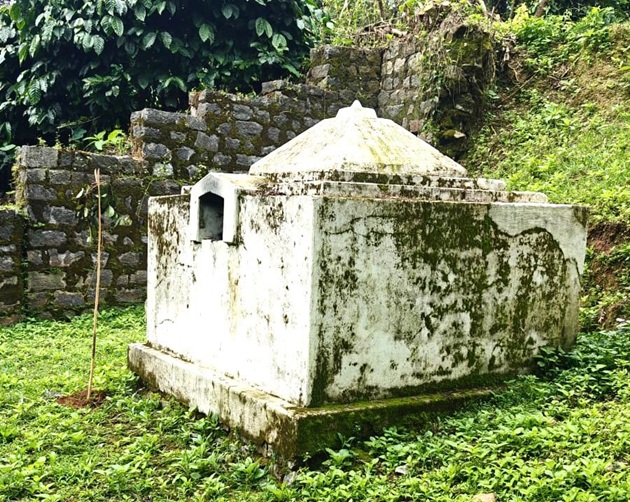
Kaimadas have managed to retain the essence of Kodava belief in the unchallenged status of the founding ancestor as the source of life, guiding spirit and protector of the clan.
Lamps are lit and food offerings (meedhi) are made at Kaimadas at every major Kodava festival – Keilpodh, Puthari and Changrandi. Songs of the history of the okka are sung, recounting and praising the glorious deeds of the ancestors, their wisdom and farsightedness that created and sustained the clan.
In essence, links are revived with the founding ancestor, and his or her continued blessing and protection is sought. In addition, at the ancestor propitiation ceremonies, once again the songs of the ancestors are sung and in some instances animal sacrifices are made.
Meedhi refers to the offerings made to the departed souls – a combination of Liquor, meat and a variety of savouries prepared with devotion. These offerings are placed before the sacred lamp (Thook bolcha) in the Ainmane, and at the Kaimada. The act is not one of ritualistic compulsion, but of gratitude – an acknowledgement of the generations that built the family’s strength, culture and honour.
In an age where traditions fade and lifestyles change, the sanctity of meedhi must be preserved. It is a reminder that honouring ancestors is not merely a ritual, it is the of the reinforcement of the Kodava identity.
(with due acknowledgement to The Vanishing Kodavas)
Join our WhatsApp Group for News and Article Alerts



Pray every kodava reads this !!
Kudos to the team 👍🙏🙏👏👏
What a beautifully written and insightful piece! It captures the essence of Kodava spirituality and the deep connection between nature, ancestors, and community. The way you’ve described Tholiyaar Pathh, the Meedhi offerings, and the sacred role of the Kaimada truly brings to life the spirit of Kodagu’s traditions. These rituals are not just acts of worship, but profound expressions of gratitude — reinforcing our identity and reminding us of the wisdom of our ancestors.
In today’s fast-changing world, preserving and sharing such practices is vital to keeping our heritage alive. Your words serve as both a tribute and a gentle call to younger generations to understand, honour, and carry forward the values that define who we are as Kodavas. Thank you for such a thoughtful portrayal of our timeless culture.
Nice article by Kodandera Mamatha Subbaiah. Meedhi is offered at the Kaimada and BaliyaMane on all the three main festivals and on all important functions at the AineMane. Here is an important snippet of information:
About 75 years ago, Karona Kodupo used to take place in the Adare month – around June 15th. This was calculatedly done prior to Kakada as everyone was usually fully stretched with work in the paddy fields. One has to marvel at the timely planning of social engagements so that it did not disrupt the Agricultural work commitments. Needless to say that all of this wisdom has been discarded in the current times with Nammes taking place with abandon!
It must be noted that Thaamane women go to their respective Okka AineMane to offer Meedhi after Changrandi, but before Pathalodhi. It was in sum and substance a theertha puja. From a very practical standpoint, in more recent times, to accommodate families getting together – the Karona Kodupo also started to be done around the same time…. a mere act of convenience for all concerned.
These are important articles and Mamatha Subbaiah does a good job in articulating the importance of these important customs that connect us with our Ancestors. The simplicity of Kodava customs are truly remarkable – subsequent external influences have added complexity to an otherwise simple way of life.
Two observations:
– it is not uncommon to read Kodava Samajas in cities requesting the Kodava members to treat the Samaja as their AineMane. This is a completely out-of-place statement. AineManes are the abode of our Karona and the Kaimada is always adjacent (both structures always East facing) – they are inseparable and cannot be anywhere other than in Kodagu.
– in the same vein, an AineMane was reportedly relocated to DakshinaChitra Heritage Museum near Chennai. In what moment of wisdom this was done is a mystery, especially since many well known custodians of Kodava culture were involved.