

Paradanda Subramani Kaveriappa is a gifted orator and custodian of Kodava Culture. For generations the Paradanda family have been tasked with keeping the customs and traditions at the Padi Igguthappa Temple pristine and relevant. While being extremely proficient with such knowledge, his humility shows when he unhesitatingly seeks external assistance from elders in the community to validate his thoughts. Subramani does his best to elegantly recollect the customs for the Kodava community.
– CLN Newsdesk.
In keeping with Kodava tradition, from the sunrise on the day of Kani Puja – which is essentially performed in Kodava households following the Teerthodbhava at TaleKaveri, the tenth sunrise marks the sacred day known as Pathalodhi, also referred to as Tholayaar Pathh. Coincidentally this event takes place a few days before the rising full moon – considered positive by the Kodavas as it signifies growth. This tenth day is therefore considered very auspicious for undertaking any good or new initiative, as it is believed that any work commenced on this day will be blessed by the Divine Force in an enduring manner. Typically piercing of ears, lagna patrike, marking the site for construction of houses, House warming… are undertaken on this date. Many Kodavas observe Karona Kodupa on this day in Okka AinManes.
A similar practice takes place in Tulunad.
At Paadi, the Paradanda family traditionally is given the responsibility of performing the Tholayaar Patth Aaradhane on Monday, 27th October 2025.
On this occasion, special poojas, Tulabhara Sevas, and Maha Poojas will be performed. An interesting aspect is that at the end of the ceremonies, after the circumambulation of the Temple, the idol of Igguthappa is brought to the South-East facing corner under the sacred (milk bearing) jackfruit tree – symbolically facing His Sister Pannangala Thamme, as well as generally considered the Gulliga Sthaana.
There are other details relating to certain agricultural practices that are of no further significance due to the advancement of veterinary science and is superficial, hence not being mentioned.
Devotees are requested to visit the Paadi Sri Igguthappa in large numbers to the Temple on this auspicious occasion. It is important to keep up with traditions that make us Kodavas and Kodava Bashikas who we are.
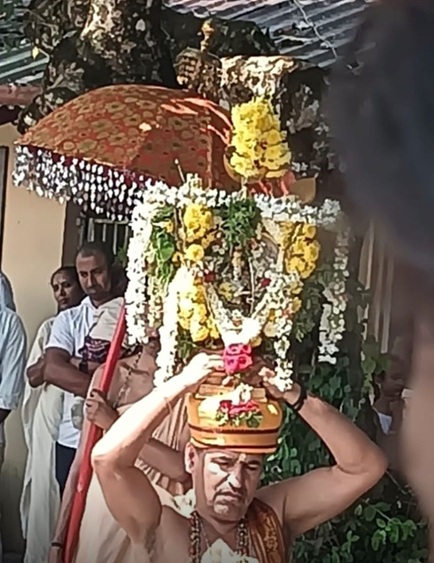
THE DEVATHAKKA’S PRAYER AT THOLAYAAR PATHH
The prayer commences by inviting the devotees who offered Thulabara Pooja to the Deity in the morning. As a matter of interest, Thulabara is open for all, irrespective of their caste.
Towards the end the Devathakka invokes Igguthappa’s blessings for the entire land of Kodagu; His kindness to influence the weather Gods from extreme weather – rain or sunshine, so that there are bountiful crops with enough water to survive comfortably; lush canopy of greenery with abundant produce in the fruit bearing trees so that even the pranipakshi, ettha kadchi and mankind can survive comfortably.
Another very important and interesting aspect of the prayer is that forgiveness is sought if any rituals or Tantra or Mantra is erred by the priest or if the chandekol maaraya missed a beat. Similar forgiveness Is sought for any errant occurrence by the person who bears the divine umbrella, the bearer of the chamara and chatri to be forgiven and last but not the least – the prayer ends with an abundant supply of oil for the sacred lamp and the padiyakki which is served as naivedhyam to the Deity.
Finally, in Kodava culture.. there is no overbearing influence of mantra and tantra when praying before nellakki bolcha in kodava thakk. This equates us as “one” (equal in stature) in all our prayers – even our Guru Karonas and the Gods are addressed in first person. Significantly the Gurukarona’s image is etched in the first step of Namaskara Mantap where the Devathakka stands and prays to the Deity. The stark simplicity and rustic yet sophisticated nature of our customs is remarkable and it is our duty to understand, practice and nurture it for future generations.
Join our WhatsApp Group for News and Article Alerts



A good post from Dr Cheppudira Kushalappa.
Very nicely written. It is articles like this that will put forward the true picture of our tradition. There are many misconceptions about the introduction of the brahmin into our culture.
The Tholiyaar Pathh – the 10th day after Changrandhi holds deep significance in the Kodava cultural and spiritual calendar. It is considered one of the most auspicious days of the post Changrandhi period, rich in symbolic meaning and ancestral reverence.
A heartfelt appreciation to CLN for encouraging learned elders to bring to light the essence and significance of Tholiyaar Pathh.
Through these thoughtful informative features, you help in preserving a tradition that every Kodava should be aware of. Head to Igguthappa Temple if possible and partake in the sincere conduct of this event and Puja.
It takes a very clear mind to communicate the essence of rituals and it’s consequences. Without any doubt, all our three key festivals are linked to the cultivation of rice/paddy.
There have been many heartfelt appeals to all the residents of Kodagu to cultivate paddy – it’s our legacy, it is central to our culture and environmentally an absolute necessity.
Thankful to Subramani to convey the meaning of such important events based on which important activities take place in our calendar for the year – including social functions.
Many of the subtleties of Pathalodhi Namme has been very nicely put across by The Devathakka, some of which has come to light for many of us only now through such articles.
It is equally important to note that there are differences in conventions and practices across Kodagu even within the community starting with language, food habits and certain customs. Notable is the lack of colourful Theres in the North where the focus is on Ajjappas’. But one thing is for sure that Karona Kodupo practice exists everywhere alongwith the three main festivals.
Every attempt should be maintained to retain the diversity. To some extent it can be argued that the Pattola Palame (PP) is being attempted to be made the Bhagavathi Gita equivalent for Kodavas, which is incorrect. PP was at best a good and sincere compilation by Nadikerianda Chinnappa of the practices in NaalNaad and surrounding areas; there are many different practices that vary in content and also there is an errant Brahminical influence in PP, which Kodavas must be aware of.
A wonderful and enlightening article that beautifully highlights the depth and meaning of our Kodava traditions. The Pathalodhi Namme rituals truly reflect our deep rooted faith, simplicity, and the harmony we share with nature and our deities. Grateful to Paradanda Subramani Kaveriappa for keeping these sacred customs alive and helping us reconnect with the essence of Kodava culture. Heartfelt thanks to CLN for publishing this meaningful post and continuing to preserve and promote our rich heritage. 🙏