

HAPPY TEACHERS DAY
“If a country is to be corruption free and become a nation of beautiful minds, I strongly feel there are three key societal members who can make a difference. They are the father, the mother and THE TEACHER.” – Dr APJ Abdul Kalam
Extending this thought process, teaching is a a very noble profession that shapes the character, caliber, and future of an individual. If people remember a good teacher, it is considered a huge honour for them. And that’s true of most professions.
Kodagu’s women teachers were the pride of the land that shaped the discipline, work ethic, cleanliness and the character of their area of influence. In the past, every school was blessed with Kodavathi teachers making a significant contribution. Consequently, the community was deeply involved in the school and its activities. It is also common knowledge that most Government Schools are built on land donated by Kodava families. Sadly this tradition has been on the wane and very few teachers in government schools today are from the Kodava community.
A few years ago we met an exceptional lady Ratna Chermanna who setup Ankur Public School with unstinted support from her husband Raja. Setting up a school of this scale was not an easy task for them. They had to face many challenges, more aptly described as battles. APS attains its eminence owing to the collective actions, thoughts and aspirations of Raja and Ratna Chermanna. It is a source of great pride that their school has completed 25 glorious years.
During our conversations it transpired that any attempt to capture her journey other than in her own words would rob the intensity of the experience. The article that follows is in Ratna’s own words – a truly exceptional journey, moving from strength to strength.
Education is a subject matter that CLN writes about regularly https://clnews.in/2024/09/09/a-historical-perspective-to-education-in-kodagu-19th-20th-century/
– CLN Newsdesk
I thank CLN for inviting me to write about my journey as a teacher and educationist, and for giving me the opportunity to share my experiences.
It gives me immense pleasure to pen my journey as a teacher – a profession I embraced by choice and one that has remained my greatest passion.
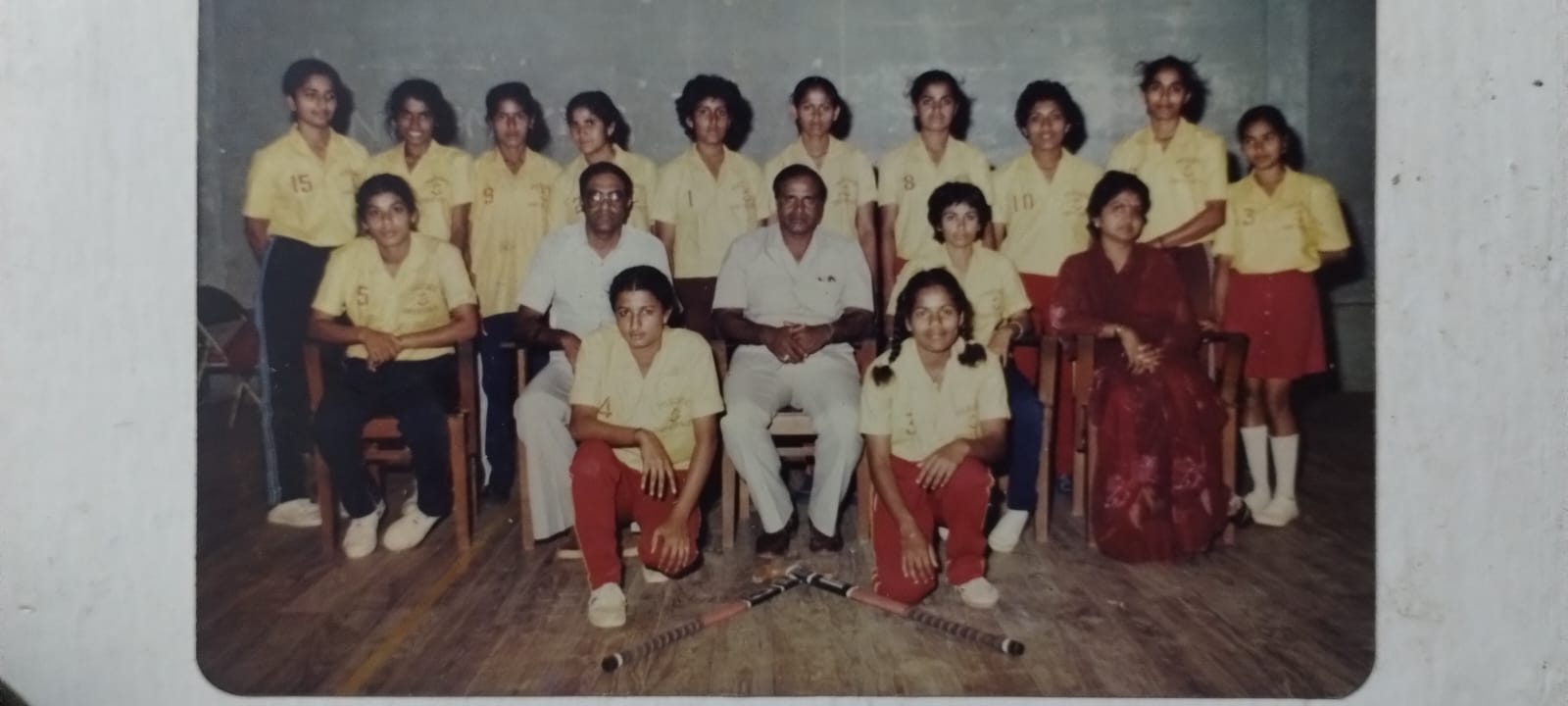
Even during my school days, I eagerly accepted every opportunity to teach my juniors and classmates. My love for mentoring continued through college, where I served not only as a student but also as a coach for my junior sports teams.
These experiences strengthened my belief that teaching is not merely a profession but a calling.
After completing my Diploma in Computer Science, I began my career as a Computer Trainer, conducting classes after my regular sessions. Upon completing the three-year diploma, I continued with computer education in institutions across Coorg.
Marriage did not interrupt my journey. With the unwavering support of my husband, in-laws, and family, I continued training young minds in my locality. I also undertook computer education projects for several schools and had the privilege of working on government projects under Aptech Computer Education.
As I interacted with children and parents, I realized that the conventional education system was not adequately preparing students to compete with their peers in metropolitan cities. This realization inspired me to explore innovative methods of teaching. In an era without social media, I travelled extensively, met educationists, and read books to understand progressive educational practices.
Driven by this vision, I converted my residence into a Play Home in 1997 – the first of its kind in Napoklu. Initially, convincing parents to accept this new approach was challenging. Instead of beginning with the alphabet, I introduced children to phonetic sounds. Instead of repetitive writing, I focused on developing motor skills through lines and curves. Adapting to this new methodology was a learning process for me as well. Gradually, parents appreciated the Play Way method, and their encouragement inspired me to establish a Montessori Kindergarten.
This journey was not without obstacles. Competition from other institutions even resulted in legal challenges. However, with the unwavering support of my family, we persevered. Although we initially started a State Board school, our vision was always to provide quality education through the CBSE curriculum.
After extensive discussions with educationists, I became convinced that CBSE offered the best opportunities for holistic learning. The process of obtaining affiliation was long and demanding. Countless visits to government offices in Madikeri, multiple inspections, and extensive documentation tested our determination. The greatest challenge was obtaining the No Objection Certificate (NOC) from the Karnataka State Education Department. By God’s grace and with persistent effort, we received the NOC, paving the way for CBSE affiliation.
Further inspections followed, and the officials appreciated our vision of establishing a CBSE school in a remote rural area, believing it would transform educational opportunities for village children. Despite continuous opposition from competitors, we remained steadfast. Finally, our school received CBSE affiliation from New Delhi.
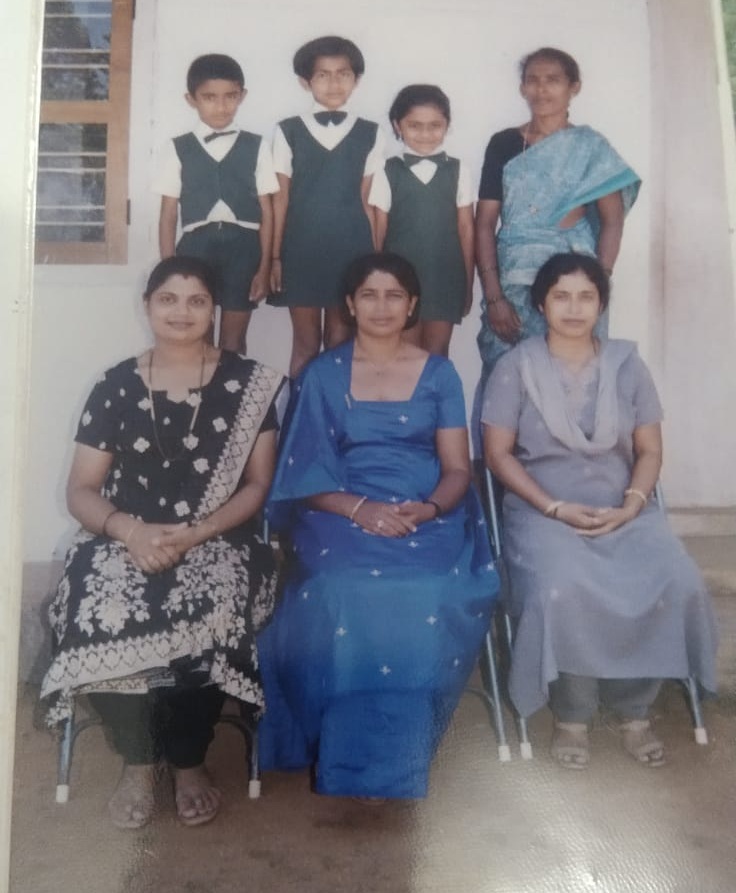
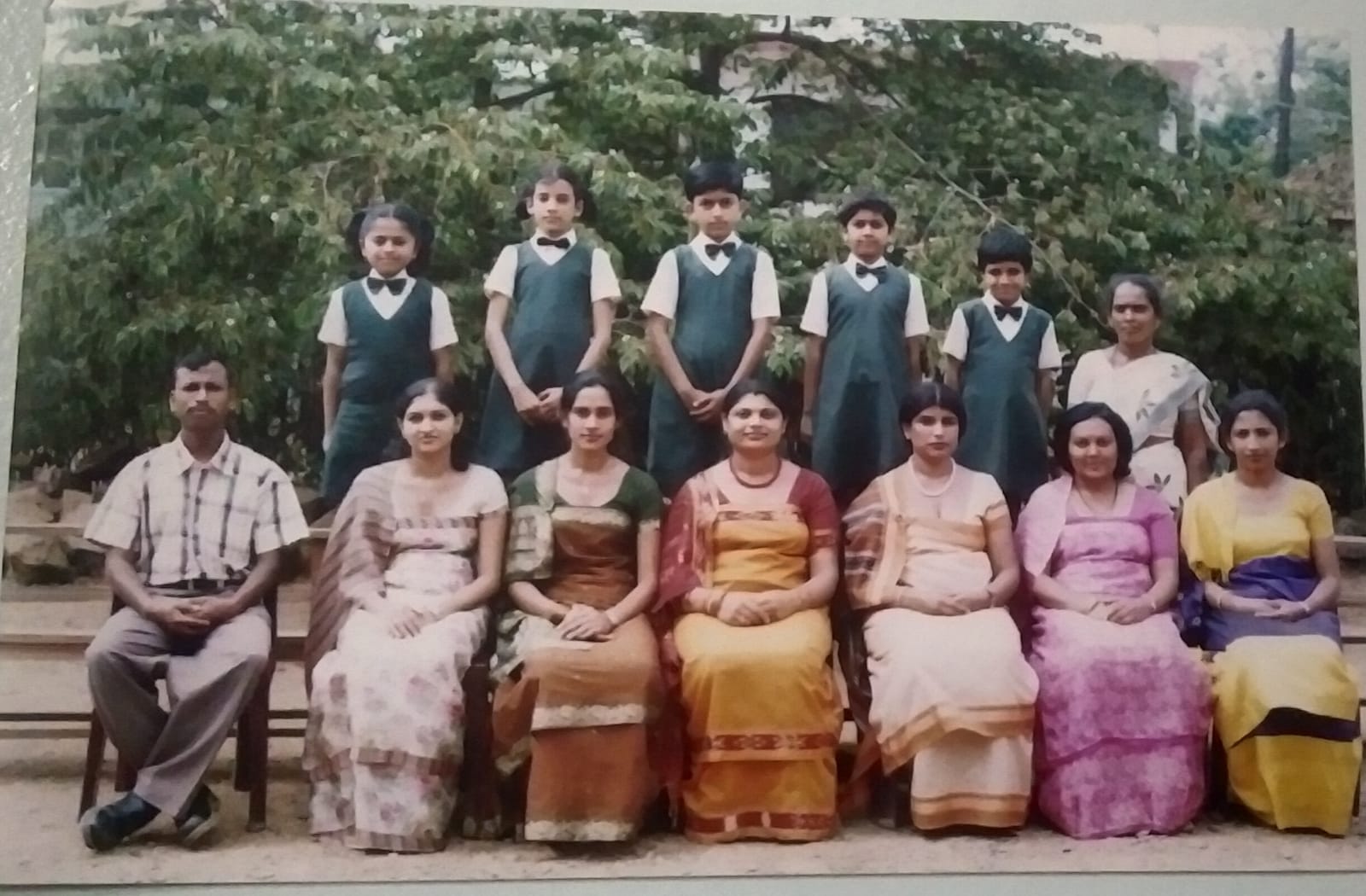
I started the school with just three students and then it grew steadily, it has since grown into a thriving centre of learning.
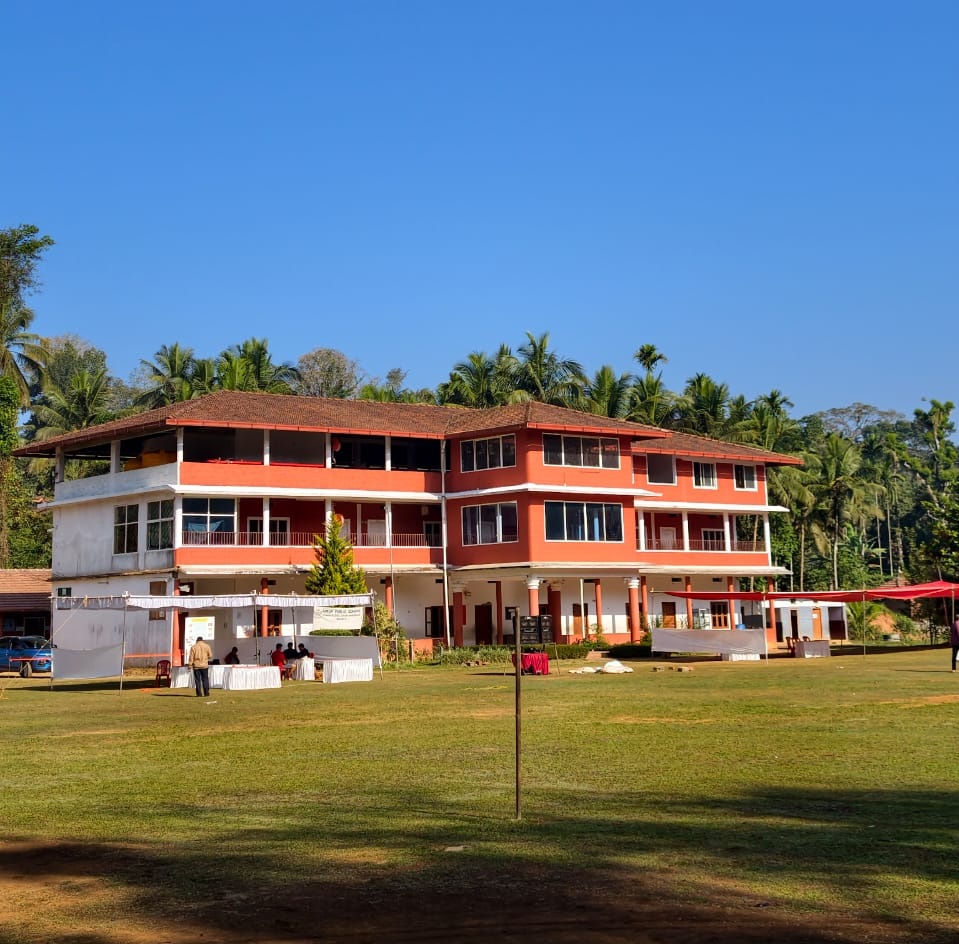
What began as a small school with just three students in a rented building gradually grew into a full-fledged CBSE institution in its own campus, in 2001. Every milestone came with new challenges.
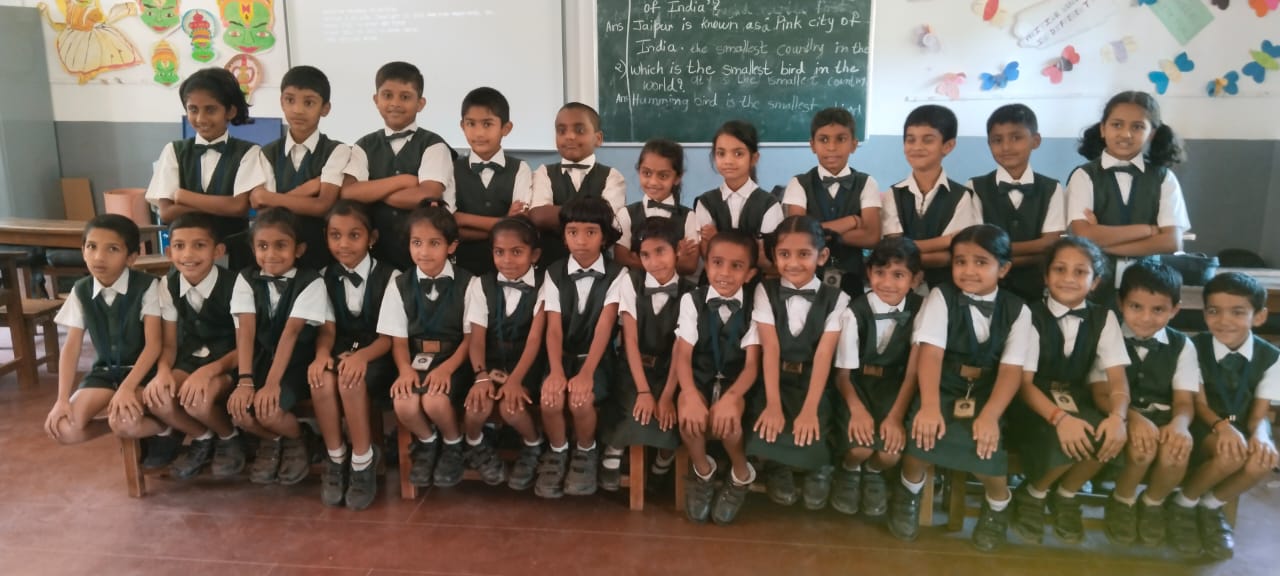
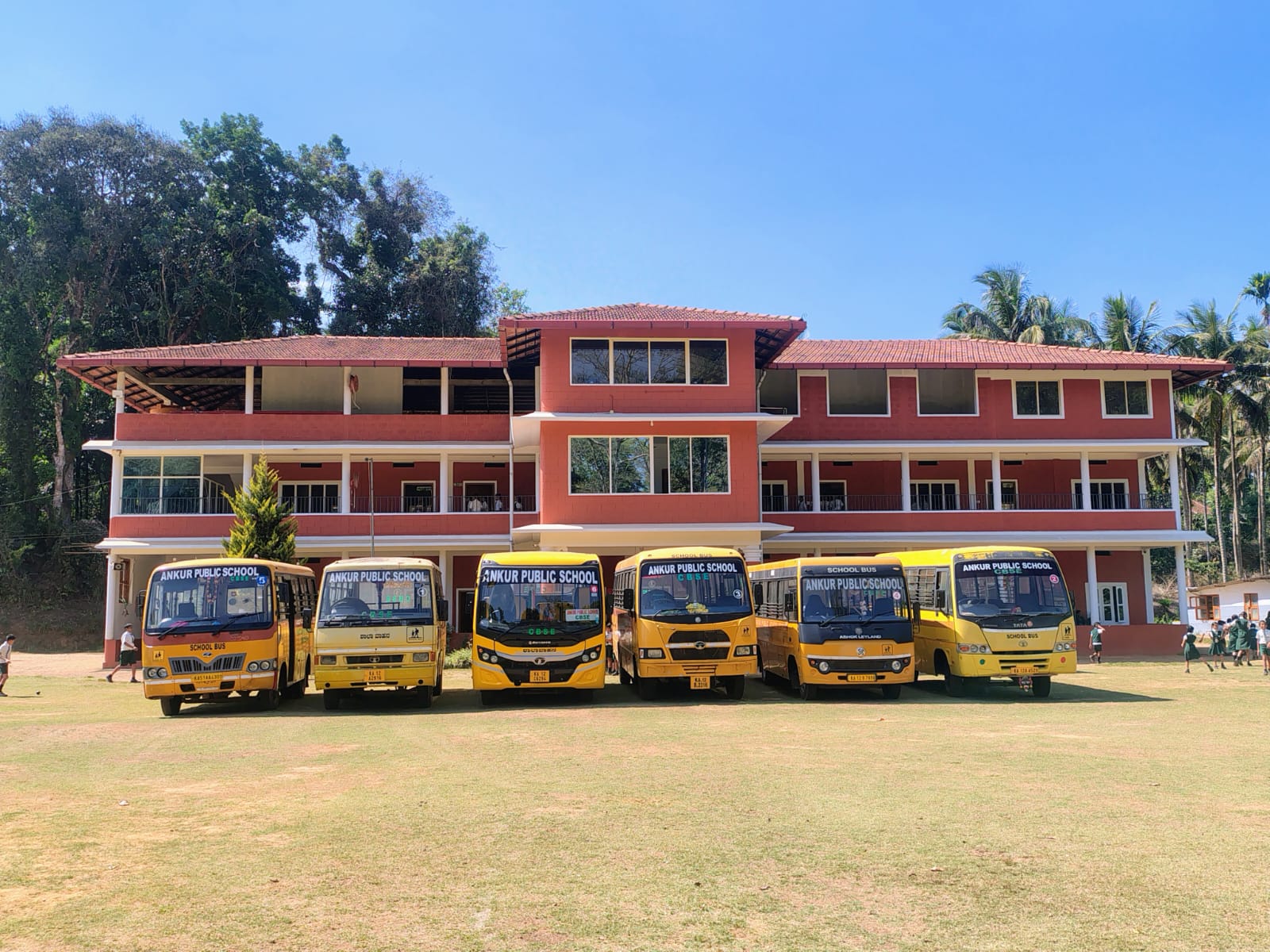
Although we initially received affiliation up to Class VIII, our first batch of Class IX students faced uncertainty regarding Board recognition. After persistent representations, we secured affiliation for Classes IX and X, ensuring that our students could confidently appear for their Board examinations.
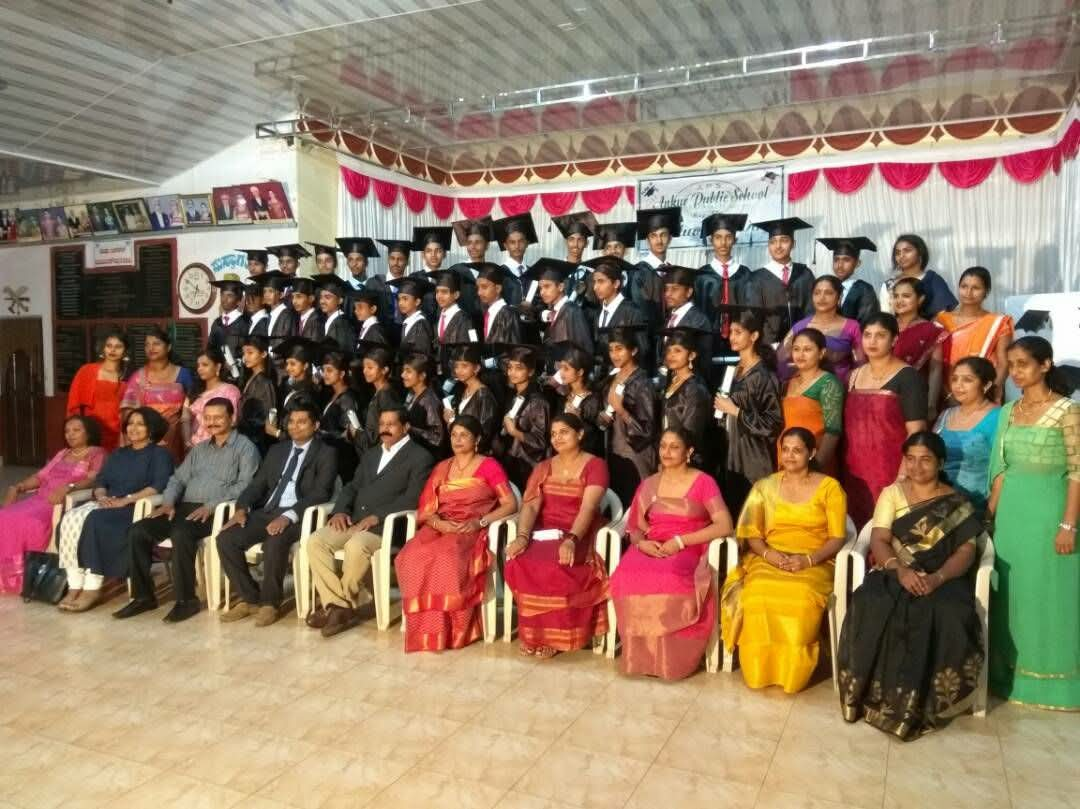
Building a committed and skilled teaching team was another challenge. Yet, our belief that sincere efforts always bear fruit kept us moving forward. Today, our alumni have established themselves successfully in diverse fields, proving the strong foundation they received at our institution. Currently we have 400 students studing in our School.
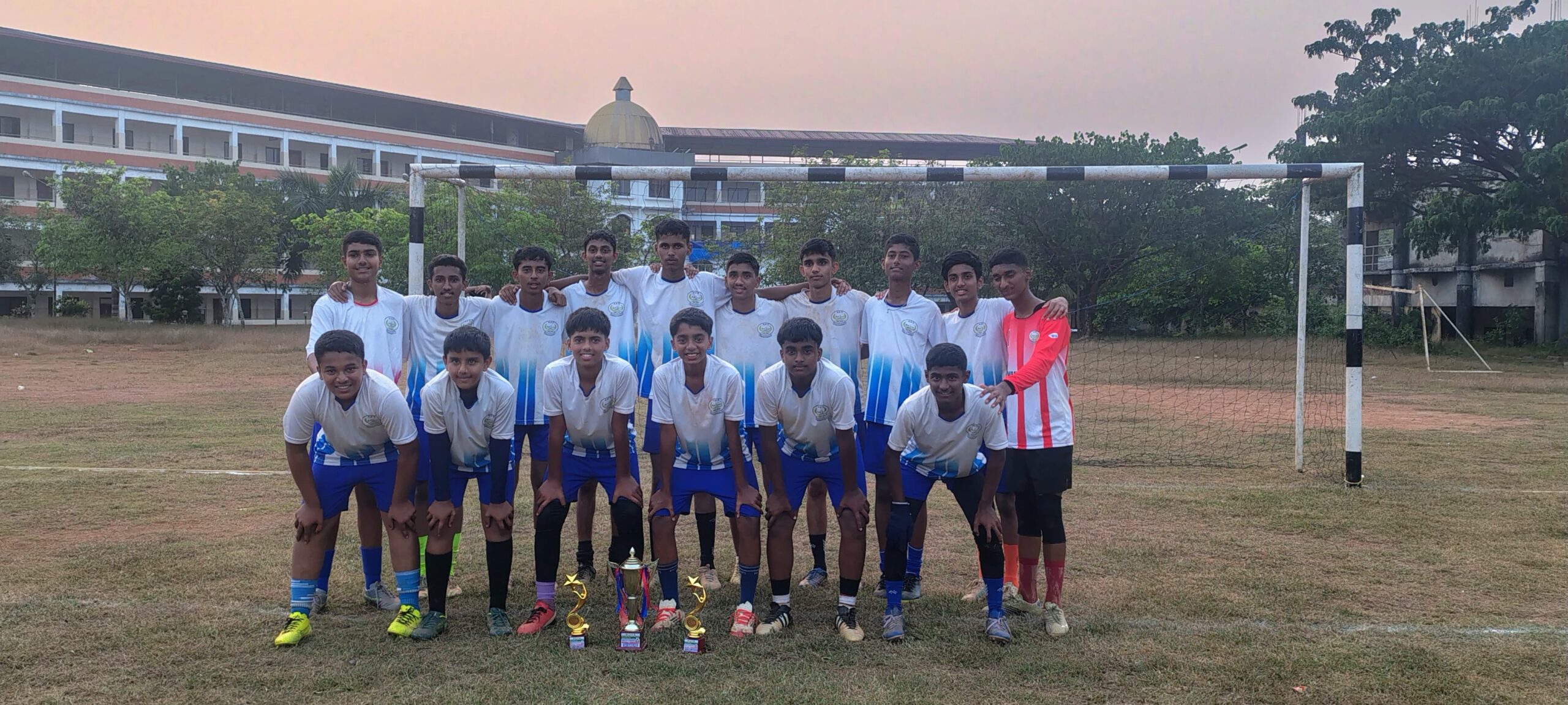
Over the years, we have embraced every educational reform introduced by CBSE while giving equal importance to academics, technology, sports, arts, and life skills. Our students have been selected for Sports Hostels, Navodaya Vidyalayas, and Sainik Schools. They have also excelled in music, art and debate.
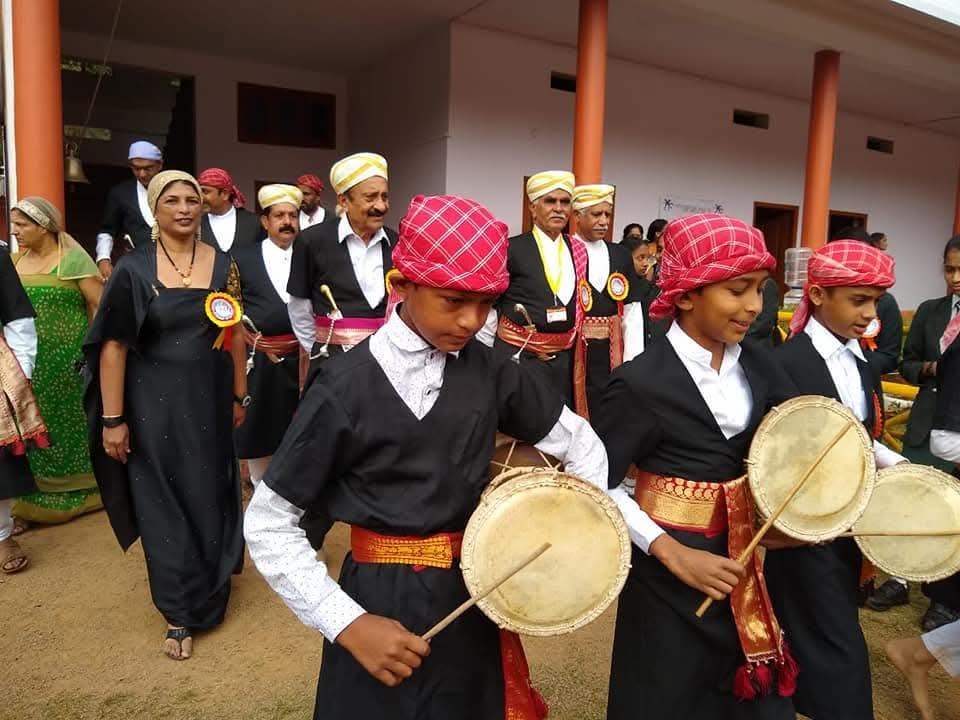
Students are also introduced and encouraged to participate in native cultural activities, helping them understand and appreciate their cultural heritage of Kodagu.
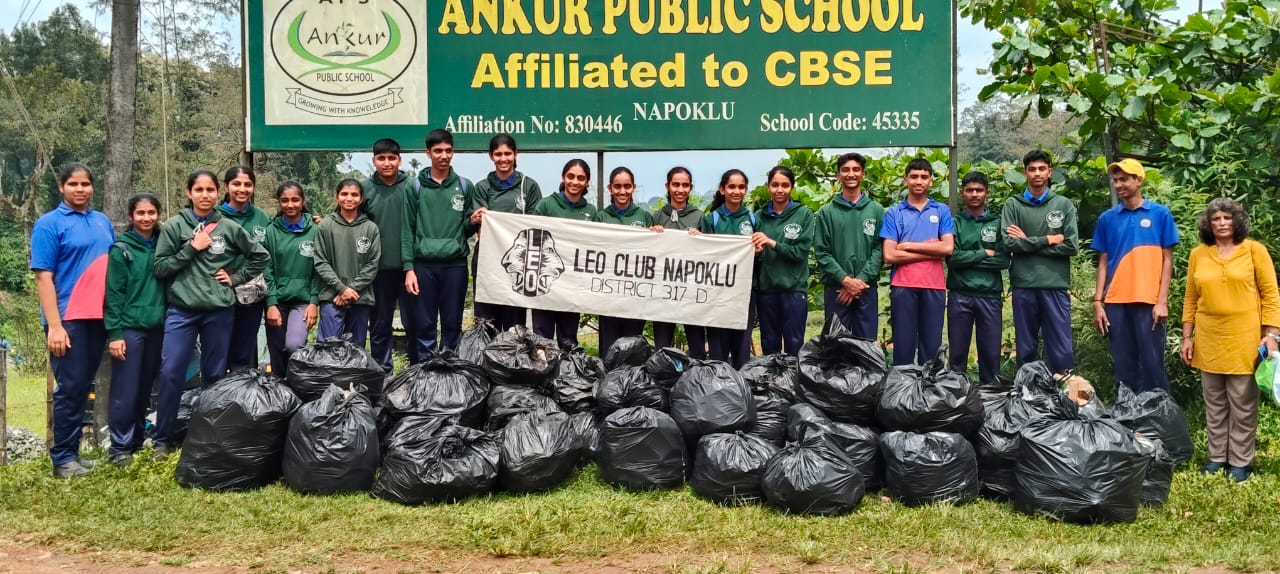
Children are also taught to protect Kodagu’s fragile environment and play their part in keeping Coorg clean.
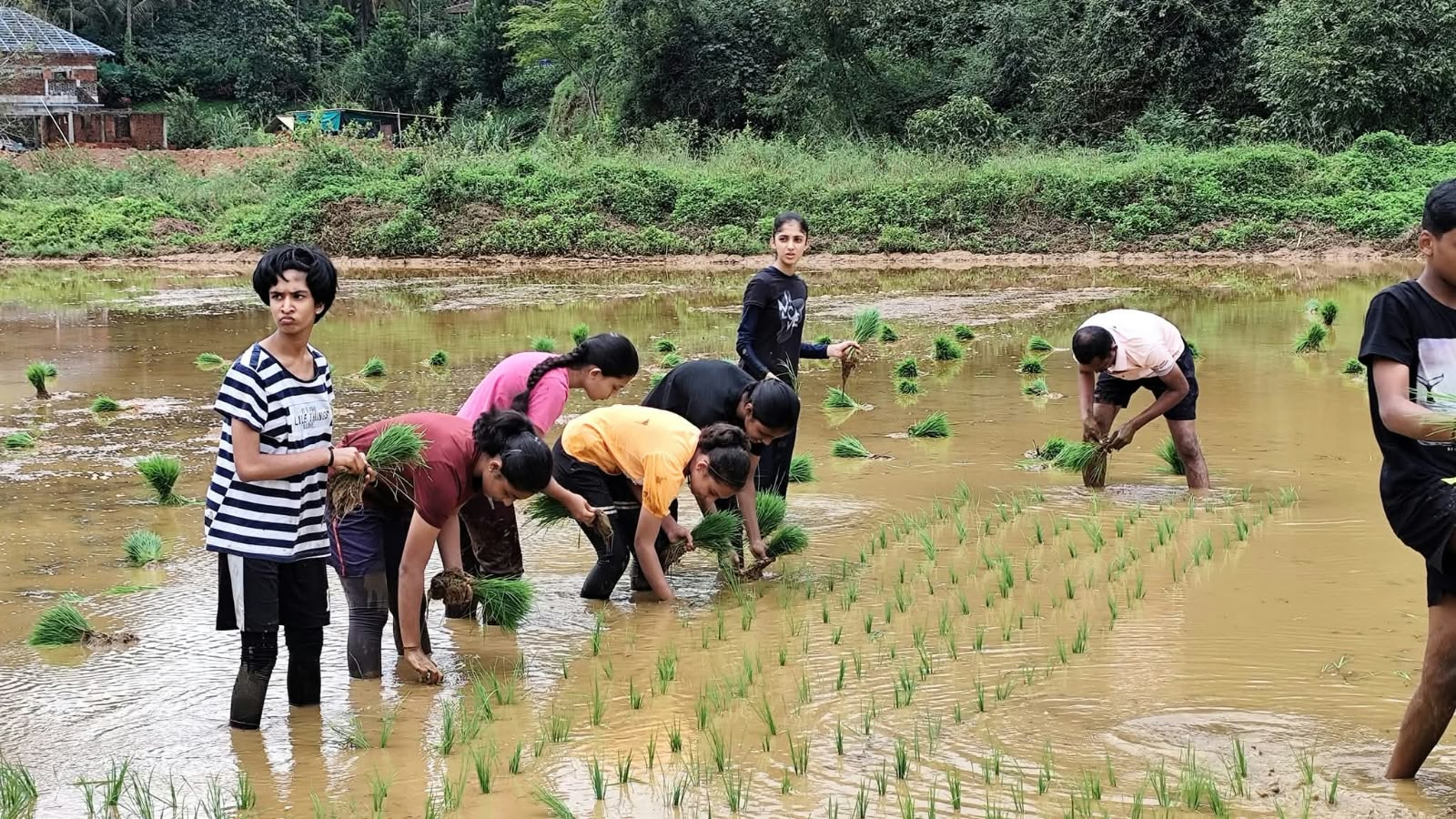
As our students are from agricultural backgrounds and so that they can retain practical knowledge of farming, we conduct rice transplantation activities, giving them an opportunity to learn and experience the process firsthand.
To nurture leadership, emotional intelligence, and social responsibility, we established a Leo Club in association with the Lions Club of Napoklu. Students are also provided opportunities to develop self-defence skills, mathematical aptitude, and overall personality.
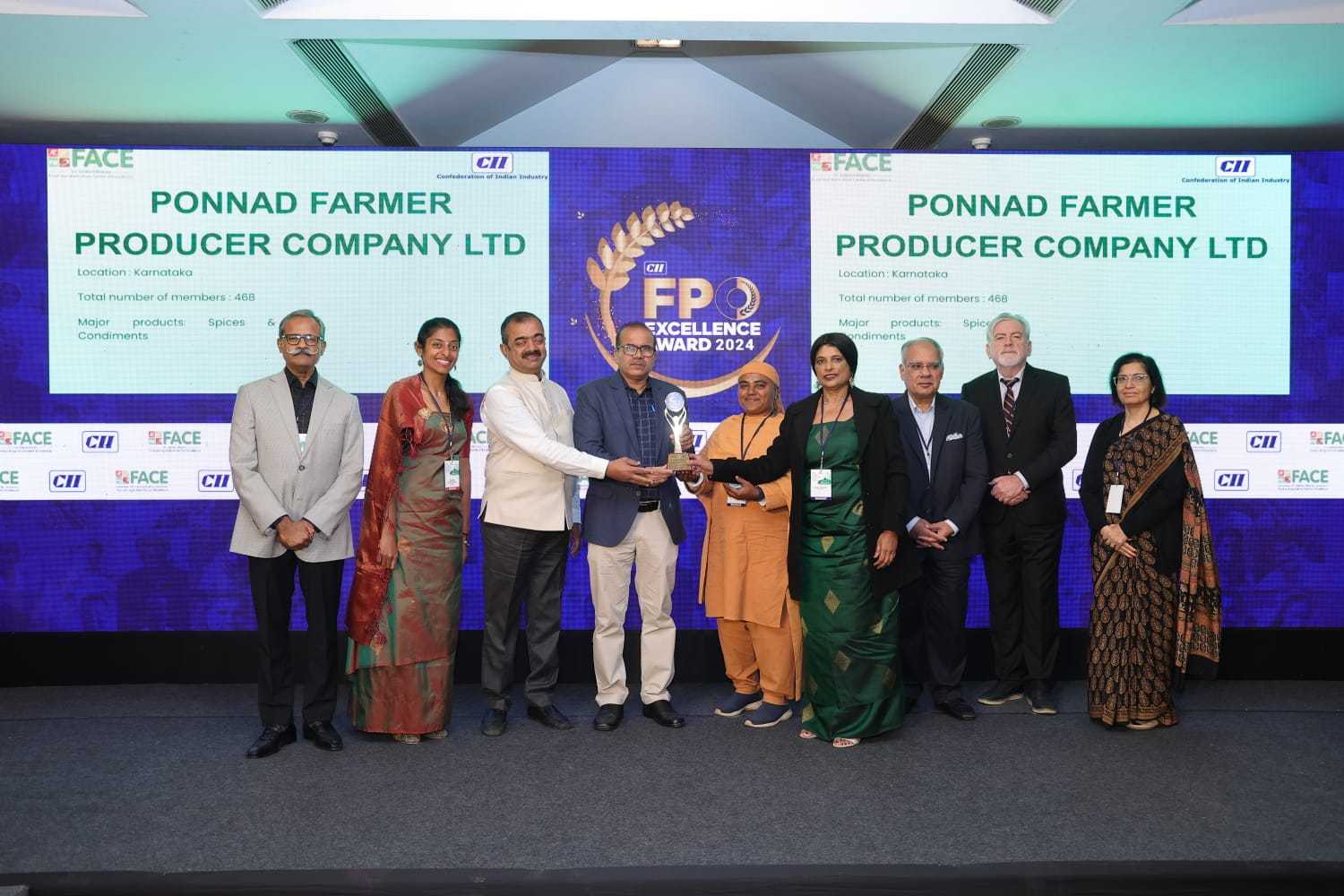
My journey extends beyond the classroom. I have had the honour of serving as a member of Lions Clubs International with a commitment to community service. I also serve as one of the six Directors of the Ponnad Farmers Producer Organisation (FPO), which has received several prestigious recognitions, including the Confederation of Indian Industry (CII) Award and the National Marketing Award from the Ministry of Agriculture.
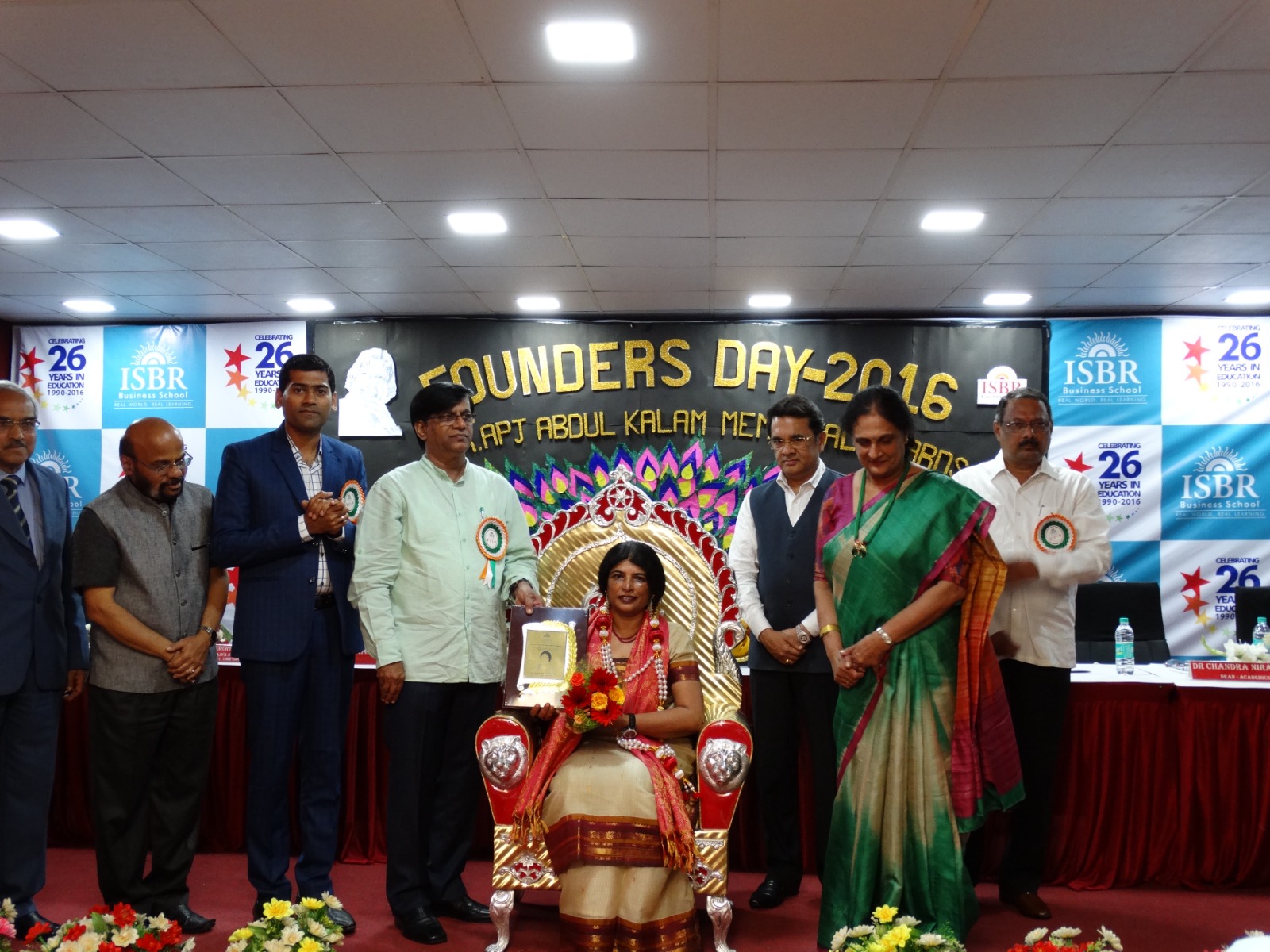
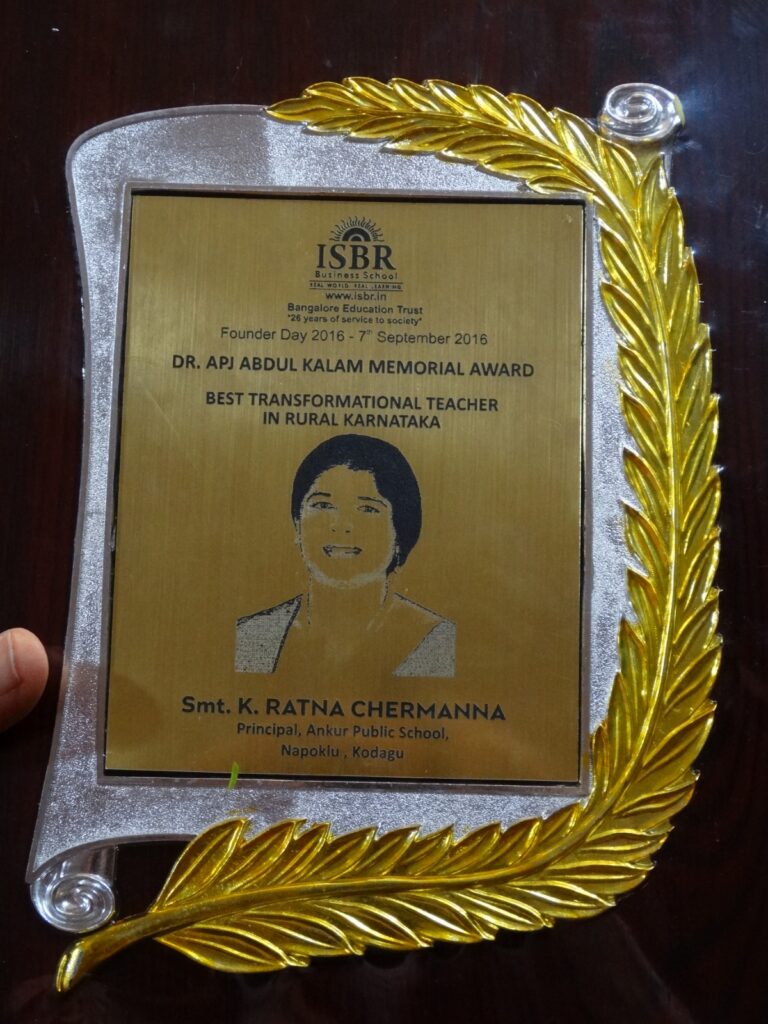
Personally, I have been humbled to receive several honours, including the APJ Abdul Kalam Transforming Teacher Award, the Women Farmers Award from Krishi Jagran, Delhi, the Champion Award from Lions International, the Marketing Winners Trophy on behalf of Ponnad Farmers Producer Organisation, the High Visionary Educationist Award from Kodava Samaj, Napoklu, and the Best Sportsperson Award from Teresian College during my student days.
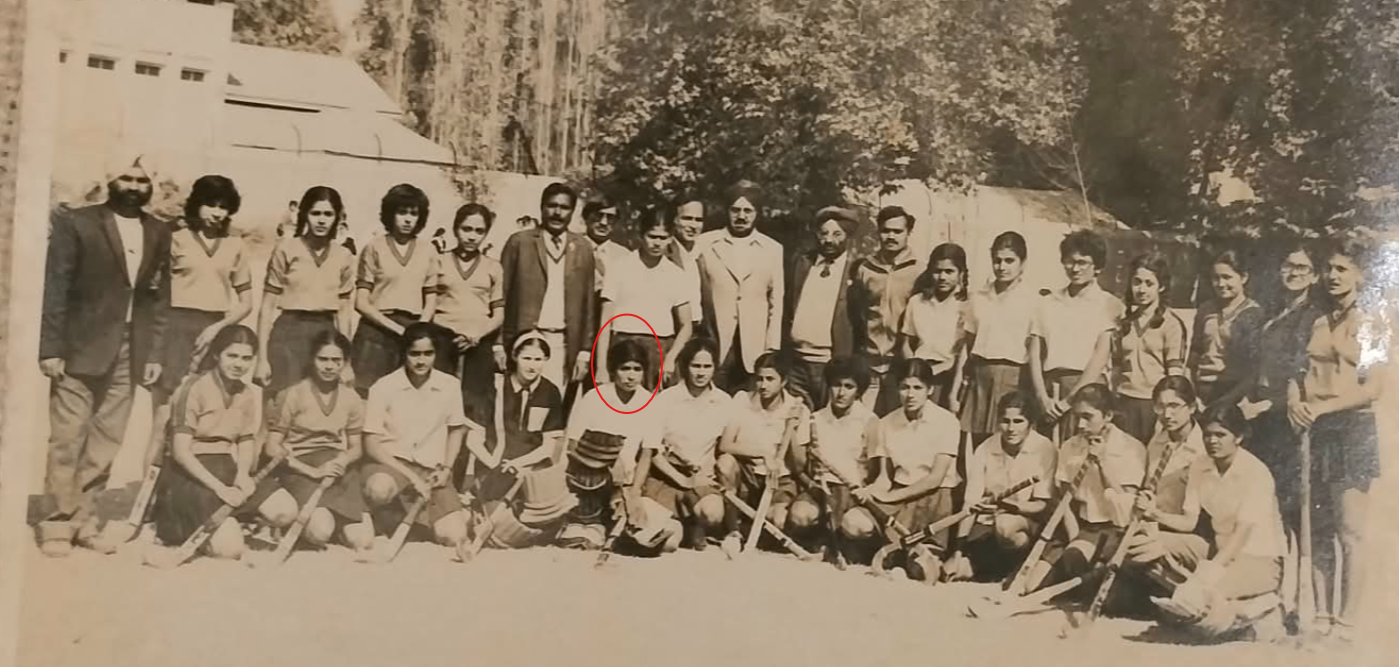
Sports has always been an integral part of my life. I proudly represented Mysore University in Basketball and was part of the School and University team in Hockey, experiences that shaped my discipline, teamwork, and leadership.
Today, as I reflect on twenty-five years of service, I realise that this journey is far more than a number. It is a story of dreams, perseverance, sacrifices, challenges, transformation, and countless young lives touched through education.
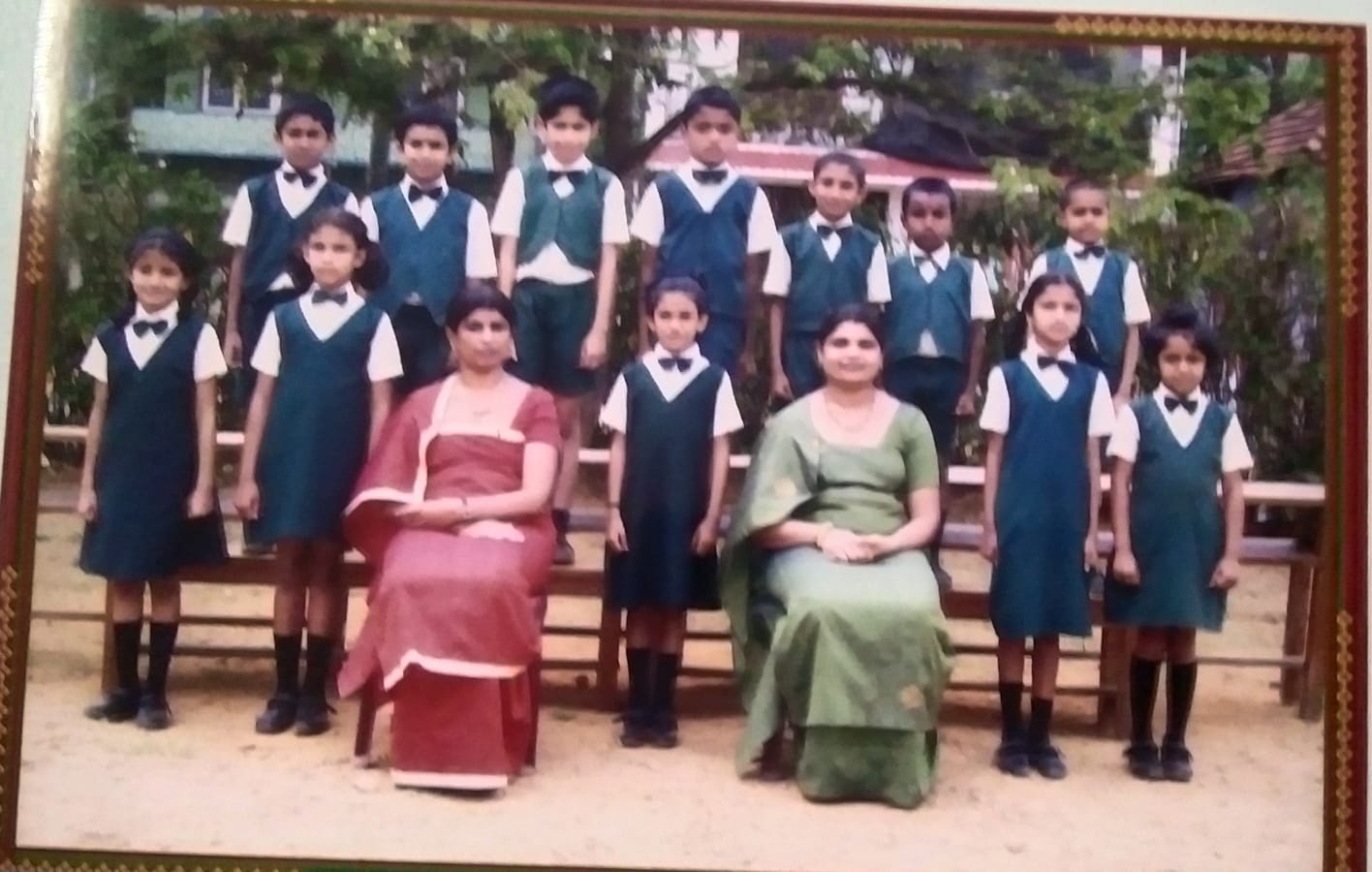
Teaching has never been just my profession – it has been my life’s mission. My greatest reward is not the awards I have received but the success, confidence, and values reflected in every child who has walked through the doors of our school.
Join our WhatsApp Group for News and Article Alerts



An incredibly inspiring journey, Ma’am. Your passion, perseverance and unwavering commitment to education are truly commendable. Your story is a testament to how vision and determination can transform lives. Wishing you continued success and many more glorious milestones.
A Very nice video to share on Teachers Day!
👇
https://www.instagram.com/p/CiHhdDlNZdF/
This has no direct correlation to Ankur Public School – but on a very important aspect of “affordable education”:
(As posted on X) On this teachers’ day, sharing an important (bit longish) Delhi experience for all of my academic community to take a note:
Three of the biggest academic publishers in the world sued a photocopy shop.
The shop charged 50 paise a page. It sat inside a university campus in Delhi and had 1 owner.
The case ran for 4 years. The shop won, and the law changed.
His name is Dharampal Singh.
He set up Rameshwari Photocopy Service in 1998, in a small licensed space inside the Delhi School of Economics at the University of Delhi.
The work was simple. Professors would prepare a reading list. For a course like Agrarian Sociology, that might mean 33 different readings, scattered across 33 different books, most of which cost more than a student’s monthly budget and some of which the library had 1 copy of.
Singh photocopied the relevant chapters, bound them together, and sold the bundle. It was called a course pack. The price was 50 paise per page.
That is less than 1 American cent.
He explained it in 1 sentence. If a student needs 33 readings for a course, he said, it could take months to collect them from different books. I make life easier for students by giving them all the material in 1 pack.
In August 2012, Oxford University Press, Cambridge University Press and Taylor and Francis filed suit in the Delhi High Court against the shop and against the University of Delhi. They wanted a permanent injunction.
By the end of 2012 the court had granted a temporary one. A commissioner was sent to the shop without warning, made an inventory, and seized copies.
Then something unusual happened.
Students organised. 2 groups, one of students and one for educational access, formally applied to join the case as defendants, on the side of the photocopy shop. The court allowed it.
In March 2013, 309 authors and academics from around the world wrote an open letter to the publishers asking them to withdraw the case.
33 of those 309 had written the very books whose copyright was allegedly being infringed.
The authors were siding with the shop copying their books.
On 16th September 2016, Justice Rajiv Sahai Endlaw dismissed the suit entirely. He wrote that copyright in literary works is not an inevitable, divine or natural right conferring absolute ownership on authors.
The publishers appealed. On 9th December 2016, a 2 judge bench of the Delhi High Court delivered the final ruling.
It held that reproducing copyrighted material for the purpose of educational instruction is not infringement under Indian law, and that no licence or permission from the publisher is required for a course pack, however much of the book is copied, as long as it is justified by teaching.
Then the publishers withdrew from the case entirely.
The shop is still there.
The next time you are told that intellectual property law always favours whoever has the most expensive lawyers, remember that 3 of the largest publishers on Earth spent 4 years trying to shut down a photocopy shop charging half a rupee a page.
And lost.
I must confess that I being so close to Napoklu was not aware that such a school existed; the article speaks volumes about the effort and the endeavour of the lady to establish her school. Hopefully more such schools will come up after taking a leaf from her book – in fact well scrutinized public private partnerships could revitalize “select” Government Schools that were built on land donated by Kodava families. Higher education and SKILLS BASED EDUCATION preferably.
What is URGENTLY required is a School for Nursing especially for young women from North Kodagu. Gowdanda Thimmaiah’s wife Deachamma retired recently as the District Head Nurse and could provide practical training – an extremely capable subject matter expert.
I read all the articles on the CLN Online platform regularly – not only are they well researched, they are earthy, focussed on what matters to Kodagu – but it also applies to people beyond Kodagu too. The Comments section is lively for important articles. With more participation especially by the young, the diaspora and from well meaning readership outside of the district, it can become a powerful platform for exchange of ideas.
My specific comment on this article – while Ankur Public School has established itself as a preeminent school in rural Kodagu, Napoklu, it is important to understand that in the fullness of time it will need to refocus on “outcome based education”. What do I mean by this?
All education in the world today is focussed on passing exams by acquiring knowledge with the prime aim of securing a job. That’s fine in a world where jobs are available. With AI there is a genuine threat of jobs shrinking. So what is the next rational thing to do?
For Kodagu in particular, really good skills based education is a must. To get wealthy, the Kodavas cannot just rely on plantation income, there needs to be many sources or streams of income. In Udipi (and among the Bunt community), in addition to a primary source of income be it agricultural or a job, every family by and large runs a small business on the side, or a restaurant and so on. It is time my Kodava friends did it too. All the immigrants who run businesses in Kodagu should really be run by Kodavas themselves. This requires dignity of labour, hard work and perseverance to succeed. Ultimately the quality of life as a Planter is far superior to living in a city and definitely more affordable.
.
When Kodagu was responsible for its own administration, be it under the Haleri Rajahs or the British and later as a Part C State, there was arguably more focus on the development of the region as compared with post the unpopular merger with then Mysore State in 1956.
Education was given utmost priority by the then Kodava Leaders – for instance the delegation petitioned Lord Elgin in 1862 seeking the setting up of formal schools to teach English and Kannada. Credit to Reverend Richter for his support and becoming the first Principal of Central High School and later the creation of Kodava Education Fund which became the Coorg Education Fund, blessed by the then Coorg Government. The first President was Kodira Uthappa, Kongetira Appaiah was Secretary and Pandanda Nanjappa Treasurer.
Post 1956, the erstwhile pioneering foresight and impetus for growth has considerably reduced. Kodagu has received step motherly treatment as it was far advanced when compared to other districts of Karnataka. Mangalore, Udupi, Karkala – all of Malnad region surged ahead with many outstanding institutions of Higher Learning being set up while Kodagu stagnated. The time has come to create new Colleges and Institutions of Higher Learning to arrest the migration of our youngsters to Bangalore, Mysore and Mangalore – they seldom return.
Private enterprise is required. Surely the same foresight demonstrated by our elders a century ago can be recreated. Coorg Education Fund could have taken the lead – but it hasn’t. Kodavas have excelled in every field across the world – perhaps a few of them can get together, sans the usual politicisation of every issue, to address this immediate need for the District.
Great story on Teachers Day from CLN – an understated personality that establishes Ankur Public School against all odds. We need such stories as placeholders for people to emulate. Too many glib speakers are appearing these days on social media either talking about culture, past glory or just being “visible”. Let our quiet action speak louder than words.
Well done Ms Ratna and hats off to your entire team. Everyone in Napoklu speaks well about the school and may it grow from strength to strength.
Ms Ratna’s endeavours need to be praised. If a single family can achieve as much as she has done, what is preventing our Community Organizations who have been around for 75 years plus, from undertaking meaning initiatives in this field?
It’s a poor reflection on us Kodavas that despite being the first in establishing formal schools of education in English, even before Mysore and Mangalore, we do not have adequate institutions of higher learning barring CIT Ponnampet.
Mangalore and surrounding areas in Tulunad have shown exemplary private enterprise in higher education in every field – basic Graduate studies (BA, BSc, BCom), Medicine, Engineering (in all fields), Law, Business Administration, Hotel Management, Teachers Training, Nursing…. the list is endless. As a consequence Tulunad has prospered in every field with distinction.
If we cannot attract private enterprise in the field of higher education to the district, the departure of youngsters to pursue higher education away from their home base will continue to happen.
It’s all ur effort today you gained. I know how difficult those days. Being a women you started with two teachers. . . Now you reached your goal . You have completed 25 years & moved on.. Let Ankur grow more than100 year’s.. Do pray the Almighty for your good health. . & strength to achieve dear Ratna❤️
At the outset, a heartfelt thank you to CLN for bringing to light the hidden gems of Kodagu and sharing their inspiring stories with us.
Hearty congratulations to Smt. Ratna Chermanna on receiving the Dr. APJ Abdul Kalam Award for “Best Transformational Teacher in Rural Karnataka.” What a remarkable achievement!
I have had the opportunity to meet a few children studying at Ankur Public School (APS), and one thing that always stood out to me was the pride in their voices when they said, “I study at Ankur Public School.” After reading this article, I now understand where that pride comes from.
When culture, tradition, agriculture, and human values are nurtured at the budding stage, it is only natural that these children grow up to become responsible, compassionate, and exemplary citizens. Kudos to Smt. Ratna Chermanna for transforming education into something much beyond textbooks and classrooms. What an achievement, and what an inspiring journey!
I couldn’t resist myself not sharing this from a School Principal’s speech at a graduation……
He said “The Doctor wants his child to become a doctor…
the Engineer wants his child to become an engineer…
The Businessman wants his ward to become CEO…
BUT a teacher also wants his child to become one of them, as well..!!
Nobody wants to become a teacher BY CHOICE”…
Very sad but that’s the truth..!!
(Most respected profession, but the least paid)
The dinner guests were sitting around the table discussing life.
One man, a CEO, decided to explain the problem with education. He argued, “What’s a kid going to learn from someone who decided his best option in life was to become only a teacher?”
To stress his point he said to another guest;
“You’re a teacher, Mrs Sharma. Be honest. What do you make?”
Teacher Mrs Sharma, who had a reputation for honesty and frankness replied, “You want to know what I make?
(She paused for a second, then began…)
“Well, I make kids work harder than they ever thought they could.
I make a C+ feel like the Congressional Medal of Honor winner.
I make kids sit through 40 minutes of class time when their parents can’t make them sit for 5 min. without an I- Pod, Game Cube or movie rental.
You want to know what I make?
(She paused again and looked at each and every person at the table)
I make kids wonder.
I make them question.
I make them apologize and mean it.
I make them have respect and take responsibility for their actions.
I teach them how to write and then I make them write.
Keyboarding isn’t everything.
I make them read, read, read.
I make my students from other countries learn everything they need to know about India while preserving their unique cultural identity.
I make my classroom a place where all my students feel safe.
Finally, I make them understand that if they use the gifts they were given, work hard, and follow their hearts, they can succeed in life.
(Mrs Sharma paused one last time and then continued.)
Then, when people try to judge me by what I make, with me knowing money isn’t everything, I can hold my head up high and pay no attention because they are ignorant. You want to know what I make?
I MAKE A DIFFERENCE IN ALL YOUR LIVES, EDUCATING KIDS AND PREPARING THEM TO BECOME CEO’s, AND DOCTORS AND ENGINEERS…
What do you make Mr. CEO? Only money?
His jaw dropped; he went silent.
THIS IS WORTH SENDING TO EVERY teacher you know.
Actually, very worth sending again and again – especially to those from other professions who think they are above teachers.
Always be proud to be a teacher if you’re one!!
Is Ms Ratna a real person?! What a resume!
Congratulations on your vision, achievements and dedication ma’am. You should now train and motivate other teachers to follow your example. Thank you for your exemplary service and far-reaching outlook 🙏
What a inspiring journey! Starting a school amidst challenges and turning a dream into a reality takes immense courage, determination and preserverance. Your story us not just about building a school, it is about building hope, shaping young lives and creating a future for generations.
Your journey is truly commendable and must be a motivation to many. May your story remind us that with passion, faith and preserverance even the most difficult beginnings can lead to something beautiful. Kudos to you for turning the challenges into a meaningful legacy.
So proud of Ankur Public School that has come up in our neighborhood. We have an active Farmer Producer Organisation in Napoklu where Ratna and I serve as Directors.
Very humble and Dedicated Teacher. An amazing all rounder and human being.
The achievements of Ankur School is commendable. Ratna has persevered exceptionally hard with the obvious support of her family and is developing the school into a good education platform.
I have your narrate a personal family initiative. Education in the rural interior areas was sparse. My father, Poonacha started the Mayanamada Mandaiah Government High School at T Shettagiri by donating land and the initial capital. The school continues to be popular with about 25 students to a class.
Another classic example of Kodava families promoting education for the community in several rural areas of Kodagu.
.
Congratulations to Ankur Public School. Such an interesting and motivating article that every youngster should read. Ankur School has earned itself a healthy reputation in Napoklu and we wish it grows from strength to strength.
My parents moved to Kodagu/Gonikoppal in 1920-30s. My primary schooling was undertaken under a thatched roof small building with Maneyapanda Cariappa as the Headmaster. We then had to go through Secondary school before passing an entrance test to be eligible to attend High School in Ponnampet. We used to walk the 6kms one way to school daily! Higher learning was out of the question.
One cannot imagine now the transformation of Gonikoppal as an Education Hub for Kodagu – hats off to KALS, COPS and CIT – all private initiatives that have served the community well.
So when we had our children, they attended school at St Anne’s Virajpet and had to go to Mysore and Mangalore for higher studies.
The point I am making is that there is a dire need for Degree and Post graduate colleges in Kodagu – if it’s a citizens’ initiative or private enterprise, all the better. There seems to be a yawning gap between the extraordinary foresight of distinguished Kodava elderly statesmen who moved heaven and earth to get English education in place and the somewhat inexplicable absence of private institutions for undergraduate education.
In our time we could somehow manage to get jobs with a matriculation qualification. The competition is so stiff now that a basic degree is a must with English medium – especially if the student is looking for a job in the private sector.
I agree with CLN that Outcome based Education is the need of the times with a focus on the appropriate skills needed to start small business enterprises.
.
A truly inspiring journey of dedication, perseverance and service to education. Having Ms. Ratna as my neighbour, I have known her quite well and have personally witnessed the challenges she faced in building Ankur Public School in a small town, and the determination with which she overcame them.
Her contribution goes well beyond education. She has been actively involved in several social initiatives and was instrumental in organising the Swachha Kodagu – Sundara Kodagu programme in Napoklu and surrounding villages, initiated by COHERA.
She has also created meaningful employment opportunities for many qualified homemakers, enabling them to build their careers while balancing family responsibilities.
She extended wonderful support to the Kundyolanda Hockey Carnival by providing free school bus service and encouraging her students to participate in the March Past.
Her journey is truly a testament to how one committed individual can make a meaningful difference to education, employment, society and the community. Heartiest congratulations to Ms. Ratna and Raja on completing 25 glorious years of Ankur Public School. 💐👏