

The article and responses to Jammada Ganesh Ayanna’s SAVE MALMA appeal has been heart rending, with all the participants at the meeting convened to discuss the Malma issue CATEGORICALLY and UNANIMOUSLY VOTING AGAINST THE DEVELOPMENTS RE: THE RECENT SALE/PURCHASE OF LAND.
Machaiah’s comments is worth reproducing –
Our ancestors understood the importance of retaining land and living in harmony with Nature. The emphasis on Jamma land tenures was a vindication of perpetuating inheritance and it is somewhat of a shame that we have found ingenious ways to overcome these restrictions and sell for short term gains.
The real issue is not just the desecration of our sacred Malma – we have even more sacred Jamma land which is also the abode of our Guru Karonas. Not to mention the incredible Jamma Malles (forests).
Further, Uthappa emphatically reiterates – The reality is that the Kodava way of life has stood the test of time and served every need of our community. Where is the need to disturb this equilibrium?
There have been many “babas” and other self-proclaimed God men who have made their presence felt in Kodagu and many of their followers are found across the district. What they do in the precincts of their homes and in private is their choice – there is no need to impose their “chosen” way of life and inflict it on others.
We are a curious lot of people – showing unnecessary hospitality to people who want to change our way of worship within the perimeters of our sacred spaces. And then feel elated when proclamations are made that there will be no commercial activity. Soon, there will be religious paraphernalia that appears in our AineManes – they’ve already made their presence – which is really showing disrespect to our Guru Karona.
The antecedents of all these accidental or deliberate attempts of people who make their unannounced purchases should not be ignored. In some respects it is similar to
https://beforest.co/poomaale-2-0-collective/ who attract people who seldom have an understanding of the culture and landscape.
Let us protect our identity, culture and landscape. Disturbing these ancient mud compacted hillsides is dangerous and unwarranted – this applies to the numerous resorts who have been given clearances under the most unclear circumstances.
At the cost of repetition, I want to emphatically reiterate that if we want to save Kodagu, we must retain our land and not sympathize and find reasons to sell inherited lands. They were entrusted to us with the expectation that we would cultivate and care for them, earn a livelihood to support our families from them, and preserve them for future generations. The growing controversy surrounding spiritual-commercial tourism projects near the sacred landscapes of Malma Hill (Nelji) should disturb every person who cares about Kodagu’s future. This is not merely a dispute over land ownership or development permissions. It is a question of our collective responsibility towards a place that generations before us revered, protected and passed on as a sacred inheritance.
Malma is not just another hill waiting to be developed. It is deeply connected to the spiritual traditions, customs and identity of the people of Kodagu. Sacred landscapes are living symbols of our heritage and must remain protected for future generations.
What is more painful is that this threat has not come from outside alone. It began when ancestral lands were sold. Before questioning developers and investors, we must ask ourselves a difficult question: why are we selling our lands in the first place?
Every sale of ancestral lands in such sensitive regions represents more than a property transaction. It reflects a gradual weakening of our connection to our roots, our customs and our responsibility towards future generations. These lands were not inherited. So that they could be converted into resorts, spiritual centers, commercial ventures or speculative investment. They were entrusted to us with the expectation that we would preserve them.
Kodagu’s sacred landscapes were never meant to become playgrounds for commercial interests. They belong to the communities that have lived alongside them, worshipped them. Outsiders view these places merely as business opportunities, the spiritual and cultural significance as it relates to The Kodava way of life that defines them is inevitably lost.
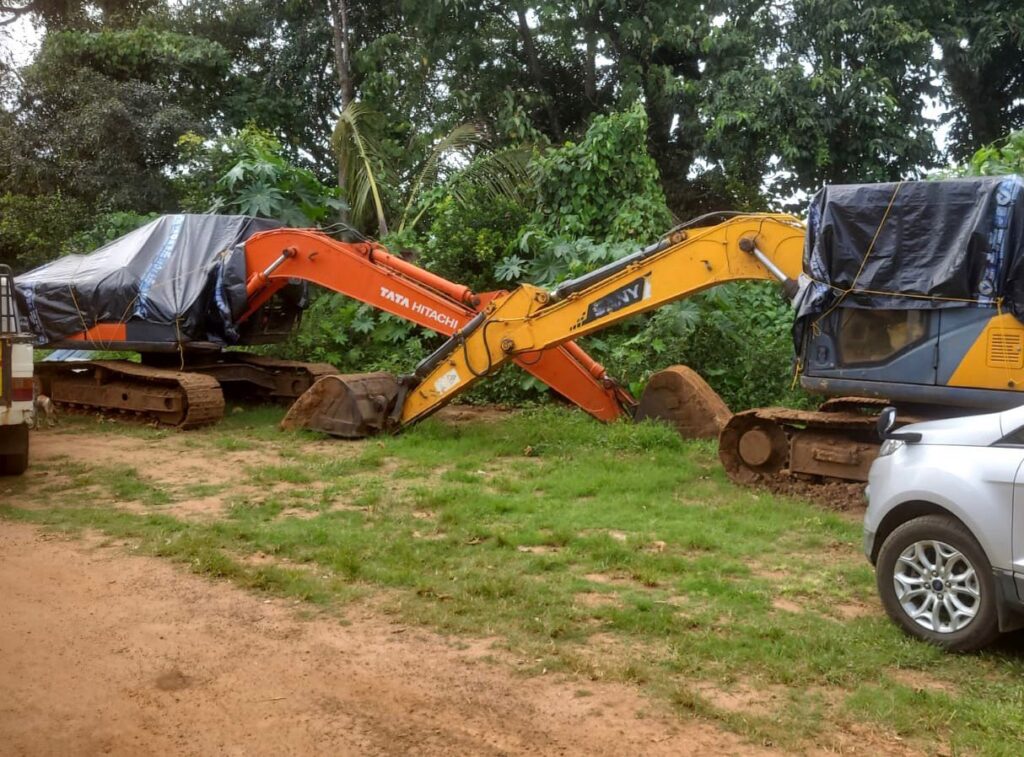
The first question that demands an answer is simple. Who granted permissions? Were all legal procedures followed? Were environmental and land utilization regulations properly examined before such activities were allowed? If everything is not done legally, the authorities must place the facts before the public and the transaction should be cancelled.
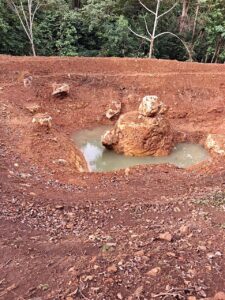
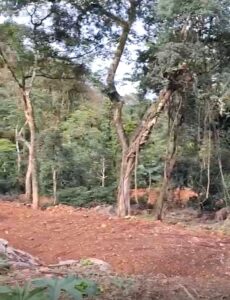
Reportedly, substantial roadworks, tank excavation and loss of tree cover has already taken place. Has this been cleared in writing by the Forest Department, Panchayat, PDO and other officialdom? if not – it is time to make this a case study and strict action taken against offenders – accountability must follow.
Protecting Malma Hills is not the responsibility of a few villagers. It is a collective duty . The sanctity of our sacred places, the spirituality of our land and the heritage of Kodagu are not for sale.
The people of Kodagu deserve transparency. They deserve to know who approved these projects, under what provisions and why such activities were considered acceptable in an ecologically sensitive landscape. Because when sacred land is sold , it is not just property that changes hands it is heritage, identity and responsibility that are lost forever.
Join our WhatsApp Group for News and Article Alerts



Land Sales in Kodagu …A Few Questions
Instead of only asking who is buying land, let’s also ask:
Who is selling?
Who are the mediators?
Why are Kodava families selling their ancestral land?
Why are so many migrating from Kodagu?
How many farmers actually know their cost of cultivation per acre and whether they are making a profit or a loss?
It’s also time to reflect on ourselves. Can we rethink our social commitments and lifestyle expenses? If our income from agriculture is shrinking, shouldn’t our spending and social expectations adapt as well?
Can’t we have more good education institutions in Coorg?
Financial awareness and a change in mindset may do more to save Kodagu’s land than simply blaming those who buy it.
Malma Kundh is not just a piece of land; it is a place of profound religious, cultural, and ecological significance for the Kodava community. It represents our heritage, our faith, and our deep connection with nature.
From the very beginning, I have had serious reservations about why such a large extent of land was purchased by a spiritual leader. While public statements have since been issued assuring that no development or construction will take place in the area, one fundamental question still remains unanswered: if there were no plans for development, what was the purpose of acquiring such a vast property in the first place?
At the same time, this episode should serve as a wake-up call for all of us. We, as a community, must seriously introspect and make every effort to refrain from selling our ancestral lands, irrespective of who the buyer may be or what assurances are offered. Once our land changes hands, we lose control over its future, and with it, a part of our identity.
Over the years, under the guise of development, Kodagu has witnessed indiscriminate tree felling, excavation, and alterations to its fragile landscape. These activities are steadily eroding the district’s unique ecosystem, increasing its vulnerability to environmental disasters. Unfortunately, our elected representatives have remained largely silent, raising concerns about their commitment to protecting the interests of both the people and the environment.
The assurance that no development will take place at Malma Kundh may have addressed immediate concerns, but it does not resolve the larger issue. We need long-term safeguards to ensure that places of immense ecological and cultural importance are protected for future generations.
It is time for all of us to come together—not only to protect Malma Kundh but also to find sustainable ways to help local families retain their lands. Preserving our land is not merely about ownership; it is about safeguarding our culture, our environment, and the legacy we leave behind.
AKS appears to have made some interesting statements in The Hindu – excerpts reproduced below:
AKS president Paradanda Subramani Kaverappa said approximately 71.60 acres of land had been sold through registered deeds earlier this year. He noted that the transactions appeared to have been carried out legally and that ownership had already been transferred in the revenue records.
The AKS further proposed the creation of a dedicated fund or pool of contributions that could be used to purchase and protect sacred land in the future whenever similar situations arise.
The controversy has intensified in recent days, with residents alleging that after the purchase of the land, trees were cut, roads were constructed, and ponds were created within the property.
All power to AKS to create such a fund pooling community contributions to acquire 71 acres near the hill and preserve its ecological and religious significance.
There appear to be several contradictions on use of land only for agricultural purposes and then a clarification that it will not be put for commercial use; juxtaposed by road widening and cutting of trees (with appropriate permissions?).
The Malma fiasco is clearly highlighting a major issue regarding the sale of Jamma land by joint family holders – for reasons best known to them. In their anxiety to do so, the land can change hands to buyers whose interest may not be aligned with that of the people of Kodagu.
To understand the extent of the matter, why can’t the District Administration, media or local Kodava Samajas (AKS ??) take the lead and make the data available for all interested parties. Transparency of data and “intent” generally leads to more circumspect transactions.
Two simple observations:
1. Why is the Igguthappa Bhaktha Sangha not raising a hue and cry about these developments?
2. Organizations like the Akhila Kodava Samaja, Federation and multifarious Kodava Samajas should have also voiced their opinion on this serious matter affecting the Kodava community. Yes the President of AKS did make a comment on the risk of constructing tanks on a fragile hillside, risking landslides, but that is incidental and not the heart of the matter.
Large scale sale of Jamma property, corporate deals of commercialising sensitive landscapes, clearances for building large resorts in an ecologically sensitive terrain with acute strain on natural resources needs to be questioned and addressed.
A common agenda that protects the future of Kodagu needs to be developed and periodic reviews undertaken with the District Administration, Political Leaders and important stakeholders. Amongst others:
– the indiscriminate sale of land endangering the environment/landscape; proper disclosure of end use with affected peoples views should be a pre-requisite
– ”monitored” tourism with appropriate levies to discourage irresponsible behaviour
– unplanned migration resulting in the change of demographics and identity of the district
– structured and predictable improvement in infrastructure with transparency and accountability
– proper management of human animal conflict; regeneration of forests and green cover
– restoration of wetland cultivation with effective incentives; if it does not rain in Kodagu and the water table is not rejuvenated there will be disastrous downstream consequences
– creation of value adding opportunities by locals and government in a consultative manner (if one depends only on the government, the progress over the past three decades is testimony to the lack of development)
The above are only indicative and a more relevant list could be jointly prepared by all stakeholders. Is the community leadership game for it?
This is the time for the Kodavas to rally, and we need to hear the genuine “Nanga Kodava” chant. The article by Ms Mamatha Subbaiah is earnest and relevant – we don’t need more spiritual gurus. What we need is a reaffirmation of Kodavaame in its truest form. What previous comments have mentioned in “spiritual tourism” is pertinent. In Kodagu all our customs, festivals and celebrations are inextricably linked with ancestral propitiation and aligned with Nature. There is no need to disturb this equilibrium.
Disturbingly one hears that this transaction has been manoeuvred and orchestrated by Kodavas. The facts should be unearthed and all misdemeanours exposed. Make a case study of the manipulative real estate deals taking place in the District with the express intent of PUTTING AN END TO ILLEGAL TRANSACTIONS. Kodagu’s identity needs to be preserved for future generations and in perpetuity.
The strength of Kodagu has always been its unique culture, ancestral lands, and harmony with nature. If we fail to protect places like Malma today, future generations may inherit the land but lose the soul of Kodagu. The recent -protests have shown that the people of Kodagu still stand firmly for their motherland, heritage, and sacred spaces. It should serve as a wake-up call to all stakeholders that some places are far too valuable – culturally, spiritually,and ecologically to be treated as commodities.
Thank you to the author and CLN for highlighting an issue that goes beyond land or property and touches the very roots of our identity. Every generation inherits not just a place, but also the values, traditions, and wisdom of those who came before. Our ancestors often linked nature with culture, faith, and community life, creating a sense of respect that helped preserve these treasures for generations. As society evolves, priorities naturally change, and sometimes we risk overlooking the deeper significance of what has been entrusted to us. That is why it is encouraging to see the community remain engaged and involved. A caring community is often the strongest guardian of its heritage, helping ensure that lessons are learned, concerns are addressed, and the same mistakes are not repeated. Progress is important, but so is preserving the memories, traditions, and sense of belonging that define us. My sincere thanks to the author, CLN, and all members of the community who continue to keep these conversations alive and work together to protect our shared heritage and identity for future generations
Our Malma issue reminds me of two phrases:
In Kannada, the phrase “ಬುಡಕ್ಕೆ ಬಂದು ಹೊಡೆದರು” (Budakke bandu hodidru) translates literally to “They came and hit right at the root.”
The second is the Latin phrase, “Veni, Vidi, Vici,” famously attributed to Julius Caesar, which translates to: “I came, I saw, I conquered.”
A certain class of Tourists do not come simply to appreciate the beauty of Kodagu; they come to buy land from the incredibly hospitable and naive Kodava people and profit from it.
Going around Kodagu, major topics of discussion are the rain deficit and how hot the region has become. Who is responsible? We, the Kodavas. We sold our land to non-Kodavas for business and who do not necessarily understand the terrain, ecology and customs. Fortunately, the Ballamavatti protest meet has been a wake-up call. I hope this awareness spreads across all of Kodagu and stops the sale of land to non-Kodavas (as is the case in Ladakh, Himachal, North-east and such eco-sensitive terrains with uniquely distinctive culture.
Perhaps what we need is regulated tourism like Bhutan and strict monitoring of unplanned migrant settlements that change the very character of the district. The latest case of the surroundings of the Malma is rather unique – call it spiritual tourism! So where do these non-profit organizations (in this case registered in the name of the buyer himself!) get money – gifts, “dakshinas”, donations – that is in itself a kind of business!! Kodagu as a district can survive perfectly well without it. As written in earlier comments – The reality is that the Kodava way of life has stood the test of time and served every need of our community. Where is the need to disturb this equilibrium?