

As part of the National Wildlife Week observances, the Coorg Wildlife Society (CWS), in association with the Karnataka Forest Department, conducted a post-monsoon biodiversity trail through the Brahmagiri Wildlife Sanctuary on October 5.
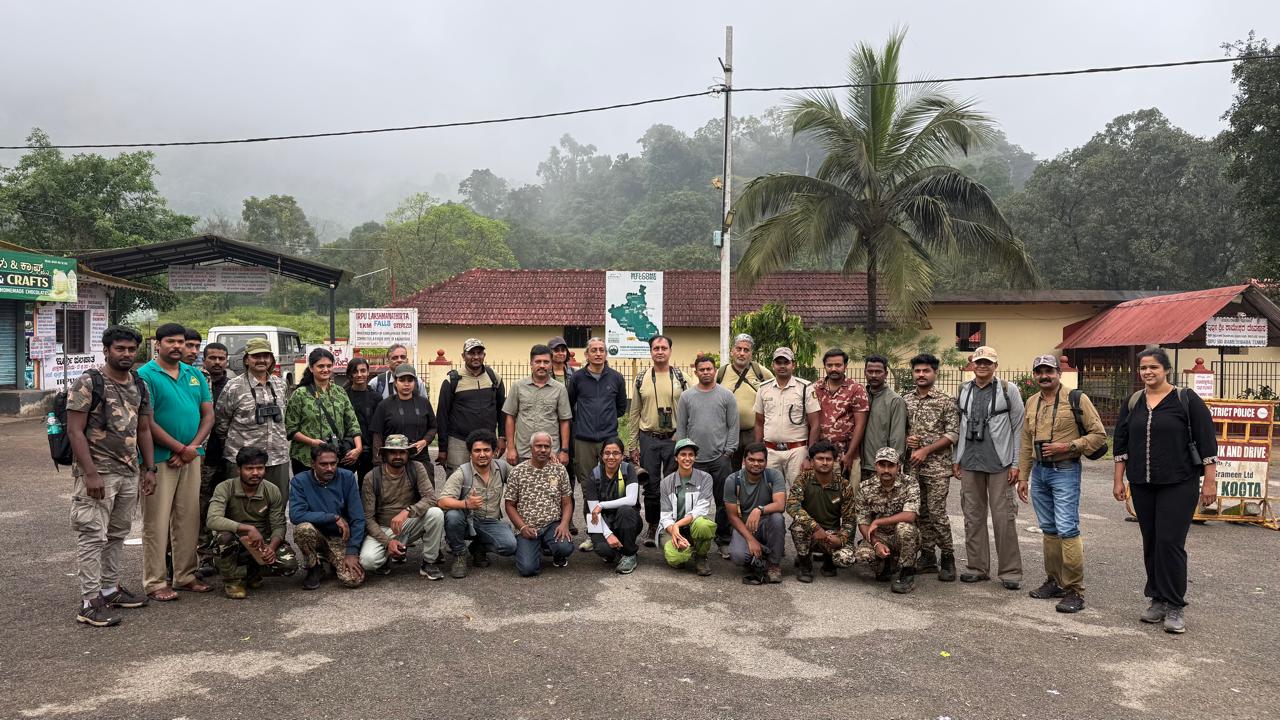
Around 25 participants from across the region took part in the trail. With the support and guidance of the Forest Department, the participants documented various species of amphibians, birds and butterflies (Lepidoptera).
Post-monsoon biodiversity surveys are particularly important in seasonal landscapes, as changing weather conditions influence water availability, vegetation cover and the movement of species.
The field observations also highlighted the importance of Ecologically Sensitive Zones (ESZs) surrounding protected areas. Such buffer regions help absorb external ecological pressures, safeguard critical wildlife movement corridors and protect fragile watersheds from unsustainable development.
“Beyond wildlife conservation, maintaining these ecological buffer areas is essential for the long-term economic stability of local agricultural communities, as they help protect soil fertility, regulate microclimates and sustain clean water supplies across the region,” said CWS member Navin Bopaiah.
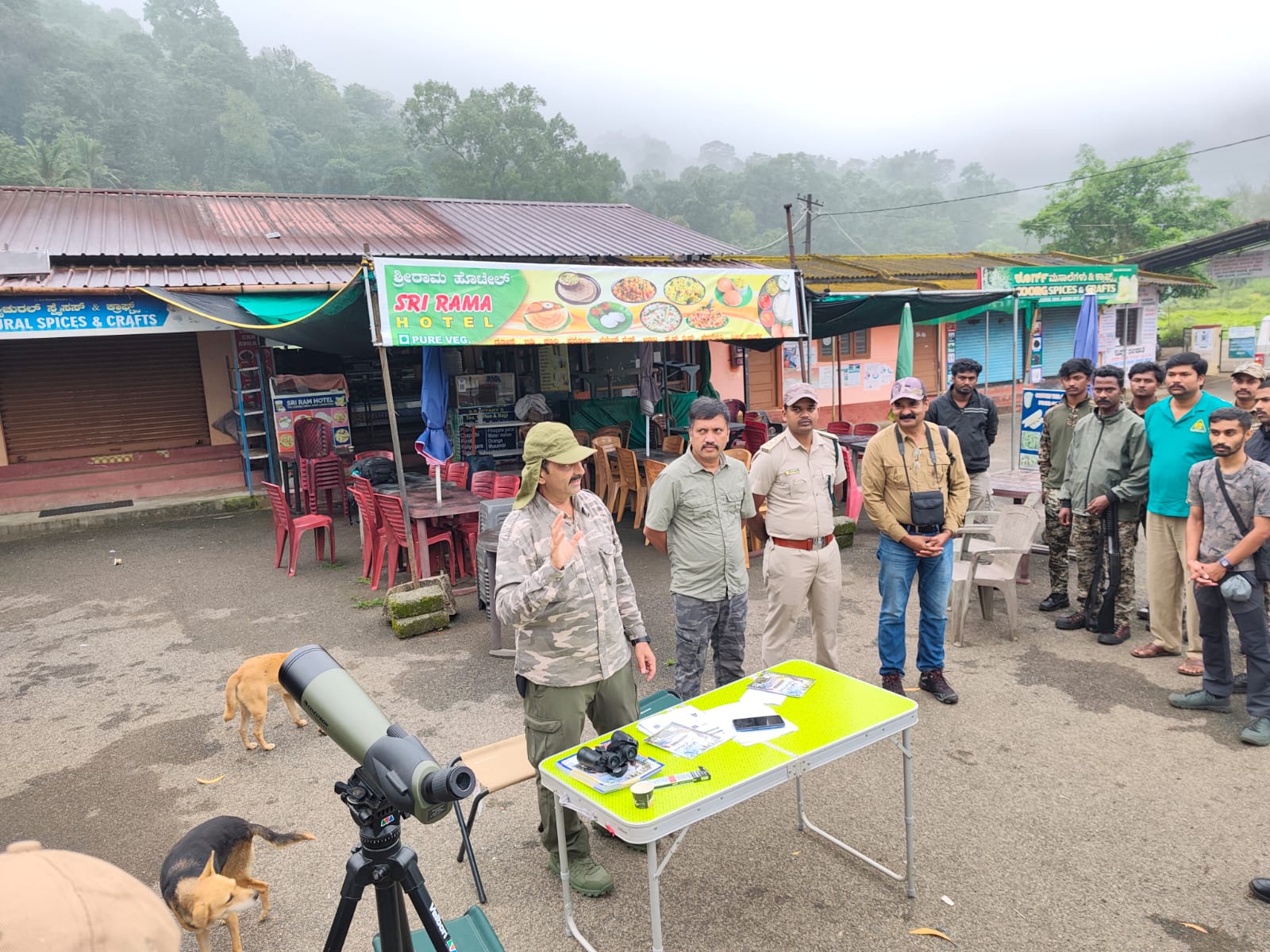
CWS members Bose Madappa, Navin Bopaiah, C.P. Aiyappa, Prashant Aiyappa, Ragini Machaiah and Vikram Subbaiah, Vishal Ponappa and Gopi, Naturalist from Nagrahole Tiger Reserve were part of the contingent that led the participants.
List of Butterfly Species Observed on the Trail (for reference)
1. Angled Castor
2. Angled Pierrot
3. Blue Admiral
4. Chocolate Pansy
5. Club Beak
6. Common Banded Peacock
7. Common Castor
8. Common Cerulean
9. Common Crow
10. Common Four Ring
11. Common Grass Yellow
12. Common Gull
13. Common Jay
14. Common Jezebel
15. Common Leopard
16. Common Sailer
17. Danaid Eggfly
18. Dark Branded Bushbrown
19. Dark Grass Blue
20. Double Branded Crow
21. Great Eggfly
22. Great Mormon
23. Grey Pansy
24. Hedge Blue
25. Large-spotted Helen
26. Lemon Emigrant
27. Lesser Grass Blue
28. Metallic Cerulean
29. Paris Peacock
30. Pointed Ciliate Blue
31. Rustic
32. Sahyadri Birdwing
33. Southern Bluebottle
34. Tailed Jay
35. Zebra Blue
List of Bird Species Observed on the Trail (for reference)
1. Asian Tit [Cinereous Tit]
2. Banded Bay Cuckoo
3. Black-and-orange Flycatcher
4. Black-rumped Flameback
5. Black-throated Munia
6. Bronzed Drongo
7. Brown Shrike
8. Cattle Egret
9. Crested Goshawk
10. Crimson-backed Sunbird
11. Dusky Crag Martin
12. Greater Flameback (Malabar Flameback)
13. Greater Racket-tailed Drongo
14. Grey Wagtail
15. Grey-capped Pygmy Woodpecker
16. Grey-fronted Green Pigeon
17. Indian Black-lored Tit
18. Indian White-eye
19. Jungle Myna
20. Large-billed Crow
21. Large-billed Leaf Warbler
22. Lesser Cormorant
23. Little Spiderhunter
24. Little Swift
25. Long-tailed Shrike
26. Malabar Barbet
27. Malabar Grey Hornbill
28. Malabar Imperial Pigeon
29. Malabar Parakeet
30. Malabar Starling (Blyth’s Starling)
31. Malabar Trogon
32. Malabar Woodshrike
33. Nilgiri Flowerpecker
34. Orange Minivet
35. Oriental Magpie-Robin
36. Plum-headed Parakeet
37. Red-rumped Swallow
38. Red-vented Bulbul
39. Red-whiskered Bulbul
40. Rufous Woodpecker
41. Rufous-bellied Eagle
42. Small Minivet
43. Southern Hill Myna
44. Speckled Piculet
45. Spotted Dove
46. Spangled Drongo (Hair-crested Drongo)
47. Square-tailed Bulbul
48. Velvet-fronted Nuthatch
49. Vernal Hanging Parrot
50. White-bellied Treepie
51. White-breasted Waterhen
52. White-browed Wagtail
53. White-breasted Kingfisher
54. White-cheeked Barbet
55. Yellow-browed Bulbul
56. Malabar flame back *
*CWS observed that – the majority of the migratory birds have not yet arrived and are still in transit.
Amphibians recored by Ragini Machaiah:
1. Kottigehar dancing frog (Micrixalus kottigeharensis)
3. Common Indian toad (Duttaphrynus melanostrictus)
3. Rao’s intermediate golden-back frog (Indosylvirana intermedia)
4. Bicoloured frog (Clinotarsus curtipes)
5. Night frog (Nyctibatrachus sp.)
6. Leaping frog (Indirana sp. – heard)
Join our WhatsApp Group for News and Article Alerts



Kodagu is very rich in biodiversity and holds immense potential for exploration.
From mega fauna to little gems it has it all. The flora too is unique, Kodagu being at the confluence of the Western and Eastern Ghats.
Surely, these are baby steps in the right direction…!!!
An excellent initiative towards systematic biodiversity mapping and long-term ecological monitoring of the Brahmagiri landscape. Such citizen-led efforts, in collaboration with the Forest Department, are truly commendable.
Excellent initiative. This is so crucial in building trust and conducting joint initiatives – in the future. There’s a big deficit in management of HEC and regreening of forests being reported in the media. This is an opportunity to correct the perception with joint efforts.
Excellent initiative by the CWS Team – extremely good initiative of making this a joint effort. Builds trust, empathy and a common agenda by all stakeholders for the appreciation and need to protect the environment.