

Pilibhit, a magical place at the foothills of the Himalayas is known for large tigers and this tiger was one of the largest I have seen in the wild.
He went around with a moniker “Rocket”, a name that aptly described the way he used to slink away on the slightest sound of an approaching safari jeep, making it very difficult to sight him in his younger days.
As he grew older he turned bolder, patrolling his territory majestically strolling the jungle paths in a gait befitting an emperor’ swager.
He was the king of the jungle , of everything he surveyed.
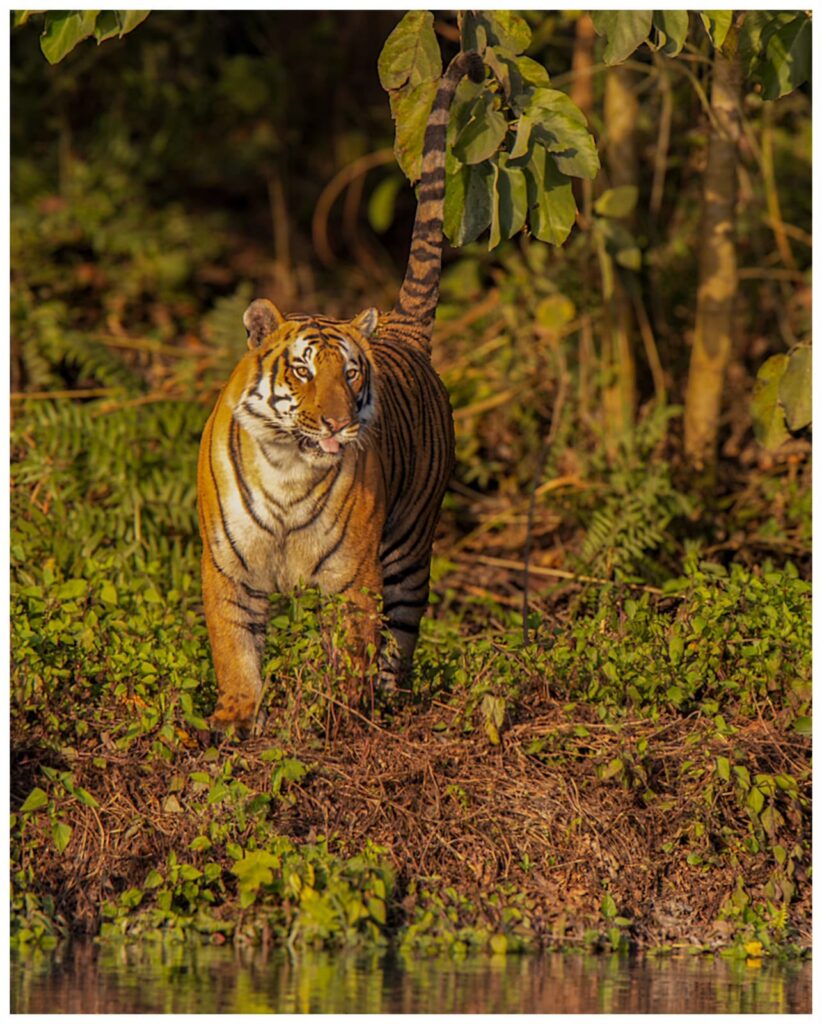
Here he is displaying a flehmen response, checking for tales of the jungle left behind as signatures in scent markings.
Sadly Rocket passed away in his prime in the year 2025.
The cause of his death is a mystery still spoken in hushed tones.
© Dr Prasad J. Kamath, Gynaecologist; Endoscopic Surgeon. A Nature Enthusiast by passion.
Join our WhatsApp Group for News and Article Alerts



We need to understand Forests more deeply. Observing animal behaviour, learning about conservation, and connecting people with nature in a meaningful way – was the old Kodava way of life. Our Devarakadus and even our approach towards hunting bear testimony to this practice.
Every walk of a tiger in the forest tells a larger story of survival, balance and conservation. It is not CONFLICT, but finding a way to coexist in your designated areas. If we don’t ensure that their terrain provides adequate nourishment for their existence, they will come out of their comfort zone.
Have always enjoyed the posts made by Dr Prasad Kamath. They are very “personal”, real and exciting to read. You are clearly an ardent wildlife enthusiast with the visits you must have made to many tiger reserves like Tadoba Andhari, Pench, Ranthambore, Corbett National Park, Kanha, Pilbhit and perhaps more.
It is intriguing that Nagarhole is not spoken about much in the “must see” tiger reserves and is a cause for concern. General complaints are the lackadaisical maintenance of the sanctuary which is infested with Lantana and nothing for the larger animals in terms of food and poor water bodies. It is not surprising therefore that these large animals have taken abide in Coffee plantations.
Curiously the tiger population has grown healthily in the Nilgiris Biosphere despite it straddling three uniquely different States in terms of Forestry management. Much needs to be done to resolve the much talked about Human Elephant Conflict – the prime issue being the need to create adequate sources of vegetation and food for the animals.
Excellent. Is that part of Corbett’s domain?
Pilibhit Tiger Reserve is located in Pilibhit district, Lakhimpur Kheri District and Bahraich District of Uttar Pradesh state in India. It lies along the India-Nepal border in the foothills of the Himalayas and the plains of the ‘terai’ in Uttar Pradesh. It is one of India’s 50 Project Tiger reserves.
Pilibhit is one of the few well forested districts in Uttar Pradesh. According to an estimate of year 2004, Pilibhit district has over 800 km2 (310 sq mi) forests, constituting roughly 23% of the district’s total area. Forests in Pilibhit have at least 36 tigers and a good prey base for their survival.
Chuka forest are situated on the bank of Sharda river in district Pilibhit. The Sharda Sagar dam on Sharda river forms Sharda Sagar reservoir which along with the forest areas present a beautiful landscape.
The Sal forests which are known for their rich biodiversity are home to various species of birds and animals. These forests offer an opportunity to renew your ties with nature.
This reserve is one of the finest examples of the highly diversified and productive Terai-Duar savanna and grasslands eco-system. The Terai forests and grasslands constitute habitat for over 127 animals, 556 bird species and 2,100 flowering plants. They are also home to around 6 million people who depend on them for their livelihoods.
Pilibhit Tiger Reserve is home to a large number of rare and threatened species, which include Bengal tiger, Indian leopard, swamp deer, hispid hare and Bengal floricans.