

KAILPODH NAMMERA NALLAME 🙏🏼
We live in a world where stability, tradition and a connection to the past are all in short supply. A hallmark of Kodavamme and Kodava festivities was simplicity, mutual respect, community involvement, oneness with Nature and elegance. All of the three major festivals are connected to growing rice – Kailpodh, Kaveri Changrandhi and Puthari were fairly simple and so were all our celebrations from birth, marriage to death. No display of oneupmanship. Things have changed radically – time to pause, think and act.
As Kailpodh approaches, social media once again reverberates with photographs of celebrations with an emphasis on liquor, pork and the real significance taking a back stage. There is nothing wrong in taking pride in our traditional food or enjoying a celebration. But when that becomes the only picture we repeatedly project of the Kodava community, we would allow the world to reduce a rich culture to a plate and a glass.
I would submit that this is not the most appropriate approach.
Kailpodh carries the memory of a community whose life was intertwined with agriculture, land and the responsibility of protecting the home and the harvest. Our traditions carry stories that existed long before social media decided what a community should look like.
Perhaps this Kailpodh we should pause before we forward another picture and ask ourselves what are we teaching our children about their heritage? What are we telling the world about who we are? Let us celebrate – but let us celebrate the meaning behind Kailpodh, not merely the feast around it.
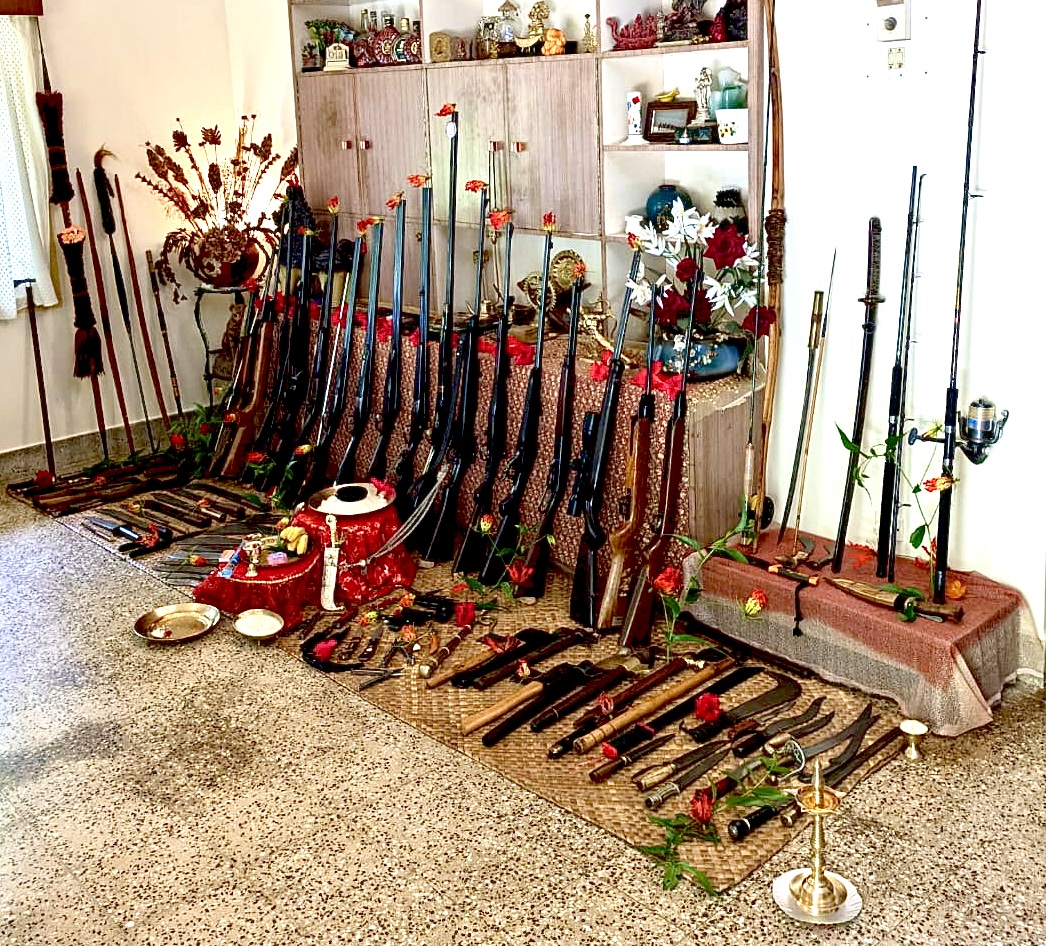
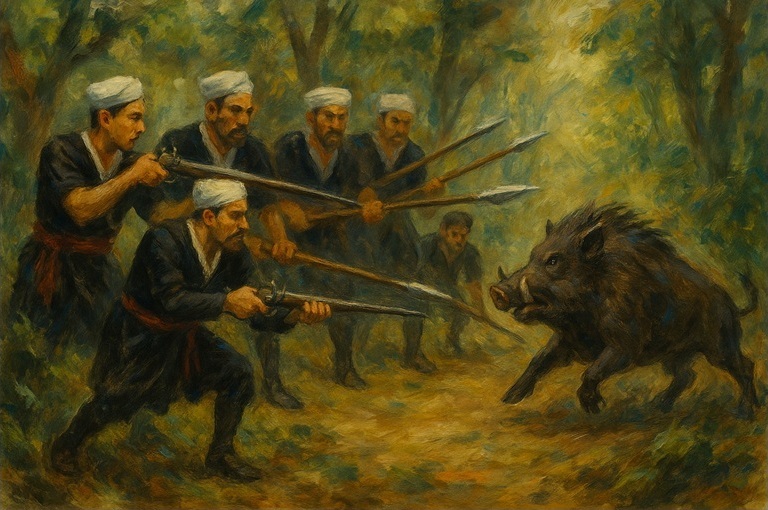
Kailpodh festival is celebrated during the end of the paddy sowing in Kodagu (Usually 3rd September). Keil (now commonly spelled as Kail) means weapon or armoury and Podh means worship. Many a time a parallel is drawn with Ayudha Pooja, but we go beyond obeisance. The festival also signifies the day that men used to prepare to guard their crop from wild boar and other animals. Hence, on the day of Kailpodh, it is customary to pay our respects to all our paddy cultivating implements, arms (Guns, Odi Kathi, etc), Vehicles (at one time cattle), Home equipments including Pen & Paper, Phone, Computer to further our kodavamme culture and lifestyle.
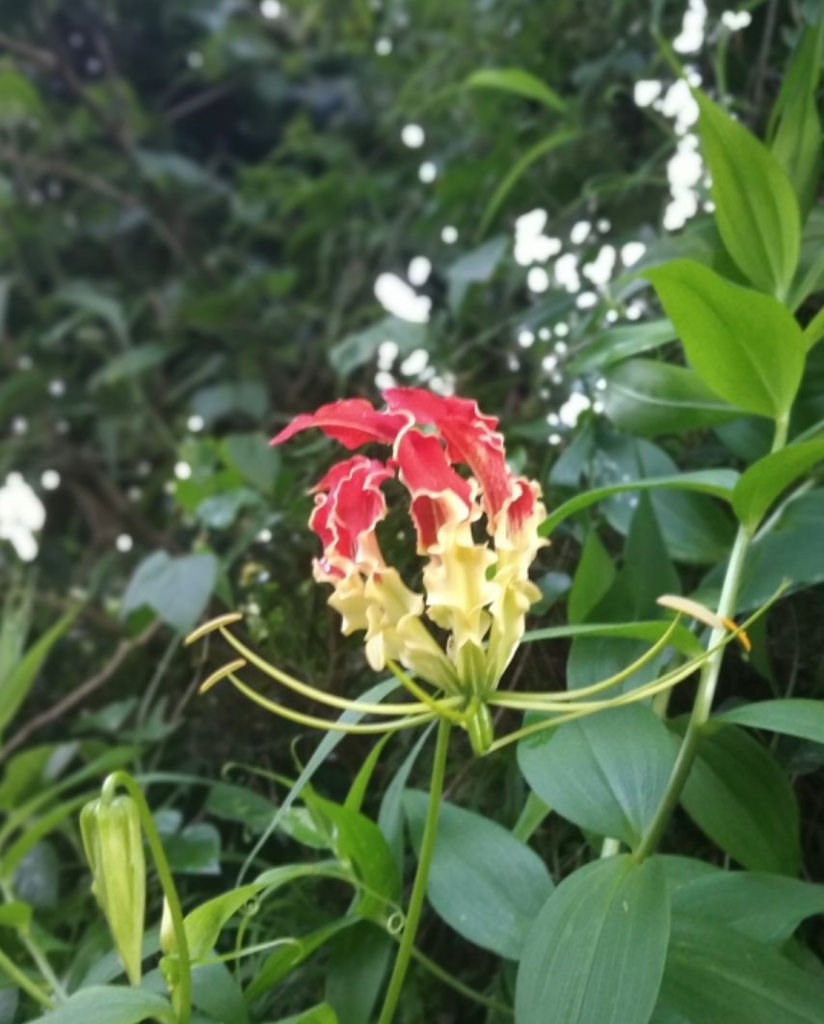
This is the only day when the Glory lily or Thok poo (Gloriosa superba) is permitted inside the house.
Kailpodh is celebrated with great grandeur and variety of games and sports are held in the fields on this occasion. Shooting targets, running race (kesaru gaddhe ota) etc, are conducted on this day. In the days gone by the Kodavas used to set out on the hunt for game which is obviously discontinued as hunting is prohibited. Instead shooting competitions are organized.
I would like to share an important excerpt from a previous event at Kakotparambu. The Akhila Kodava Samaja President Paradanda Subramani Kaverappa in his speech appreciated the organisers for involving all the citizens in conducting the sports event. Most importantly it shows the Kodavas commitment to unity. Secular leadership was a legendary trait amongst Kodava leadership demonstrated in all fields – especially during the major festivals.
Let us share photographs of our Ainmanes, let us speak about our ancestors, let us celebrate our farmers and support those who cultivate their paddy fields. Let our children know the meaning behind our festivals. Let us tell the stories of Kodavas who served the nation, excelled in sports, built institutions and contributed to society.
And most importantly, let us teach our children that culture is not what we consume. Culture is what we inherit, preserve and pass on. Let us celebrate our festivals with pride – but also give the world something more meaningful to understand about our unique culture.
Finally, I would like to reproduce a few lines from the outstanding recent publication – Coorg the Cookbook written by Kaveri Ponnapa:
“For centuries, rice cultivation shaped how we lived, ate, celebrated, and built communities, a vital link to the land that brought prosperity and plenty to the table. Rice lies at the heart of our cuisine and culture.
Recent years have seen a visible drop in rice cultivation. It wouldn’t be an exaggeration to point out that the area under cultivation has halved in the past two to three decades. The rhythms of rice cultivation still shape our social lives. Festivals, celebrations, and the season when weddings are conducted continue to be centred around the progress of the rice crop. Like many rice cultures, the rice spirit is a feminine energy: while ploughing the fields, songs are addressed primarily to Kaveramme, the mother goddess, and the generations of ancestors who ploughed the land. The all-important rituals before transplanting seedlings are performed by women, emphasising the role of the feminine figure in defining the boundaries and cultural practices of the community.” More about this when we write about Kaveri Changrandi.
My family has been growing rice for over a hundred years – I can vouch for what we have done since I got married. We are amongst the few who cultivate our wetlands in Hatur Kunda as we consider it sacred and it also ensures that we eat healthy organic rice. As we yield more rice fields to progress, there are a few clans that still gather to sow, plant, and harvest their ancestral lands, while managing their city jobs, driven by an awareness that without nurturing rice fields, we will lose an essential part of our cultural identity. May this tribe grow and it is good to see youngsters taking part in Bael Pani events on the rise.
With thanks to Kaveri Ponnapa for reference from her book The Vanishing Kodavas; Chapter on Celebrations: pages 234-61 – must read!
Featured Image – Courtesy: Coorg On Your Plate
Join our WhatsApp Group for News and Article Alerts



Beautifully written. Thank you for bringing out the real significance of kailpod and reminding us that it is far more than a celebration- deeply rooted in our agricultural heritage. Our land and our connection with nature. At a time when social media is creating and spreading distorted versions of our traditions , it is important to return to the roots and understand what our festivals truly mean.
.
.
Thank you, Ms. Mamatha, for a truly splendid perspective on Kailpodh.
Reading about families who still cultivate their ancestral wetlands for as long as you’ve done is phenomenal. Preserving our paddy fields isn’t just an agricultural choice; it is fundamental to preserving our identity and environment.
Too often, social media reduces Kodava traditions to a caricature of “unlimited liquor and pork.” This superficial portrayal ignores the soul of our culture—a tradition grounded in simplicity, mutual respect, elegance, and a deep connection to Nature.
Our Ainmanes shouldn’t just be places to showcase material success or urban accomplishments. They need to return to being hubs of community action. We must begin having serious conversations about land preservation, commercial exploitation, and local relevance. We have to continuously reinvent ourselves to preserve the hereditary values.
It is time to look beyond the symptoms and take active responsibility for safeguarding Kodagu’s future. Culture is not merely what we display or consume—it is what we cherish, practice, and pass on to the next generation.
Kailpodh Nammera Nallame!
.
Excellent article that articulates the key features of why the festival takes place and the “connectedness” that our ancestors had with rice cultivation in our annual calendar of activities. The different aspects of the festival from the respect/worship of all implements/guns/ bulls/tractors, the significance of the actual offerings at the time of worship in the AineManes and homes, the induction of youngsters to the “sacred hunt” (which is now replaced with shooting competitions and community sports) and of course the well deserved feast that follows after all the work in the fields.
An explanation about the meedi :
Guns and swords are cleaned and polished, a mat is spread below the tooke bolcha in the central hall of the AinMane, the weapons are dotted with sandal paste and toke puv is placed in the barrels of the guns. Three meedis are placed before the lamp made up of offerings of pork curry, puttus and other cooked food. The first is dedicated to Botekara Aiyappa, the God of the Hunt, the second to his pack of his hunting dogs, and the third one, which includes a glass of liquor, to the ancestors. Although the collective celebrations are long gone, individual homes celebrate in much the same way.
The Kodavas were a robust and hard working race that justified the calorie intake with physical exertions. That is not necessarily the case in the present day reflected in the physical appearance of most of us. The calorific intake needs quiet introspection!
Well written Mamatha Subbaiah. Your reference to Kaveri Ponnapa’s books is a good sign of tapping into well researched work. When we worked in the paddy fields we used to sing uyyo paat – invoking the mother goddess and our ancestors, praying that wild boar and bison (kaati) would find the crop too bitter to eat. The headman of the village used to lead the singing and the chant was taken up by everyone working in the fields. There was a great sense of interdependency and camaraderie built amongst all in the village and beyond, that strengthened the bonds and identity.
The special nuances that you highlight are invaluable Ajja. 🙏🏼
May it rain abundantly to fill the streams,
May the water flow and glisten.
By the grace of Lord Igguthappa, Mother Cauvery and our Ancestors,
May life bloom, thrive, and remain
evergreen forever.
May unity, harmony, and togetherness flourish like blooming flowers.
May envy, ill-intent, and bitterness
Be buried deep into the abyss.
Respecting and holding fast to our Kodava heritage and traditions,
May our unique Kodava identity, language, and culture
Endure and prosper forever.
All-round well-being and Prosperity to Everyone.
— President and Members, Akhila Kodava Samaja
A very well written article, it takes me back to my childhood.
Proud to see Mamatha Subbaiah’s articles – robust, down-to-earth and well thought out topics that are relevant for Kodagu’s future. She accesses scholarly research material painstakingly, giving appropriate credit and weaves the invaluable information with total integrity to educate the younger generation why this festival means a lot for Kodavas. This should be widely published in all forms.
It is particularly encouraging to see your comments Anil Anna. I have been thoroughly enjoying my time writing in such a focused manner on pressing matters that affect Kodagu. It is time that the leaders of the community shed their political identity and worked unitedly to preserve, enhance and ensure that Kodavaame in its truest form reestablishes itself as the primary platform for the residents of Kodagu.
Reading this article evokes a sense of nostalgia for a time when festivals like Kailpodh were closely connected, with farming tradition and community life. It serves as a valuable tribute to preserving a rich heritage for future generations. Thanks Mamatha and CLN for authoring this insightful article.
It brought back fond childhood memories of accompanying my grandparents to the paddy fields and watching them work alongside fellow farmers. Those experiences reflected the strong sense of community and the close connection to the land that defined life in Coorg.
It is saddening to witness the gradual decline of agriculture and the conversion of paddy fields.
There has to be committed effort at all levels – Government and Farmers to ensure that there are no permanent “fallow” wetlands. There has to be serious dialogue between policy makers, farmers, environmentalists, administrators to ensure that paddy cultivation does not diminish in Kodagu. It has serious repercussions beyond cultural heritage.
A beautifully articulated and meaningful read. Kailpodh is more than a post or a celebration; it’s a part of who we are. Let’s keep the spirit alive beyond social media. Nammera Nallame! 🙏🏼
I am immensely proud to be born in Kodagu and to celebrate its rich culture and traditions. ❤️🌿
Let us not forget to teach the next generation what the real Kodagu stands for.
Kodagu was never made up of just one community or one religion. It is a land where we celebrate each other, respect each other, and live in harmony with the land, water and nature that have given us so much.
It is high time we come together to protect our nature, culture and land for generations to come.
Let us celebrate Namme not just as a festival, but with an understanding of why we celebrate and how our traditions came to be. Let us pass that knowledge, respect and pride to our children.
Yellarku Kailpodh Nammera Nallame! 😊❤️🌿
What a lovely message Anthony – it conveys a deep sense of reverence, gratitude and affection for this sacred land of ours. Your message on the need for continued secularism to prevail is well made. Since you’ve lived in Kodagu since your childhood you would have witnessed a huge demographic change – especially in the past two decades. Juxtaposed with a massive influx of uncontrolled tourism, it places a phenomenal stress on the “culture” and “identity” of this place, especially for those of us who have lived here from time immemorial. This calls for a sensible policy of checks and balances that has to be codetermined and implemented with great care.
A very thoughtful piece by Kodandera Mamatha Subbaiah. Thank you to CLN and the author for bringing out the deeper essence of Kailpodh. Traditionally, the food, the rituals, the worship of weapons and the reverence for the gods and ancestors were all part of a way of life, with each having a meaning connected to the land, livelihood, protection and community. The weapons were not merely ceremonial objects either. They had a real place in the life of the people and in protecting the harvest.
Today, perhaps without us even realizing it, the focus seems to be shifting. We find ourselves taking comfort in photographs of someone else’s arrangements, beautifully decorated spaces and making the celebration Instagrammable. Perhaps this is also a reflection of how the actual use and purpose of those traditional weapons has naturally reduced, while their visual appeal has grown. There is nothing wrong with celebrating and sharing these beautiful traditions, but it is worth pausing to remember the meaning behind them. This article is a lovely reminder of that.
This is an excellent article, and I really connected with the thoughts because it took me back to our school days when Kailpodh meant more than just rituals. It meant a holiday we all eagerly looked forward to. The thrill of waking up knowing there was no class, spending time with friends, and soaking in the festive mood.
Reading this reminded me how much those holidays shaped our sense of community and joy. To me, culture isn’t just about what’s on the plate. It’s about what we inherit, preserve, and carry forward with pride.
Excellent article. Needs no further comment.
Kailpodh Nammera Nallame.
Thanks for another factually grounded article by Mamatha. While agreeing to the whole article as such, personally I feel Social Media has triggered the interest among the younger generation to read more. For example I am sure the very mention and reference to COORG THE COOKBOOK & THE VANISHING KODAVAS in this article would definitely instill some interesting in GEN X to atleast read those books.
Also when we share the images and posts on our Festivals the younger generation would like to know more about our festivals and personally I feel would either ask their elders or maybe Google or go and find out from other sources regarding the fiber details and nuances of our CUSTOMS FESTIVALS TRADITIONS DRESS CUISINE etc. So Social media helps us to know more than what we know and not to forget people like MAMATHA KODANDERA WONT FORGET TO ENLIGHTEN US THROUGH THEIR BRILLIANT GREY MATTER AND PEN.
Deeply honored that my Ur Kaara who works so much for everything that is Kodavaame and for Kodagu responded to the article. As you can imagine there is a group of us at the news desk who have enriched the content, which is a matter of great satisfaction for me as a writer.
On the use of Social Media – I have some concerns. CLN Online itself is very much a social media platform using WhatsApp with a big difference – content is edited for integrity and quality. What passes off as an eye-catching post can be destructive and misleading in content (see Kaverappa’s comment). Our culture cannot be trivialised nor wrongly portrayed. I am sure you have seen some media posts and YouTube content virulently circulating which is banal and below par. Also there are others who plagiarize without giving credit and worse appropriating content from well established sources. I KNOW that you do not support such practices, but this is also meant for those who read our interactions that are clear where we are coming from.
https://www.instagram.com/reels/DcqwU2ouKYm/
Excellent share☝🏼and greeting that I received from my Kodava friends ☝🏼
I really like the Kodavas – all my friends are wonderful gentlemen, very cultured, high integrity with a great zest for life. I began to understand the depth of the unique Kodava culture after reading The Vanishing Kodavas. There is so much meaning to every function and community celebrations and it is important to pass this on to future generations. Lots of similarities with the Sikh Community where community work (Seva), sharing with the underprivileged and secular living are ways of life with us. It makes sense for the Kodavas to celebrate important festivals and events at their Family Homes (BalyaMane) where their Guru Karona resides. That should be the epicentre for the celebrations.
Thank you for having pointed out the need to go the primary place of worship and celebrations Mr Amarjit Singh. This is the reason we keep harping that all Kodavas should celebrate key festivals in their AineMane and NOT in the Kodava Samajas.
The Sikhs go their Gurdwara, the Christians to Church on Sunday and observe Lent and Christmas – so what is it with us that we can’t celebrate Karona Kodupo, Puthari, Keilpodh and Kaveri Changrandi in our AineMane in Kodagu in the manner that it was done for time immemorial??
This is a very good article that emphasises the importance of Rice in all our customs within our culture. Since I am from NalNad, it is shocking to see rice being bought for Tulebara in sacks from Napoklu and Kakkabe. Even more shocking is that the rice disappears, hopefully for the free food served at the temple. Many planters have discontinued cultivating their wetlands citing non-availability of labour and lack of profits. The fact is that growing paddy is critical for the environment as the water in the paddy fields helps maintain the underground water table at a high level.
The point Ms Subbaiah makes on the appalling quality of social media messages is very true. There is trivialization of our important customs and my friends in Bangalore think that all Kodava functions focus on alcohol and eating pandi curry. That is so far from the truth.
I know exactly what you mean by the low grade of content posts being made in social media, even amongst the Kodavas 👇🏼
https://youtu.be/6rC0jybpxKQ?si=hSI_7kCuGdtUUV7x
https://www.instagram.com/reel/DcyATCvRCfd/?igsi=MWtibHN4dXYzNnRvNg==
This resonates deeply. Our ancestors left us much more than rituals and recipes—they left us a way of life rooted in simplicity, respect, community, nature and responsibility. Perhaps the greatest way to honour them is to ensure that our children inherit not just the celebrations, but also the values behind them. A beautiful reminder to pause and reflect. Kailpodh Nammera Nallame! 🙏🏼🌾
A fascinating glimpse into Kailpodh and the deeper relationship between land, community and tradition in Kodagu. What appears at first to be a festival of weapons and feasting is really a story of responsibility, memory and continuity — of what one generation chooses to pass on to the next.
Warm wishes to all the people of Kodagu on the joyous festival of Kailpodh. May this special celebration bring happiness, prosperity, peace, and togetherness to every home.
Happy Kailpodh, to all..
As the heavy rains slowly vanish from the valley and intermittent rains with sunshine prevail to further fasten up the vegetative growth,.. paddy fields further draped in green, growing to the next phase from “karinaati” as addressed by the farming community of kodagu, comes the kailpoudh.. which is very well explained from Mamatha subbiah
As it is important to note that most of our culture revolves with rice .. be it a prayer under the holy lights if nellakki, or each and every step of growing rice, is attributed to cultivate with even more sanctity towards mother earth as “jabbomina uthith nattith”
It’s also important to note that paddy cultivation is reduced nowadays and fields prepared by ancestors with all the hardwork are taken over by the land Mafia and the very tradition will exist only by practices of growing rice, even though the circumstances look difficult and not impossible..
The key to reviving it involves with the practice of WE carry it in our ainmane aarwaada..
Where the climax of kailpoudh is elders handing over the arms to youngster after ‘thappadka’.. at nellakki nadubaade and younger men touch the feet of the pattedhaara for blessings..
This is a common practice where each member of the clan including women and kids come out to visit each households to gather blessings and good wishes .
The elders made this unique design within the clan to further strengthen the “oggatt, otthorme” and this practice has taken care nullifying the rivalry and small disputes erupting within the family members pertaining to the land sharing..
The family pattedhaar is clever enough to eradicate such things when the clan members gathered at the ainmane and used to call upon the brothers with disputes in front of everyone on this occasion and the youngest one had to touch the feet for blessings and and that is how rivalry and grudges used to be settled and no court cases were necessary.. from the older times
More than anything else on this auspicious day we must focus on this practice of harmony and camaraderie of the kodava culture which is a common practice in each and every House holds in Kodagu..
These practices are important to preserve the land holdings..when sanctity is attributed.. people will hold on to it
The advantage lies in the gatherings of ainmane and celebrate the festivals has a tremendous impact rather than celebrating it in individual households or kodava samajas..
Because ainamane aarwaada is our “sanctum sanctorum”..
Wishing all the happiness , prosperity and contentment to the people of kodagu on this auspicious occasion of kailpoudh
Delighted that you have taken time to respond to the article with intricacies of the social aspects that took place. It is really gratifying to see the online platform being used to spread knowledge about our precious customs
From Survival to Celebration: Why We Must Preserve Our Paddy Fields
In the past, the people of Coorg were largely dependent on hunting, animal meat and edible products from the forests for their food and survival. The cultivation of paddy brought a major transformation to the community. For the first time, food could be cultivated, stored and secured for the family and community. Paddy therefore became much more than a crop….it became a symbol of food security and prosperity, and was considered auspicious.
Our intelligent ancestors appear to have understood the importance of giving the land and themselves a dedicated period for cultivation. From around July 16 to August 16, the period known as Kakkada, there were traditionally no social functions or temple celebrations, with the exception of funerals. The entire focus was on cultivation and completing the agricultural work.
Around the middle of this period came Kakkada 18, when people took a brief break from their demanding agricultural work. Selected traditional foods were consumed, believed to help restore and strengthen the body during this important agricultural season.
Once cultivation was completed, it was time to celebrate..and also to prepare for the next phase of survival.
Agricultural implements were cleaned and maintained. Weapons were cleaned and prepared for hunting. Prayers were offered for a successful and safe year ahead. The agricultural tools and weapons were respected through pooja, acknowledging their importance in providing food and protecting the family.
The pooja itself was simple and rooted in what was naturally available. Dhoopa and arathi were offered, along with Thok Poo, a flower that was available in the jungle during that particular season. There was no elaborate decoration or extravaganca ..just gratitude, respect and a prayer for survival.
This celebration came to be known as Kail Poudh,,,a celebration after cultivation and a preparation for the challenges ahead.
Over time, the economy of Coorg changed. Cardamom became an important parallel crop, followed later by coffee. As coffee became economically more attractive and rice became readily available in the market, paddy cultivation gradually lost its economic importance. A crop that was once central to our food security became less profitable, labour-intensive and increasingly neglected.
But perhaps we should look at our paddy fields differently.
A paddy field should not be valued only by its present day profit.
Food security can become important again at any time. Markets can change. Supply chains can be disrupted. Climate, disasters, economic crises or other unforeseen circumstances can affect the availability and price of food.
Our ancestors cultivated paddy not merely to make money, but to secure food and ensure survival.Therefore, wherever possible, let us preserve our traditional paddy fields as paddy fields.
Coffee may give us an income today, but paddy can give us food when we need it most. We should not allow the fields that once secured our ancestors’ survival to disappear simply because they are less profitable today.
Let us preserve them..not only for our culture and traditions, but for the food security of our own future generations.
This video demonstrates the importance of undertaking basic agricultural activity – growing rice is what gives us Kodavas our stature. Everything cannot be monetarily justified, wetland cultivation is an environmental necessity, as much as retaining green cover for our hills.
Your very practical thoughts on how the cultivation of rice must be preserved is essential reading for all Kodavas – especially the younger generation. Rice was what made our ancestors prosperous, and all our activities were planned according to the paddy crop. Sustaining wetland cultivation is critical not only to preserve our identities, but also the sacred land and its water resources.
A much needed reminder that culture is far more than what we eat, drink and post on social media. Kailpodh carries stories of our land, our farmers, our ancestors and our responsibility towards preserving what has been passed down to us. Beautifully articulated.
Particularly delighted to see young voices express support for Kodavaame in the manner that you have done Neer. Bodes well for Kodagu!
I could easily relate this article to Kaveri Ponnapa’s research-based work, which says that Kail Podh is about the rhythm of rice, ancestral duty, and the sacredness of tools, not about showy posts. In The Vanishing Kodavas, chapter on Celebrations, she writes, “For centuries, rice cultivation shaped how we lived, ate, celebrated, and built communities… The rhythms of rice cultivation still shape our social lives. Festivals, celebrations, and the season when weddings are conducted continue to be centred around the progress of the rice crop.” When I read her work, I could see why the author is right to question social‑media driven Kail Podh. Once you understand the reason and spirit behind the festival, you stop chasing Instagram‑able moments.
The strength of this CLN article is that it does not just criticise social media, it offers a way back to the heart of Kail Podh by talking about land, labour, and responsibility in everyday language. It reminds readers that the festival belongs in the ainmane and the paddy field, not only in reels and photo dumps. By doing that, it helps people connect Kaveri Ponnapa’s deeper insights to how they actually celebrate today. That shift from display to meaning is exactly what the community needs right now.