

On this Independence Day, CLN is publishing three articles.
- The first is from the archives of AIR by the first and last Chief minister of Coorg, Late C.M.Poonacha.
- The second is by Gummatira Kishoo Uthappa, Kodava Clan. The second is a more contemporary compilation of events leading up to Independence. In this content we would also like to highlight a previous article by Bacharanianda P Appanna as to what he witnessed as young boy.
- The third is from CLN’s regular contributor Ms. Mamatha Subbaiah who gives her personalized expectation of what freedom means to an individual, with a focus on its relevance to the Kodava and Kodagu.
The underlying thread with all these articles is that freedom was hard fought and won. We have to earn the right to keep it.
In the first instance, and in a manner of speaking, Kodagu lost its administrative independence with the merger with the then Mysore State in 1956. Keeping that in mind it is only fit and proper that Kodavas and Kodagu should do everything to safeguard our identity, culture and socio-economic well being. This includes not selling our sacred inherited Jamma properties, cultivating our wetlands, innovating to add value to our plantation crops, providing leadership to all those who live in Kodagu and follow the Kodava way of life.
Coorg: History of Freedom Struggle
By: Late C M Poonacha / Source: AIR, Bangalore.
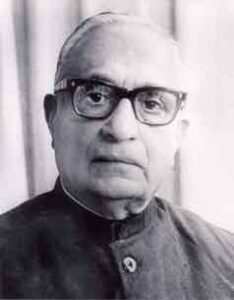
As far back as 1926, Coorg, though a small Chief Commissioner’s Province, enjoyed the benefit of working certain democratic institutions to which elections were held once in three years on a restricted franchise—these elections provided the basis for the people to form political parties and fight the elections.
Coorg Land Holders’ Association was a leading political party in Coorg, which fought these elections.
The wave of national upsurge all over India during the late twenties had its impact over the political life of Coorg.
As political awareness spread over the length and breadth of India, leaders of Coorg Land Holders’ Association viz., P. T. Kushalappa, Nidtha Subbannya, Khan Abdul Gaffar Khan, P.I. Belliappa, C. N. Venkappayya, K. C. Karumbaya and several scores of other second line leaders came under the influence of the national upsurge.
National leaders of Karnataka like Gangadhara Rau Deshpande, Hanumantha Rau Kaujalgi, Karnad Sadashiva Rau, R. R. Diwarkar, and Dr. N. S. Hardikar used to tour Coorg now and then and established contacts with the leaders of Coorg Land Holders’ Association. By the end of 1929, the Coorg Land Holders’ Association, by and large, became an organ of the Indian National Congress and several of its leaders enrolled themselves as active Satyagrahis and participated in the Salt Satyagraha Movement of 1930. There was spontaneous response all over Coorg to the call of Mahatma Gandhi to fight for the freedom of our country.
The first batch of leaders—P.I. Belliapa, Khan Abdul Gaffar Khan, K.C. Karumbaya and H.R. Krishnaya—were arrested in Ponnampet (South Coorg) in December 1930 and then onwards the movement spread like wild fire all over Coorg. Picketting of liquor shops, foreign cloth shops and leading processions and Prabhat Pheries became the order of the day and hundreds of Satyagrahis mostly young men and women participated and courted arrest. The convicted political prisoners were taken away to Madras jails as Coorg had no Central Jail of its own. This was a blessing in disguise as Coorg political leaders came in contact with the leaders of South India and developed greater political awareness.
In 1931, as a result of Gandhi-Irwin Pact, all the convicted Satyagrahis from Coorg were released from Jails and these leaders on return started organising Satyagraha camps all over Coorg to build up a cadre of dedicated Satyagrahis. As the Round Table Conference in London proved to be a failure, Mahatma Gandhi and other leaders returned to India totally disappointed. On his return to India, Mahatma Gandhi again proclaimed that the people of India would fight for their freedom, their birthright, and the Civil Disobedience Movement was thus sparked off all over the country with renewed vigour.
In Coorg hundreds of Satyagrahis courted arrest and went to Jail. Students and peasants joined the Civil Disobedience Movement in large numbers. A cyclostyled news sheet called Veer Bharathi was being published twice a week since the only weekly paper Kodagu was banned and its office and press were sealed by the Government on account of its support to the National movement.
I was editing and publishing Veer Bharathi. Police efforts to unearth the place from where Veer Bharathi was being published proved unsuccessful for over eight months.
As the movement gained mass support, Government’s repressive measures became severe and heavy fines were imposed in addition to imprisonment. It was at this stage that I was first arrested and convicted and sent to Cannanore Central Jail in 1932. The Bengal revolutionaries, like Bhattacharya, A. C. Guha and others, were serving their detention periods in Cannanore and we had the privilege of coming in contact with these veteran political fighters.
It is here again in Cannanore that I met Kamal Nath Tiwari, a close associate of late Bhagat Singh (famous Lahore conspiracy case prisoner). Later in 1964—after 32 long years—I had the great pleasure of meeting Kamal Nath Tiwari as a Member of the Lok Sabha in Delhi. I remember those prison days when we were taking our first lessons in Hindi from Tiwarijee.
As I mentioned earlier, we, the political prisoners from Coorg, had the splendid opportunity of associating ourselves with eminent leaders of South India like C. Rajagopalachari, Prakasam, Pattabhi Sitaramayya, Bulusu Sambamurthi, S. Satyamurthi, V. V. Giri, K. Kawara and others and had the opportunity of profiting ourselves by discussions and talks with them. I was shifted from Cannanore to Vellore where these leaders were held. Here I met Jaya Dev Kapoor, another close associate of late Bhagat Singh, and Jitendra Das, younger brother of the famous martyr Jatin Das. It was a unique privilege as a young political worker for me to come in contact with such patriots and gain from their acquaintance.
The Civil Disobedience Movement of 1932 was called off in 1935 in pursuance of a decision taken by the Congress to enter the legislatures to give a fair trial to the 1935 Reforms Act and, in case the Reforms were not capable of leading India, step by step to full Independence, to wreck it from inside. In 1937, the Congress came out successful in seven out of the eleven British Indian Provinces and formed the Congress Governments. In Coorg also, Congress secured majority of seats out of the elected seats in the Coorg Legislative Council.
At the break of World War II in 1939, as a protest to British Government’s unilateral decision to involve India with men and resources in the war without even consulting the people and without making anything clear about grant of independence to India, the Congress decided to come out of the Legislatures and launch a nation-wide agitation to demonstrate its non-co-operation with British Government’s war efforts. Again, the prison gates were thrown open and lakhs of people were arrested and put behind the bars. In Coorg also, a large number of Satyagrahis were arrested and imprisoned. P. I. Belliapa, K. C. Karumbaya, B. M. Kariappa, K. M. Devayya and myself were sent to Trichinopoly Central Jail where most of the South Indian leaders were confined.
Latter in 1942, after the historic Quit India resolution, the freedom movement turned into a mass upsurge and the British Government was finding it difficult to suppress the nation-wide movement. On my return from the Bombay A.I.C.C. session, I was arrested and detained under the Defence of India Rules. This time my colleagues and I were taken to Vellore Central Jail and detained there for two years (1942-1944). This period of detention proved to be the best part of my prison life as we were confined with about 42 picked leaders of erstwhile Central Provinces.
Our revered leaders like Vinobha Bhave, Kaka Kalelkar, Ravi Shankar Shukla, D. P. Misra along with others were confined in the same enclosure and their company gave us the opportunity to benefit from their vast knowledge of men and matters.
Later, on my being elected to the Lok Sabha, I had the good fortune of meeting my Jail colleagues viz., Amar Singh Saigal, Chandok and Sayed Mohamed, who were also Members of Parliament and had the privilege of working with them till 1970. We all know how the freedom movement came to a successful conclusion after World War II when His Majesty’s Government proclaimed grant of complete independence to India and transfer of power on August 15, 1947. I was elected to the Constituent Assembly of India and had the privilege of serving as a Member of Constituent Assembly and the Provincial Parliament till 1951 and had opportunities to work in close association with most of those leaders with whom I had served my prison terms.
In conclusion, I wish to make a special mention of the fact that to most of us, the prison days were a unique opportunity and rewarding experience to come in close contact with some of our great national leaders. The prison walls could not stifle our aspirations. Instead, they gave a rich content and healthy directions in the service of our motherland.
The facts, views and opinions expressed are solely those of the author and do not necessarily reflect the views of Coffeeland News.
*Editor has corrected the spelling. The rest of the content remains exactly as available with AIR. For example, in the original AIR copy, “Belliappa” is spelled “Balliappa” in some places. These spelling errors have been corrected in the edited version.
Join our WhatsApp Group for News and Article Alerts



Who chose the Lions of Ashoka?
The National Emblem of India is adapted from the Lion Capital of Ashoka at Sarnath, erected by the Mauryan Emperor Ashoka in the third century BCE. The four lions symbolise power, courage, and confidence, while the Dharma Chakra represents the continuity and progress of life. Beneath the emblem appears the motto “Satyameva Jayate” — “Truth Alone Triumphs.”
The fascinating modern story of the emblem begins before Independence.
In 1940, a young Indian Army officer, Captain M. Habibullah Khan Khattak, later Lieutenant General Habibullah Khan Khattak of the Pakistan Army, was posted from the 5th Battalion, 10th Baluch Regiment to the reorganised 1st Battalion, Bihar Regiment.
The battalion’s British commanding officer, Lieutenant Colonel J. R. H. Tweed had designed a rather uninspiring badge for the newly formed regiment. Captain Habibullah felt strongly that something more appropriate was required. After initially meeting resistance from his commanding officer, he was eventually told to find a better design.
During a visit to the museum in Calcutta, Habibullah came across representations of the Lions of Ashoka. He was immediately struck by them and brought back picture postcards showing the Lion Capital, proposing that it should become the badge of the Bihar Regiment.
When Colonel Tweed subsequently went on leave and Habibullah officiated as commanding officer, he formally submitted the proposed badge to Army Headquarters. The Adjutant General rejected the proposal, pointing out that a regimental badge should not change simply because the commanding officer had changed.
Undeterred, Habibullah wrote directly to the Commander-in-Chief, Field Marshal Sir Claude Auchinleck, enclosing drawings of both the existing badge and his proposed Ashoka Lions. He argued that the new design had a historical association with Bihar and was far more appropriate for the regiment.
Auchinleck replied:
“Whilst I cannot disagree with my Adjutant General that a battalion crest does not change with the commanding officer, I agree with you that the crest recommended by you is better and I therefore reluctantly agree with you.”
And so the Lions of Ashoka became the badge of the Bihar Regiment.
A few years later, in 1945, after heavy fighting in Burma, the 1st Battalion returned to Shillong for rest and refitting. During a visit, the Governor of Bihar, Sir Thomas Rutherford, noticed the regiment’s distinctive badge and was so impressed that he sought permission to adopt the same emblem for the Government of Bihar, which until then had used the symbol of a fish in a bowl.
Permission was readily given, and in May 1945, the Bihar Government formally acknowledged the 1st Bihar Regiment and Lieutenant Colonel Habibullah Khan Khattak for allowing it to adopt the regiment’s crest.
Then came Independence.
In 1947, when the government of independent India was searching for an appropriate symbol of the new state, it too chose the Lions of Ashoka.
By then, Habibullah Khan Khattak had opted for Pakistan, where he would eventually rise to the rank of Lieutenant General. When he learned that India had adopted the Ashoka Lions, he was delighted and wrote congratulating the Government of India. He also suggested that acknowledgment might be made to the Bihar Regiment since it had adopted the emblem earlier.
His suggestion apparently met with a rather curt response. As Habibullah later recalled with characteristic humour:
“I was told to ‘shut up’ — and I did.”
Following Independence, the Ashoka Lions acquired another important military role. In 1949, the Chiefs of Staff recommended that the British Crown appearing on Indian military badges should be replaced by the Lions of Ashoka. The National Emblem was formally approved for use by Service Headquarters on badges, buttons and accoutrements in October 1949.
Thus an ancient Mauryan symbol, rediscovered and championed as a regimental badge by a young officer of the 10th Baluch Regiment, passed through the Bihar Regiment and the Government of Bihar before becoming one of the most recognisable symbols of independent India.
It is a small but fascinating reminder of how deeply intertwined the histories of India and Pakistan remain — even after Partition.
The story is adapted from Appendix 3, “The National Emblem of India: The story of its adoption and sanction for use in regimental badges,” in the book titled “IZZAT”: Historical Records and Iconography of Indian Cavalry Regiments (2008), pp. 798–801.
This story was received from Col. P P S Bains, 4 Garhwal Rifles, according to our present Governor of Bihar Lt. General Ata Hasnain.
Fascinating history of independence struggle erupted from the beautiful tiny coffee land of Kodagu.
This is also an introduction of many unsung hero’s of the independence because many of these names never been taught.
Thanks for bringing it in the right time.
The past is a foreign country,’ is a famous LP Hartley quote. This could apply to Kodagu also, considering the 1956 misadventure.
Not many people know that that in 1947, India came perilously close to becoming several foreign countries. Birth of a Nation: The Twenty-One Days that Made India, a new book reminds us that besides partition another battle, less blood-spattered but no less significant, was being fought to prevent the Balkanisation of India. The then transfer of power did not simply divide the subcontinent into India and Pakistan. It also freed 565 princely states from British rule, leaving it to their rulers to decide their future. These states covered 40 per cent of the subcontinent’s landmass and were home to nearly a quarter of its people.
Under the aegis of Sardar Patel, “A small group of Indian officials gathered in New Delhi for the critical mission of completing the jigsaw puzzle of India. They were tasked with accomplishing in weeks what usually takes decades, if not centuries—nothing less than the creation of an independent nation.” These were the men who built the republic.
All of the above is relevant for Kodagu today too – we need solid leaders and people with proven skills and networking abilities to hold the community (that should include all who follow the Kodava way of life) together for a united identity and retention of everything that makes us who we are. This is applicable for all small communities to preserve their uniqueness and live upto what makes this country great – Unity in Diversity.
.
.
One of the most famous and celebrated patriotic poems about India written by a prominent poet is “Saare Jahan Se Achha” (1904) by the legendary philosopher and poet Allama Muhammad Iqbal
Saare jahan se achha, Hindustan hamara,Hum bulbulein hain iski, yeh gulsitan hamara.
(Better than the entire world is our Hindustan, our own, We are its nightingales, and it is our garden, our own.)
Reading about the Prabhat Pheries and how students and young people of Coorg became part of the freedom movement brought back a different kind of nostalgia. It took me straight back to my school days in Madikeri, walking those familiar streets and growing up surrounded by stories of our land and its people.
Beautifully brought together. Some histories are not just meant to be read; they make you remember where you came from.
A fascinating reminder that the history of Kodagu is much deeper than the stories we usually hear. Some of these names and sacrifices deserve to be remembered far more widely. Thank you for bringing this part of our history back into the conversation.
.