

The coffee bee hawkmoth

Date:

Comments:

The coffee bee hawkmoth (Cephonodes hylas), also called as the pellucid hawk moth or coffee clearwing , is a captivating moth and unlike most moths that are nocturnal, this one is diurnal.
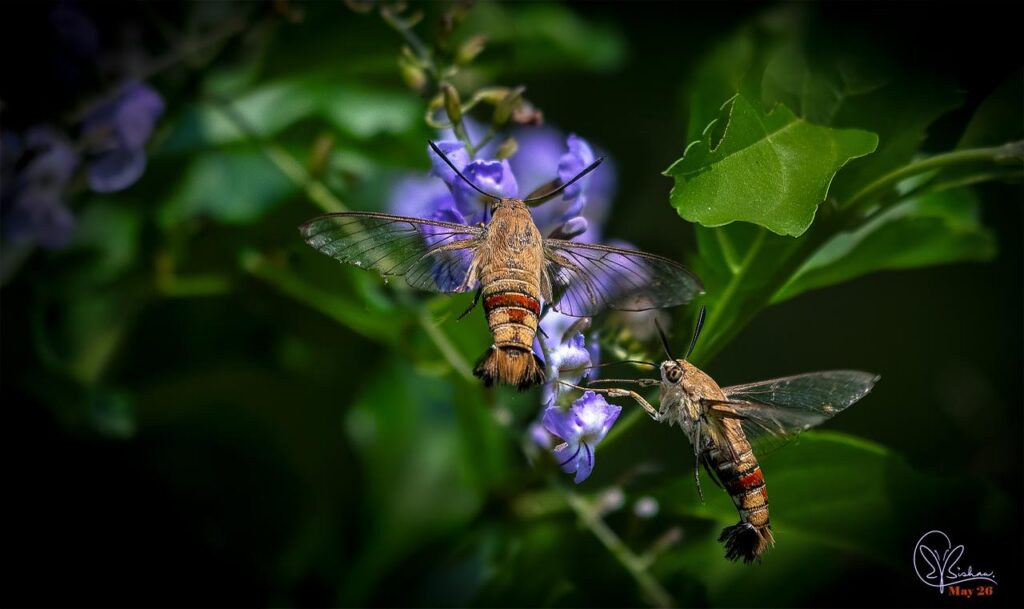
It is famous for its striking resemblance to bumblebees & hummingbirds.
They possess an incredible ability to beat their wings up to 70–85 times per second allowing them to hover perfectly in mid-air, fly backward, and make sharp turns while using a long proboscis to sip nectar from flowers.

As caterpillars, they feed primarily on coffee plants , hence their common name.

When adults emerge from their cocoons, their wings are actually covered in fine gray scales. During their first flight, these scales completely shed to reveal completely transparent, glassy wings. This unique feature reflects very little light, acting like an invisibility cloak against predators.

The species is highly adaptable , has a massive geographic distribution.

(Composite of two images of the same specimen)


Shot in Coorg. © Dr.Bishan Monnappa.

CLN Policy on Comments:

CLN reserves the right to edit or not publish any comment, especially if it contains offensive or inappropriate language.

Join our WhatsApp Group for News and Article Alerts

CLICK HERE to join our WhatsApp Group

LEAVE A REPLY

Please enter your comment!
Please enter your name here

The maximum upload file size: 100 MB. You can upload: image, audio, video, document, spreadsheet, interactive, text, archive, code, other. Links to YouTube, Facebook, Twitter and other services inserted in the comment text will be automatically embedded. Drop files here

Recent Comments

Subscribe to CLN Print Edition

spot_img

More Posts
Related

ESA or ESZ: Planters Livelihood Not At Risk

There has been a lot of messages on social...

THE FRAGMENTED FOREST PATHS OF KODAGU: Understanding the Escalating Human-Elephant conflict

I begin this article by extending my deepest condolences...

Heavy Rain in Harangi Catchment: Additional Water Released from Dam

Owing to continuous rainfall in the catchment area of...

The Simulator

The greater racket-tailed drongo (Dicrurus paradiseus) is a medium-sized...