An adult tiger was recently found dead in a coffee estate at Chettalli, after being caught in an illegal snare trap, raising fresh concern among conservationists and local communities.
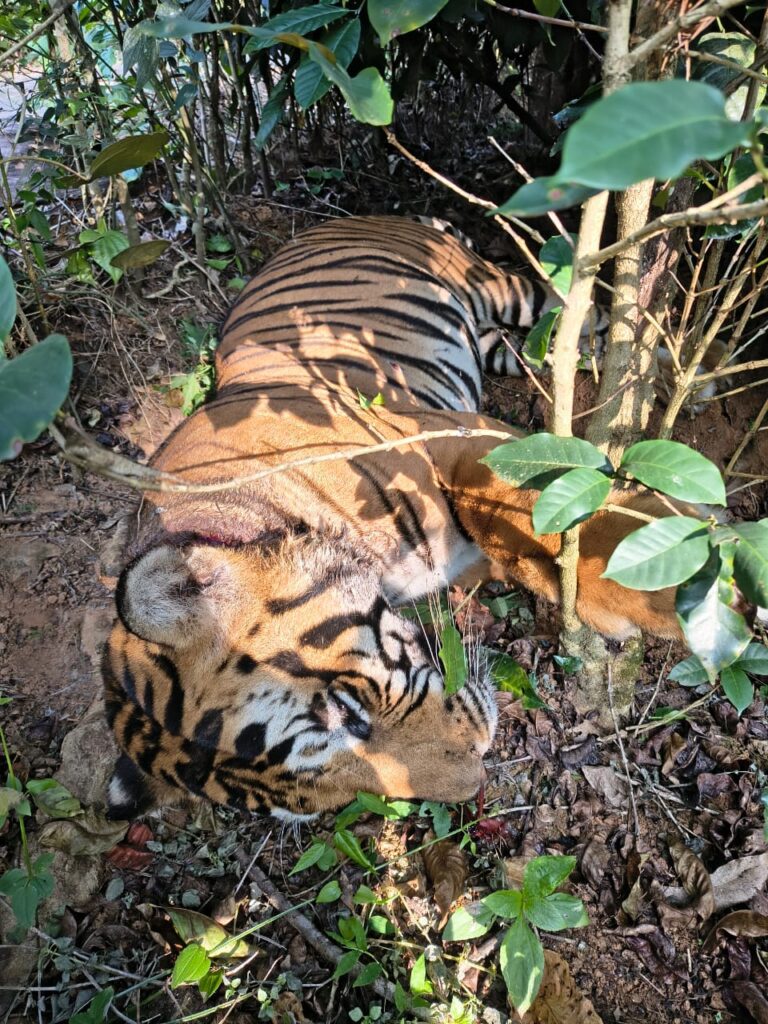
Forest officials discovered the carcass of the approximately eight-year-old big cat in a plantation early morning. A wire snare was tightly wound around the tiger’s neck, and preliminary evidence suggests the animal struggled for nearly two days before dying from its injuries.
Following the discovery, the Karnataka Forest Department has intensified anti-snare patrols in coffee estates and along forest fringes, and deployed dog squads to locate more traps. Authorities are also urging estate owners and workers to remain vigilant and report suspicious activity.
Elephants and Now Tigers
Traditionally, human-animal conflict in Kodagu was primarily associated with elephants, especially intrusions as the elephant corridors are virtually non-existent or encroached up in Kodagu. However, recent years have seen tigers increasingly move through coffee and plantation landscapes beyond core forest zones, either while establishing new territories or in response to changing habitat conditions. This expansion of tiger movement into estates has brought a new dimension to wildlife conflict in the region, necessitating proactive strategies from the forest department.
Local stakeholders and conservationists urge a balanced approach to ensure both human safety and tiger conservation. Measures recommended include:
- Establishment of Wildlife Corridors linking Bandipur, Nagarhole, Wayanad Wildlife Sanctuary (WLS), Brahmagiri, Tala Kaveri and Pushpagiri WLS.
- Stop and Remove the encroachments of Forest Lands in Coorg.
- Regular scanning for illegal traps and removal of snares from estates
- Community awareness programmes on wildlife protection laws and the ecological importance of tigers.
- Enhanced monitoring using camera traps and ranger patrols to track big cat movement near human habitations and estates.
- Rapid response teams trained to manage conflict situations effectively before they escalate.
With Kodagu’s rich biodiversity and status as part of the Western Ghats — a global biodiversity hotspot, such incidents are a stark reminder that habitat pressures and human encroachment are driving closer wildlife-human interactions. Ensuring coexistence will require coordinated action between forest authorities, local communities, and estate stakeholders to prevent further loss of life, both human and wild.
Join our WhatsApp Group for News and Article Alerts