

This article by Subramani is a continuing series on the practices and customs followed in Nalaknad, especially as it relates to the Paadi Igguthappa Temple. Kodavas and Kodagu have a very distinctive identity despite the not so subtle differences across the district in terms of spoken language, dress, rituals and food. However, the one aspect that binds the community together is Rice and the cultivation of our precious wetlands.
Sadly, in a matter of two decades, the area under cultivation of paddy is about a quarter of what it was. Paddy/Rice was the basis on which our ancestors thrived and created the community that we are. Rice is associated with every celebration and custom blessed by Nature’s bounty, the energy/hard work of our ancestors and Kaveramma and Igguthappa’s blessings. This extreme drop in paddy cultivation has a severe impact on the depleting water table and environment reflected in drought like conditions the moment it stops raining – abetted by the sprinkler irrigation of Coffee plantations and uncontrolled growth of tourism.
The dire need of the hour is to resume cultivation of our wetlands – profits cannot overrule the need to preserve our customs and culture. How can we celebrate Puthari without growing paddy in our wetlands? – CLN Newsdesk
Life in Kodava households revolves around Rice – our culture, festivals, ceremonies are all inextricably linked to RICE – our sacred Nell. With the imminent celebration of the Harvest Festival – Puthari it would be interesting to recapitulate some of the related ceremonies and its significance prior and after the actual day of the much celebrated festival.
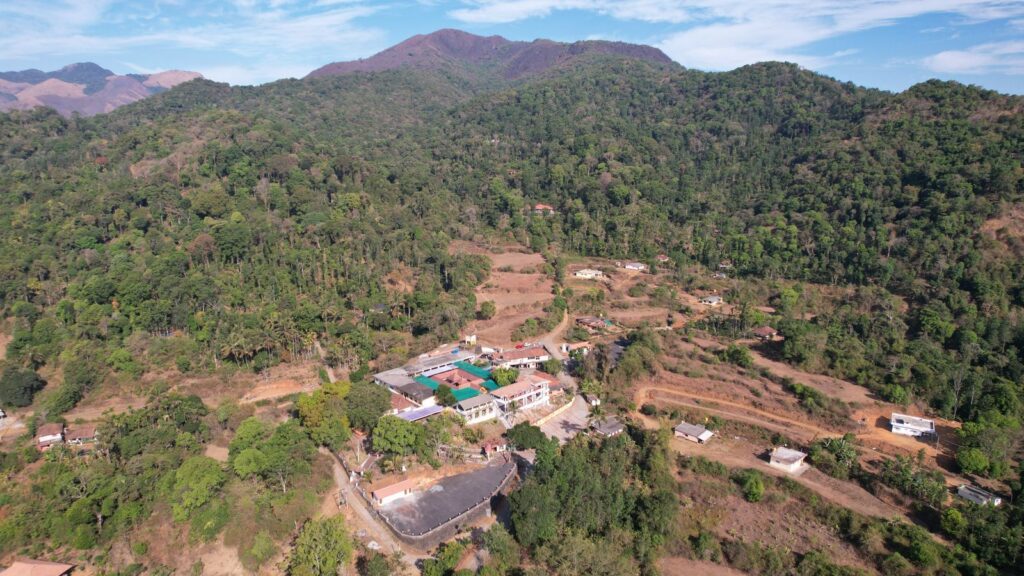
To begin with let us enumerate the significance of Desha Katt or Puthari Katt. An announcement has already been made about the Puthari Kuripo ceremony on 19 November – which also is the ‘New Moon Day’ or Kartha Bavu in Kodava thakk. This day is also the threshold of Amavasya, when all the Naadthakkas, Devotees and the Devathakka family gather at the PathePare (Main Hall) meant for this purpose at the Paadi Igguthappa Temple. The Ammangeri Kaniya family are vested with the responsibility of indicating the time and date for the Nammekuri. The conduct of the DeshaKatt atop the imposing Malma is overseen by the Deshathakka. The actual day and timing for the harvest of the Kadd is stated, which includes Deva Poudh (the offering of Kadh to the deity) and the actual harvest by the farmers – including Nere Kettuvo, Kadh Arupo and Bojana.
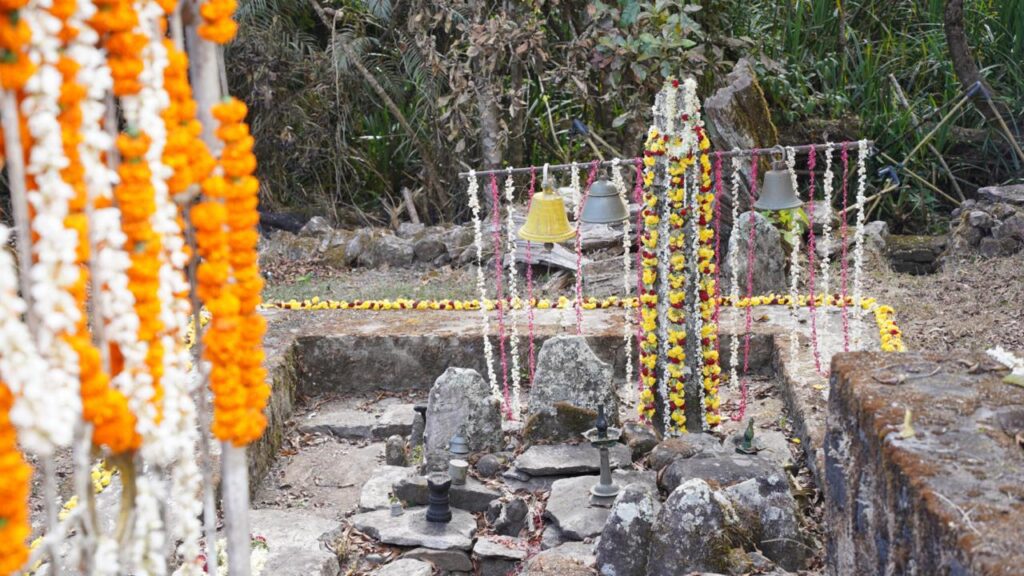
The sequence of events following the Nitya Pooja, a group of devotees alongwith the Devathakka, Temple priests and Kolekaara ascend the Malma. Thakkas and devotees from Nelji and Peroor Temples also approach the top from three different directions – an inspiring spectacle! After the Pooja at the Malma, Deshakatt prevails until the evening of the Kaladcha Festival on 4 December. During this period, most of the households within Nalaknaad refrain from social functions and abstain from being non-vegetarian. The practical aspect is that community participation in the cleaning of the areas surrounding the Ainemanes and Mandh had to be undertaken with the involvement of menfolk – who would otherwise have escaped on hunting expeditions. Hunting was strictly forbidden during this period. There are other associated nuances like no valaga or guns not being touched even in the event of an unfortunate death in the family.
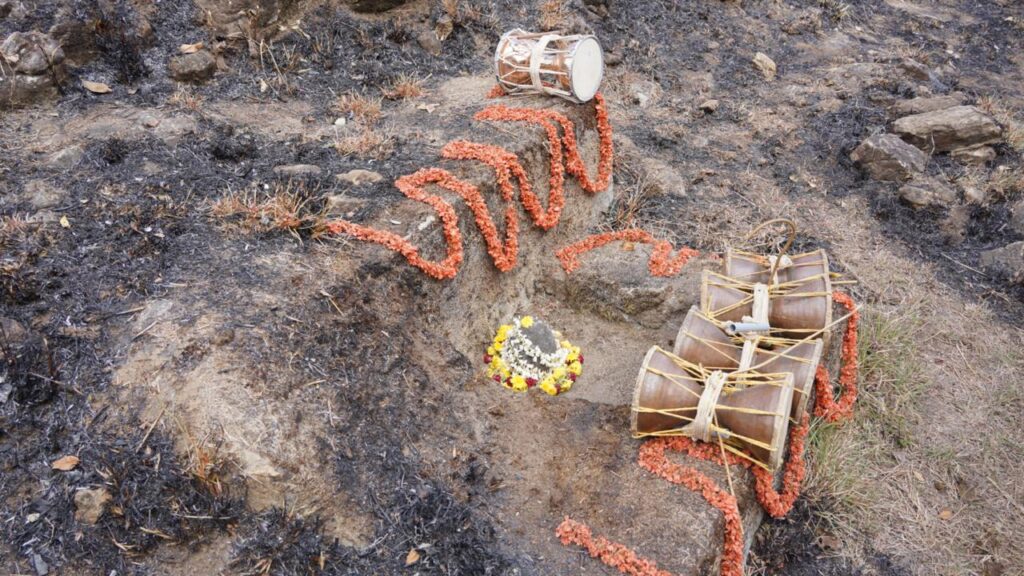
In the days gone by Mundhalaadith Mandlaado took place, where young adults were taught the steps and the art of dancing Puthari Kolaat and Paat in and around the Mundh of the Ainemane. It was also common practice in the Ainemane Aarvaada, Kaimada and such places to celebrate light up the evenings to add to the festival atmosphere.
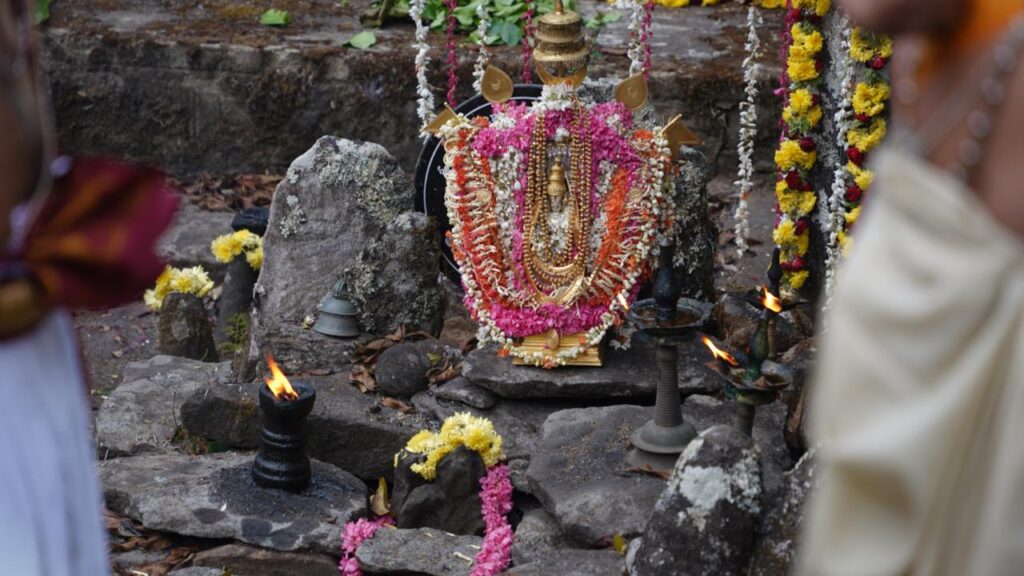
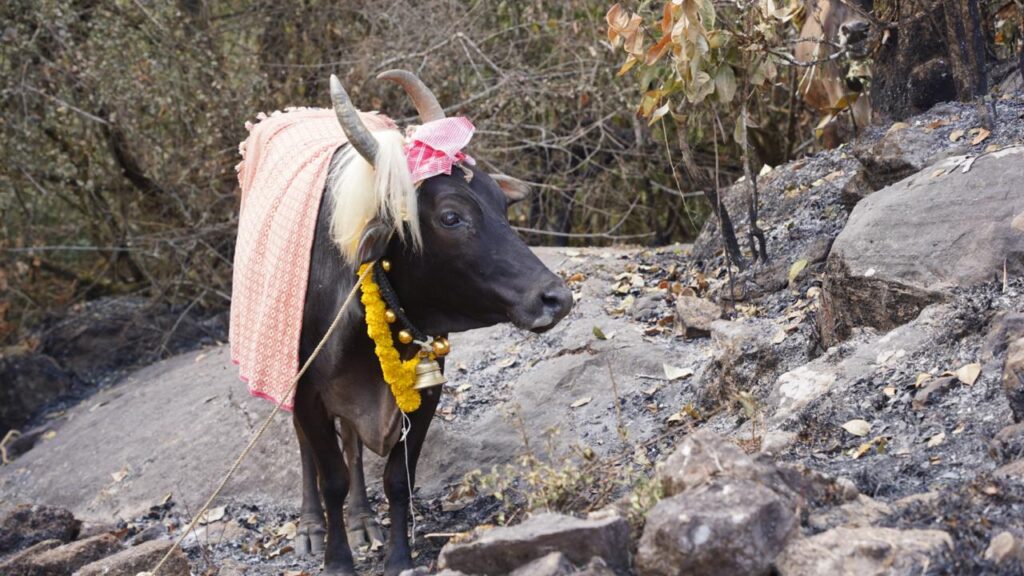
On 4 December, the glittering idol is taken to the top of the Malma alongwith the Yeth Porata of Jodichoma with the Thakkas of the temples. After completing three rounds of the Malma the bags of rice on the bulls is heaped in a mound as an offering. The Deshathakka seeks the blessings and pardon for any mistakes and the Rice and money collected is shared – half to Paadi temple and the other half is shared by Nelaji and Peroor temples.
Over a period of time many nuances have evolved on various festivities – but it is best left to the interpretation and beliefs of individuals. However, it is absolutely critical to understand and absorb the importance of Rice in our culture:
- The blessings of the groom and bride at Weddings is done with a handful of rice being showered on their heads.
- The prayer at the Nellaki nadubode by the Okka Pattedara is conducted with rice being showered in the direction of the lamp.
- The Samaiya at the funeral takes place with rice being strewn on the path to the Kekola or graveyard by the Aruva.
- During the Puthari festival, it is in our rice fields that we call out to the Gods – shouting “Poli, Poli, Deva!” – seeking blessings for a bountiful crop.
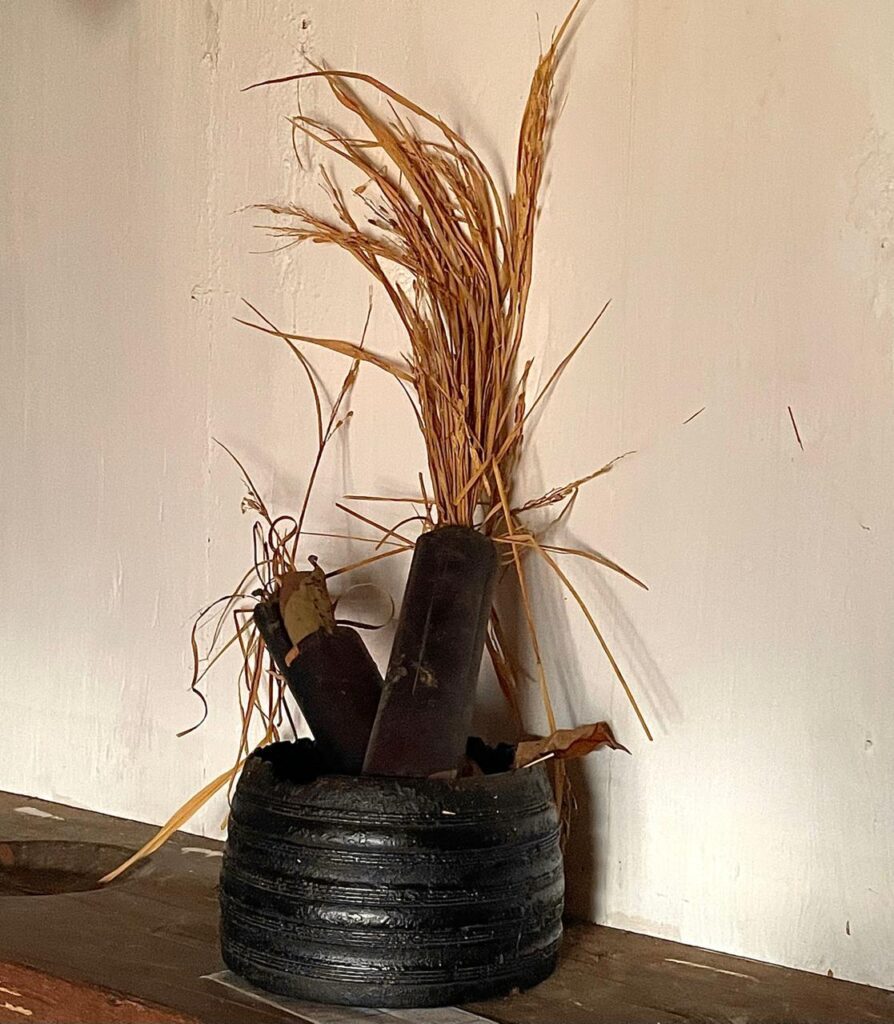
The guidance at the end of this message is we should grow paddy and not keep our wetlands fallow. Our Guru Karonas and ancestors have given their blood, sweat and tears over generations to create these sacred lands – WE MUST CULTIVATE THIS PRECIOUS INHERITANCE – everything is not about profits. Inherited land should NEVER BE SOLD – it is our collective duty to pass this on to the future generations. INHERITANCE IS NOT FOR US TO SELL – everything is not to be evaluated in commercial terms, certainly not our culture!!
All images featured in this post are copyrighted. Prior permission is required for their use.
Join our WhatsApp Group for News and Article Alerts



In my childhood the lush green and later golden paddy fields at the time of Puthari, with a gentle breeze used to greet us when we visited the Paadi Temple. All of this is now not there – instead incongruous concrete balconies with cement pavings. This completely destroys the aesthetics of the sacred temple surroundings.
We are glad to see the Bhaktha Sangha taking the initiative to grow some paddy so that at least a symbolic harvest is made for the temple. Can we not restore this practice to its former glory? The taking over of the temple administration by the Muzrai Department has denigrated the sanctity of the Kodava worship. On the one hand we are lectured that if Kodavas do not come to the temple and make their offerings, the ethos of the precinct is lost – then why can the Bhaktha Sangha not manage it with proper checks and balances? At least the surplus will get used for growing paddy and related temple and community development projects.
This is a very thought provoking and profound article which highlights the need to preserve our culture intact by continuing to grow paddy like our ancestors did which was never meant just as a source of income but it was part of our traditions which needs to be followed as a sacred ritual which highlights our connection to Mother Earth. This article also brings back some wonderful childhood memories where we would run around these pristine paddy fields which exuded high energy.
Our ancestors created the wetlands for paddy cultivation with their superhuman efforts and hard-work over generations….well before the Gods and temples were built. It is for this reason that we pay our obeisance first to our GuruKaronas and the AineMane is exclusively their abide with the adjoining Kaimada.
In this context one is reminded of some lines from the ‘Gitanjali’ collection of poems …..
Go not to the temple to put flowers upon the feet of the God,
First fill your own house with the fragrance of love and kindness!
Go not to the temple to light candles before the alter of the God,
First remove the darkness of sin, pride and ego from your heart!
Go not to the temple to bow down your head in prayer,
First learn to bow in humility before your fellowmen and apologize to those you have wronged!
Go not to the temple to pray on bended Knees,
First bend down to lift someone who is down-trodden and strengthen the young ones!
Ravindranath Tagore
Let’s till our fields first and celebrate the Harvest festival- Puthari. Prayers follow 🙏🏼
This piece is a timely wake-up call. Kodavas may differ in dialect, dress or customs across Kodagu, but rice is the common thread that binds us. Watching paddy cultivation drop to a quarter of what it once was should alarm every one of us. Tourism and commercial crops may bring profit, but they cannot replace heritage. Our wetlands are sacred — cultivated through generations of blood, sweat and devotion. Inherited land is not a commodity; it is a responsibility. If we want our future generations to celebrate Puthari with meaning, the call is clear: Let us return to our wetlands, revive our paddy and honour our roots.
I completely agree with Sagar Ganapathy. Preserving the Malma in its natural, unspoiled state is vital. This place is not just a scenic hilltop; it holds deep spiritual and cultural significance for our community, rooted in centuries of tradition. Allowing photography, artificial decorations, or a ‘social-media’ makeover may seem harmless, but it risks diluting that sacredness. If we want Puthari Katt and related ceremonies to mean what they once did, we must resist turning our heritage into just another “tourist attraction.” Let’s honor how our ancestors respected and protected these spaces, and ensure future generations experience them with the same reverence.
Let us Preserve the Sanctity of the Holy Malma
The sanctum centrum of this holy place must be preserved in its natural, original form. Malma should remain untouched, just as our ancestors respected it for generations. The mountains, the flowing water, and the pure environment are sacred elements that hold deep cultural and spiritual significance.
To protect this sanctity, photography, videography, and any form of decoration should be strictly prohibited. In recent times, decorative setups, artificial ambience, and social-media-driven marketing have begun to creep into this sacred space. Such trends are a direct threat to the purity of the site and go against the values our forefathers upheld.
Same applies to Male Therike.
Let us collectively ensure that this holy place remains authentic, natural, and spiritually untouched exactly as it was entrusted to us.
We need to see more of Kodagu’s valleys with this sight – “golden” paddy ripening for the harvest festival – Poli Poli Deva! Well done Mr. Subramani for this timely article.
Excellent article. Similar to Kodagu, our ancestors cultivated paddy with great enthusiasm. Sadly, the cultivation is declining. In our case, youngsters are seeking what they think are greener pastures. The fact is that agricultural activity should always be sustained, whatever be the circumstances – else there will be major setback in several areas.
The quality of these special articles from eminent writers are truly wonderful. Simple and to the point without the exaggeration that is part and parcel of “quick read” social media type posts.
What I particularly liked was the veering away from too much “shastra” and cutting through to the main issue – the deplorable state of our wetlands. The lush landscapes of Kodagu has a lot to do with cultivating paddy, keeping the water table high and more than anything else, retaining the relevance of our distinctive culture.
Rice to the Kodavas gave them preeminent status in the surrounding lands – even the Gods – Igguthappa’s brothers and sister coveted our green cover and paddy! Rice was the medium of exchange – the equivalent currency of gold. Yet, with the influx of coffee and insatiable greed, we have forgotten our roots of sustenance!
Dear Suman,Hearty Congratulations for your crisp,meaningful and apt writeup on our Puthari festival.
This article captures a reality many of us in Kodagu feel deeply but seldom express. Paddy, for Kodavas was never just food – it was tied to every celebration, every ritual, every offering made to our ancestors and our dieties. It carried the blessings of Igguthappa and Kaveramma. It held within it the sweat of our forefathers who created a community in the rugged remote hills and unforgiving monsoons.
Our wetlands were never mere agricultural spaces, they were the heartbeat of our culture and the foundation on which our identity was built. The sharp decline in Paddy cultivation over the past two decades is an alarming shift in farming practices. It is a sign of how far we have drifted from the essence and core of our sustenance that once defined our land and our people.
The question before us is simple – who will save our sacred wetlands that once nourished us all?
Very good article by Sri Paradanda Subramani about Puthari Katt. As a reader I wait for CLN news about Kodagu – every article is a new knowledge about Kodagu.
The flow of Puthari Katt is very interesting; “Transports you back to good old days” when there were no mobiles, Few cars – it was marvellous how Kodavas managed to communicate and Puthari was celebrated in a very grand way. People have forgotten that there many days of Government holidays for Puthari – all which has changed.
Important takeaways are – let’s not sell the inherited land, There is a sacred power in this land that once sold is gone. We are experiencing this with the climate change these days, which is not favouring the farmers.
At the same time I’m happy that a lot of Kodavas are buying back land in Kodagu. Recent observations also show that a lot of youngsters are visiting Balya Mane during festivals and ceremonies from cities and enjoy being with the extended family. Hope this affection and kinsmanship with growing reverence for land, especially cultivation of wetlands for rice. Cultivate rice and let’s celebrate Puthari in a grand way; lets not buy rice from other states … Kodava culture is after all intertwined with rice!
Dear Subramani,
Your contribution towards educating the young kodavas on the culture of the land and its people, using print and digital media is commendable.
Request to keep the practice alive on both kannada and english medium.
Thank you,