An Introduction – The Coorg Wildlife Society has been at the forefront of protecting the flora and fauna of Kodagu district since its inception in 1980. Our district is well known for its natural beauty and prolific wildlife density. The Brahmagiri range has also been notified as one of the Biodiversity Hotspots of the world by the United Nations. Our founders, realising the importance to protect the essence of the district set about creating the Society with the urgent need to safeguard the dwindling natural resources and rampant destruction of the pristine landscape
How it started – In 1985 during one of the committee meetings the idea of replicating a conservancy, being run at that time, in the downstream reaches of the Cauvery, around Galibore and Bheemeshwari, by the Wildlife Association of South India was discussed.
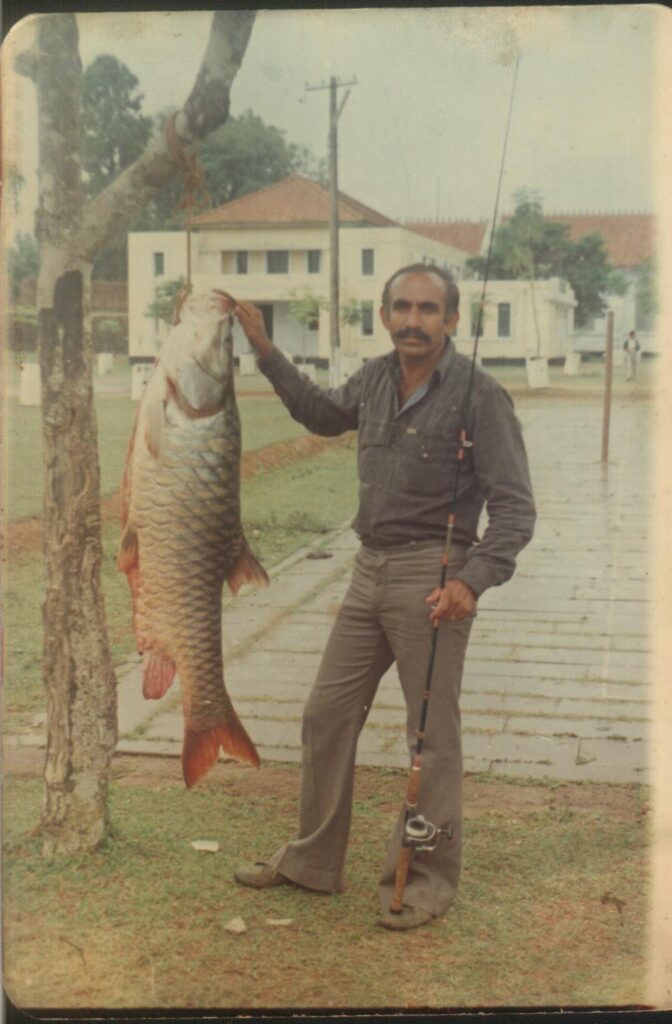
The presence of a few large Mahseer, in Dubare and Valnoor was brought to the notice of the Society, and an idea was born. In July 1985 a fish weighing 44 kilos was landed in Valnoor. This only confirmed the presence of large fish and reiterated the need to set up a system to protect the iconic fish.
During the same year, an official application was put forward to the Fisheries Department and a lease obtained for 25 kilometres from Siddapur bridge to Kushalnagar bridge, on the Cauvery River. This lease was given for the sole purpose of protecting the Mahseer from destructive fishing practises like dynamiting, poisoning and netting.
Early days – Initially, large scale awareness programs were conducted by Coorg Wildlife Society, targeting local communities living on the banks of the river. People were shown the importance of the river C its ecosystem for the region and the detrimental effects of destructive fishing practise like dynamiting, poisoning and netting. They were shown the benefits of using a line C hook, in place of destructive practises and how this would make a difference to the river.
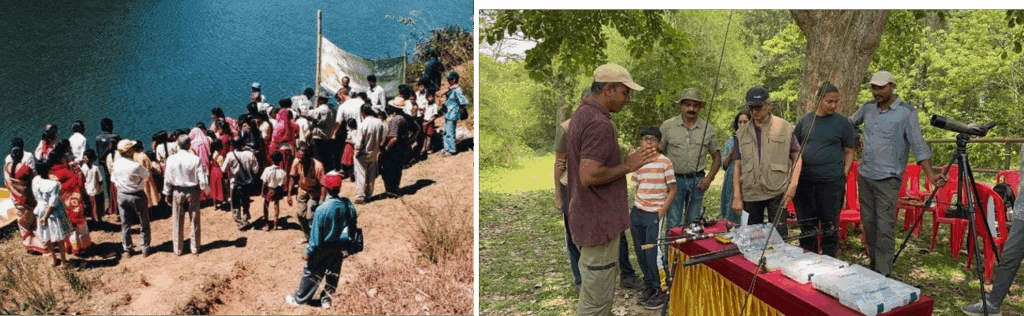
To initiate a sustainable program of conservation, the society, with the permission and support of the fisheries department, opened part of the stretch on the river to angling.
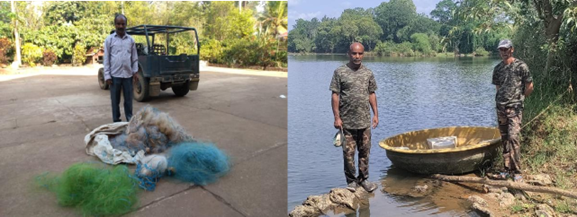
The society hired watchers to patrol the river, ensure that illegal activities were controlled and activity reported to the relevant authorities. This has had a huge impact in keeping the river-banks free of any encroachments unlike other areas.
A shift in policy – Between 1991 / 92, Mahseer fingerlings from the Tata Hatchery, Lonavala, Maharashtra were ranched into the protected stretch at Valnoor. This was widely published in local media, to create awareness among the public on the need to protect and conserve the fish.
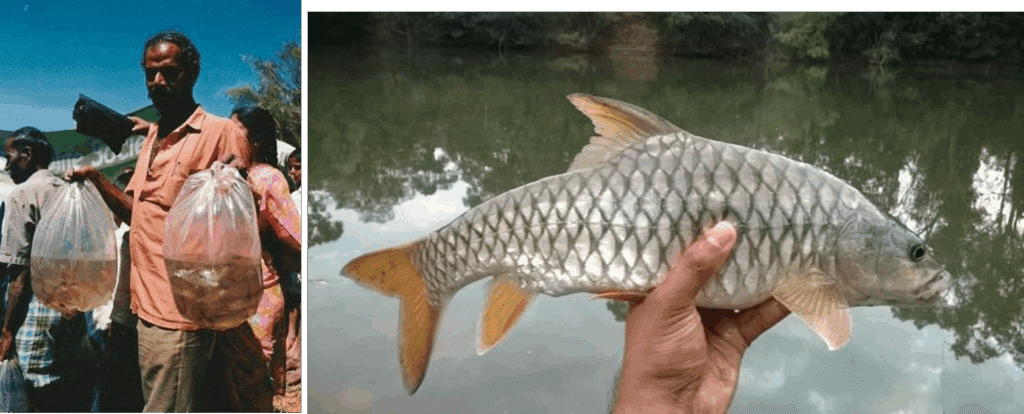
Over the years this moved to a more controlled policy of catch and release. Anglers were permitted to carry home a limited number of fish. However, any mahseer caught had to be mandatorily released back into the river. Additional watchers were employed to improve the security of the region. The society put in place a handbook on the do’s C don’ts in the area and local planters were actively involved in managing stretches of the river adjacent to their properties, with active support from the society.
A few other measures were put in place like deploying coracles for better management of security on the river. After much effort on the part of the society and a ruling from the High Court of Karnataka, a complete ban on sand mining on the protected stretch under the Coorg Wildlife Society was brought into effect. The presence of watchers on the river ensured that large scale dynamiting C poisoning was completely controlled. The Fisheries department built a cottage at Valnoor for the convenience of researchers C Anglers.
In March 2011, conservation efforts paid off when a 63 kg fish was landed at Valnoor, the largest Mahseer ever caught on record. This event proved that with strategic planning, effective management and dedicated effort, conservation can be brought to the forefront. To ensure that this event was not exploited, certain zones were designated as no fishing and sanctuary.
In appreciation C recognition of the work done by the Coorg Wildlife Society, the Fisheries Department granted lease to a total of 95 kilometres of river stretches in Kodagu district including the Cauvery and Barapole rivers. However, with limited resources we were unable to manage the full stretch.
Part 1 – Ends here.
Research Mode – From 2014, the Society focused on research where visiting scientists from the Carleton University, Ottawa, Canada, Department of Aquatic Science C Outreach C the University of Massachusetts, Amherst, USA – Fish Conservation, worked with the society on the following subjects, which helped us crate a fact based handbook for anglers:
- Rapid assessment of catch and release fishing
- Post release mortality
- Feeding habits
- Handling of a fish post landing
The Coorg Wildlife Society, in association with research fellows from the Carleton University also initiated the first of its kind radio telemetry to study C map migratory habits of Mahseer on the Cauvery.
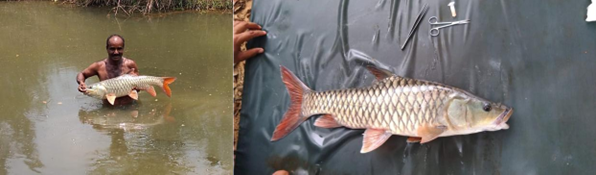
The Coorg Wildlife Society has also supported research initiated by the Govt of India, through Central Inland Fisheries Research Institute (CIFRI) and Central Institute of Fresh Water Aquaculture (CIFA). Over a period of 5 years date was collected on
- Quality of Water during the year
- Riparian Vegetation and its importance
- Aquatic Diversity in the river
The Society has also supported a venture by the Nityata River Otter Conservancy on the habits and density of smooth coated and small clawed Otters.
All the above activities have helped us in understand the nature of the rivers and its occupants and taught us the necessity to care for its welfare to the best of our ability.
The past 8 years – Our focus has now shifted from Mahseer conservation to a broad spectrum, covering all aquatic species in the river. Large scale awareness programs were run with the involvement of school children and locals, highlighting the importance of river conservation in relation to its effect on the local environment / ecology, teaching them the basics of catch C release fishing to promote fishing as a hobby.
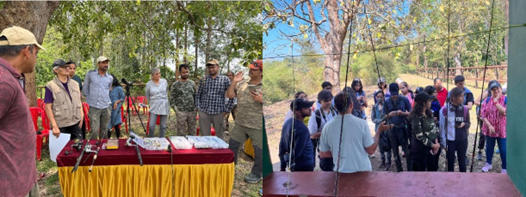
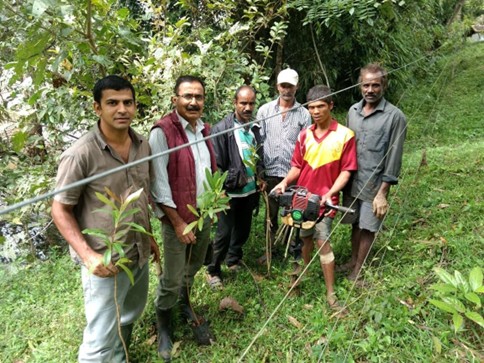
Afforestation activities along degraded riverbanks, prevention of soil erosion with the support of the Karnataka Forest department and planting of native riparian vegetation. Mahseer conservation Field days with locals and government agencies to highlight the work done by the Coorg Wildlife Society.
Mahseer breeding Program – The Coorg Wildlife Society in collaboration with the Fisheries Department felt the necessity to initiate a breeding program of the endemic Hump Backed / Orange Finned Mahseer as there was a drastic fall in the population of the same.
The method used to capture the fish was cast netting by professional fishermen. The first effort was in 2016 where 4 fish were caught over a span of 3 months and sent to the hatchery of the Fisheries Department at Harangi. This was repeated the following year in 2017. However, despite best efforts, this was not successful as the fish were unable to adapt to closed confines.
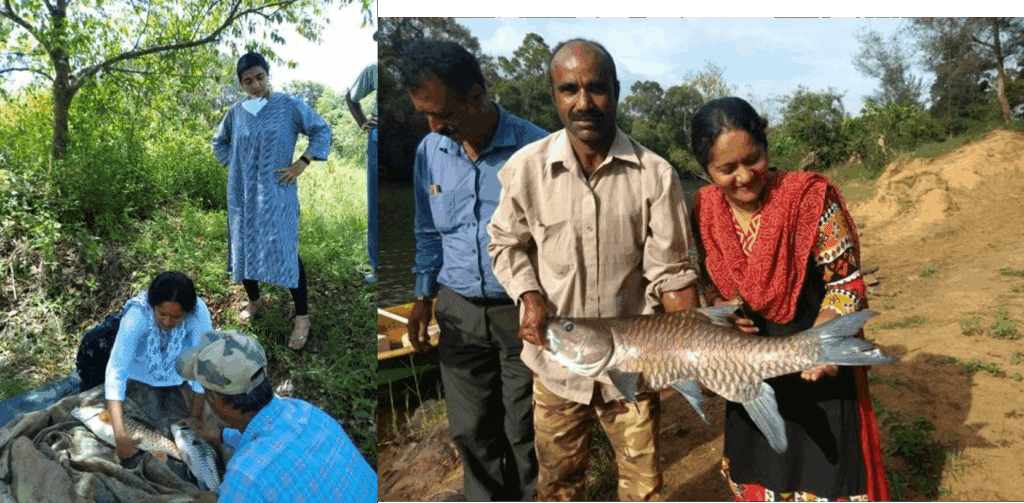
In 2018 / 19, the approach was changed, and the fish were retained in earthen ponds close to the river and their health C behaviour closely monitored. During the floods of 2019, the fish escaped back to the river. In 2020 this was re-initiated in the presence the Deputy Commissioner of Kodagu who offered full support to the program. This effort is ongoing to develop broodstock of the Hump Backed Mahseer.
Additionally, the Fisheries department have also started a program to breed fish species that are endemic to the Cauvery, in close association with the Coorg Wildlife Society.
Part 2 – Ends here.
The Way Forward –
- Build an advanced fish repository, to be constructed with latest technology that will help study the habits and behaviour of various types of mahseer
- Coordinate with institutions and individuals working in similar fields for the conservation and development of aquatic species on the Cauvery River
- Use latest technology tools to collect and manage data in the field of research on endemic aquatic species with the aim of ensuring best practises are deployed
- An annual workshop involving various stakeholders, on Mahseer conservation, other aquatic species and riparian
- Promote catch and release fishing to sustain scientific research and conservation tools on the river over the long
- Hiring additional staff for watch and ward on the river which will help keep in check illegal activity and promote conservation of the riparian vegetation and aquatic species
- Conduct awareness programs on a regular basis among students and public on the importance of the river ecosystem, with specific emphasis on aquatic species and riparian vegetation and their
Work with the Forest Department to ensure that soil erosion is controlled through afforestation of barren areas.
Part 3 – Ends here.
Join our WhatsApp Group for News and Article Alerts