

The Sacred Bloom

Date:

Comments:

Ocimum tenuiflorum, commonly known as tulasi (from Sanskrit), tulsi, or holy basil, is an aromatic perennial plant widely cultivated throughout the Southeast Asian tropics.Ocimum sanctum is a heterotypic synonym of O. tenuiflorum.
It is grown for religious reasons particularly by the Vaishnavite sect. It is worshipped as the avatar of Goddess Lakshmi.

It is used for traditional medicine purposes esp in Ayurvedic and Siddha practices. It is cultivated for for its essential oil and also widely used as an herbal tea.

The three main morphotypes cultivated in India
1. Ram tulsi (bright green leaves),
2. Purplish green-leaved (Krishna or Shyam tulsi) and
3. The wild vana tulsi.

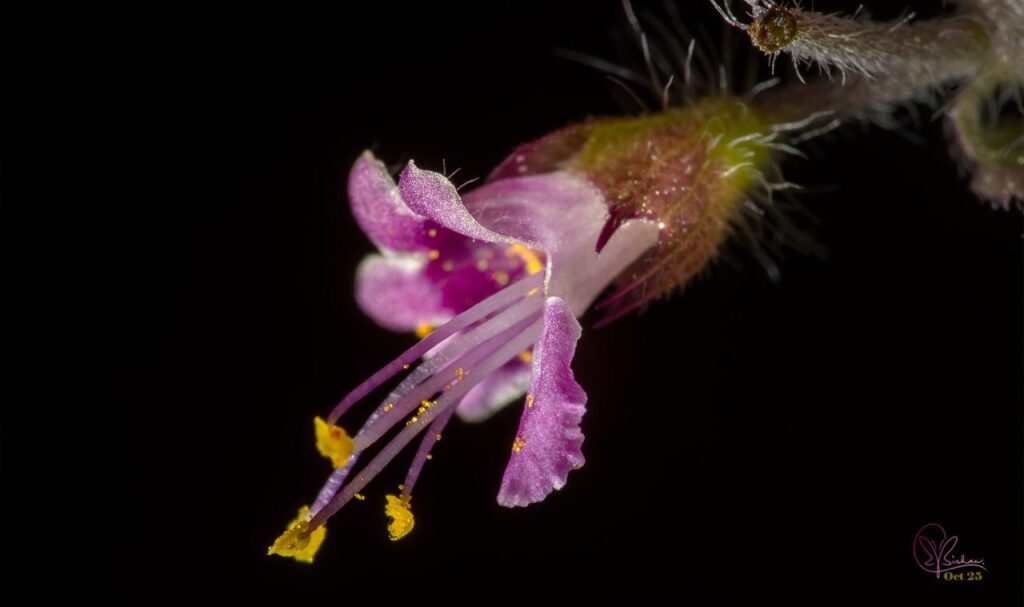
It has purplish flowers placed in close whorls on elongated racemes. A close up of a single flower is presented here.


Shot in Coorg October 2025 â’¸ Dr.Bishan Monnappa

CLN Policy on Comments:

CLN reserves the right to edit or not publish any comment, especially if it contains offensive or inappropriate language.

Join our WhatsApp Group for News and Article Alerts

CLICK HERE to join our WhatsApp Group

LEAVE A REPLY

Please enter your comment!
Please enter your name here

The maximum upload file size: 100 MB. You can upload: image, audio, video, document, spreadsheet, interactive, text, archive, code, other. Links to YouTube, Facebook, Twitter and other services inserted in the comment text will be automatically embedded. Drop files here

Recent Comments

Subscribe to CLN Print Edition

spot_img

More Posts
Related

The Nilgiri Striped Squirrel

The Nilgiri Striped Squirrel aka Nilgiri Palm Squirrel (Funambulus...

The coffee bee hawkmoth

The coffee bee hawkmoth (Cephonodes hylas), also called as...

COORG WILDLIFE SOCIETY: No Need for Projects That Threaten Kodagu’s Ecology

Gonikoppa: Addressing a press conference on Wednesday, Bose Madappa,...

The Common Mime – Form Clytia

Papilio clytia, the common mime is a black-bodied swallowtail...