

The past week has been all about Garbage and Waste Reduction in Kodagu, thanks to the determined efforts of COHERA. Now that the dust has settled and everyone’s awareness on garbage has been heightened to a feverish pitch (seeing the active posts on Swacha Kodagu Sundara Kodagu Abhiyana WhatsApp Group), Ganesh Aiyanna has taken a reality check on what needs to be done in the next phase.
With the continuing rains, there has been a marked decline in the tourist footfall and interestingly the quantity of garbage has reduced drastically – especially plastics. This does not absolve the locals, whose bad habits die hard.
REDUCE, REUSE, RECYCLE has to be the catch-phrase or mantra for active implementation and management of waste. Also the District Administration has to take a leaf out of the Indore case study quoted In Ganesh Aiyanna’s article and set up a Waste Processing Unit (or two) in Kodagu. The State Government should pay heed to the solutions relating to garbage management proactively. Special attentions needs to be given to high tourist footfall areas as they generate very useful revenue to the State Government’s coffers.
– CLNewsdesk
Looks simple – but in reality a humongous problem if waste generated by humans isn’t managed properly on time- every time. Humans are the only creatures who generate vast quantities of avoidable non-degradable wastes in the animal kingdom. No other animal generates any waste which isn’t biodegradable .
As per available data, about 5 years back Kodagu generated about 5 tonnes of waste per day. It could be higher today with the surge in tourism.
The first step in processing waste is – Source Segregation. Waste management systems involve SIX types of segregation:
– Biodegradable (kitchen)
– Non-biodegradable
– Plastic
– Sanitary
– Hazardous (Medicine)
– E Waste
Unless this is done scrupulously for collection and processing, everything else is wasted effort.
Having defined waste, let’s now try to understand what are the activities that generate Non-biodegradable wastes. In Kodagu which is primarily agribased, traditional Industrial wastes and effluents are minimal. The main source of waste is Plastic.
Kodagu gets an annual tourist footfall of approx 50 lakhs. While this is a serious source of plastic waste in the form of food packaging and water bottles, the waste generated by the local residents is also significant.
To handle and manage this waste the best way is to make the ecologically sensitive Kodagu district totally plastic free. Tourists arriving in Kodagu need to surrender all plastic items at the border before entering. This is a practical way of curtailing plastic waste. KODAGU DISTRICT COULD BE DECLARED A PLASTIC FREE ZONE.
The alternative is to impose very heavy penalty for littering and throwing waste in highways, roads, public places, parks etc at wanton abandon. This will be a very tough call as monitoring becomes a huge issue.
The Hospitality Industry should also take responsibility for disposing the waste of their guests through proper segregation and recycling.
The 15th October 2025 SWACCHHA KODAGU SUNDARA KODAGU event is a great endeavour and cleanup drive to collect and recycle waste. What I understand from the COHERA TEAM is that the collected waste – over 200 tonnes, is going to a cement factory in Mysore for recycling, which is a brilliant project by itself.
Concomitant with segregation, RECYCLING is the next major step in the Waste Management cycle. Waste recycling plants and businesses should be incentivised by offering subsidies and TAX HOLIDAYS, by the Government, with entrepreneurs getting into WASTE RECYCLING BUSINESS. REDUCE, REUSE, RECYCLE AND CONVERT WASTE TO VALUE – SHOULD BE THE UNQUALIFIED PRIORITY.
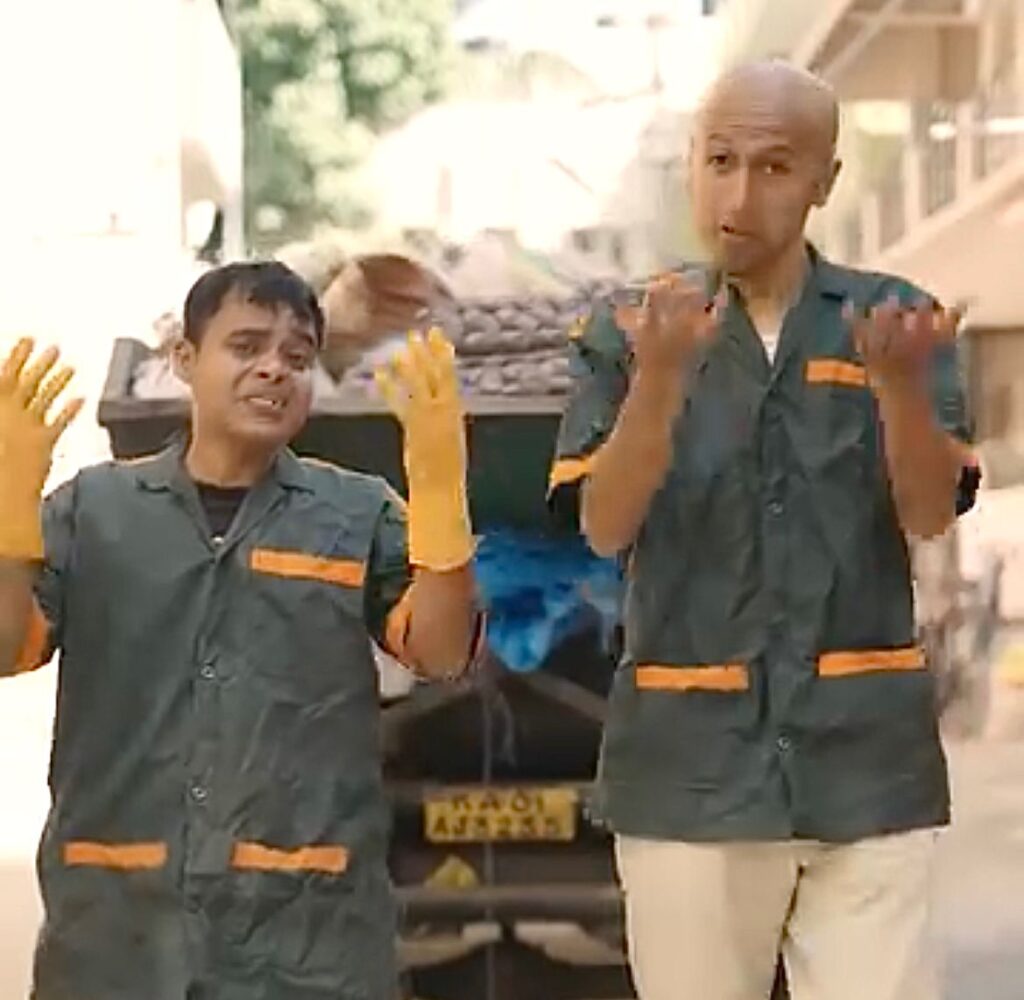
Now waste collection is one way of handling this explosive issue of waste management. But in the long run for sustainable waste management to work we need to put our heads together to tackle the issue at source. Every area has to evaluate its own carrying capacity to sustain ecologically. Areas like KODAGU HAVING FRAGILE ECOSYSTEMS AND EXTREMELY ECOLOGICALLY SENSITIVE ZONES THAT NEED TO BE HANDLED AND TREATED WITH EXTREME CAUTION, LEST THEY ARE IRREVERSIBLY DESTROYED.
KODAGU ALSO IS THE BIRTH PLACE OF RIVER CAUVERY WHICH IS THE LIFELINE OF MILLIONS IN SOUTH INDIA AND ANY TINKERING OF THIS ECOSYSTEM COULD HAVE DISASTROUS CONSEQUENCES IN FUTURE.
With this in mind it’s time the government of the day seriously thinks of putting a workable model of RESPONSIBLE TOURISM IN PLACE IN KODAGU. Responsible Tourism needs to be understood properly instead of becoming a cliche, with no one TAKING REAL RESPONSIBILITY FOR MANAGING TOURISM IN KODAGU.
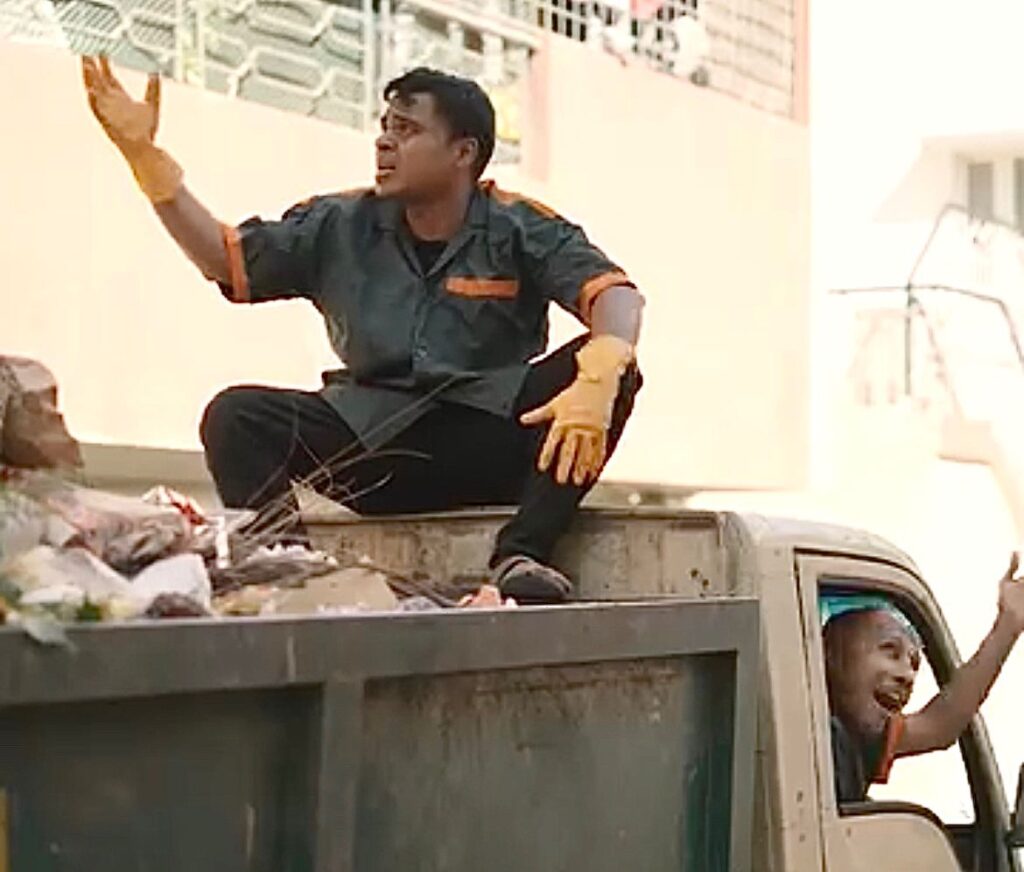
Hence the onus of waste disposal and management mainly lies with the waste generator – which is all of us. If all of us take the responsibility of our waste generation, why should someone else clean our waste. Serious internal reflection required. Waste Management has a lot to do with our upbringing and basically Indians lack good civic sense which is a major societal issue to be addressed both at home and school.
Am attaching an illuminating video on Indore – ranked the #1 City year after year.
The Cleanest Cities Of India | Ep-1 | How Indore became the cleanest city in India?
Key ingredients for success is summarised as SEGREGATION, COMMUNITY OWNERSHIP, PROPER GOVERNANCE, VALUE CREATING PROCESSING FACILITIES, REWARDS & RECOGNITION!
Way Forward
Waste management should be proactively managed by the Government and Civil Society. Now the straight question which comes to one’s mind is why and how did so much of waste accumulate in the first place? The answer seems to be like the writing on the wall. THOSE RESPONSIBLE FOR WASTE COLLECTION AND DISPOSAL DID NOT DO THEIR JOB WELL. However much organisations like COHERA try to manage waste without proactive involvement and support from the Government managing waste efficiently shall remain a pipe dream. Government of Karnataka collects crores in revenue from Tourism but where is the basic infrastructure like proper Roads, waste management, proper Toilets. Looks like all the TAXPAYERS MONEY IS GOING ONLY TO FUND THE FREEBIES OF THE GOVERNMENT.
To begin with let’s start with one area – perhaps, Madikeri, on a regular basis and replicate the success!!
Join our WhatsApp Group for News and Article Alerts



Yes, Indore is indeed very clean and the municipal administration is very effective. I was very impressed with their waste recycling units and even their teeming food streets are very clean. Kodagu can definitely give stiff competition to Indore if we make up our minds.
BUT, the local Administration is very lethargic and the earlier municipal commissioners were very corrupt. We got cases instituted against them for non compliance of the mandate prescribed by the pollution control board and even hauled up one of them for contempt of court. The Stone Hill garbage issue turned out to be a true ‘peoples movement ‘ and though the High Court directed clearance of legacy waste more than 4 years ago, we could not get it done as no one came forward to do it despite tenders being called repeatedly. Now finally one company has come forward but the rain is proving to be detrimental and the issue remains unresolved……these are the ground realities of Kodagu!
Anyone serious about the Environment should read this 👇🏼
Who’s Leading the Green Race?
Every year, nations are ranked for their progress in protecting our planet — from clean energy to biodiversity to carbon reduction. The results reveal who’s walking the talk on sustainability:
✅ Most Green Countries (Top 10)
1️⃣ Sweden 🇸🇪 – Powered by renewables and circular economy innovation.
2️⃣ Denmark 🇩🇰 – A global wind energy leader.
3️⃣ United Kingdom 🇬🇧 – Rapid emissions cuts and clean tech investment.
4️⃣ Finland 🇫🇮 – Forest-rich, climate-smart, and education-driven.
5️⃣ Switzerland 🇨🇭 – Exemplary waste and water management.
6️⃣ France 🇫🇷 – Bold climate targets and green transport systems.
7️⃣ Costa Rica 🇨🇷 – Nearly 100% renewable electricity.
8️⃣ Iceland 🇮🇸 – Geothermal and hydro power champion.
9️⃣ Norway 🇳🇴 – World leader in EV adoption.
🔟 Ireland 🇮🇪 – Expanding renewables and sustainable agriculture.
⚠️ Least Green Countries:
Qatar, Iran, Turkey, China, Saudi Arabia, Vietnam, Indonesia, Malaysia, Algeria, Kuwait.
These nations face challenges tied to fossil fuel dependency, industrial growth, and policy gaps — but also massive potential for green transformation.
Green leadership isn’t luck — it’s policy, innovation, and mindset. The most sustainable nations prove that climate action drives competitiveness, resilience, and growth.
Maka MakhatadzePaulo Andrade de Oliveira, MBAVarsha NitishLuis P.
These rankings remind us that true green leadership is built on policy, innovation, and long-term commitment, not quick wins.
On the other hand, Africa is green, Bhutan is green. It’s the green that we can see, not on the basis of papers and protocols.
So the bottom-line is to design programs that are relevant for each Country/State/District based on the unique circumstances prevalent and the local challenges. Coorg appears to be a good compact district to develop an agreed model for success. The Comments Br readers make good sense.
We don’t have to go far to realise why we’ll-intentioned plans fall astray. The article in Star of Mysore provides sufficient reasons for the chaos arising from political innuendos and other vested interest scuttling well-intentioned plans.
https://starofmysore.com/solid-problem-of-waste-management/amp/
Despite the above, the heritage city of Mysuru gets ranked 3rd cleanest city in India in the 3–10 lakh population category at the prestigious Swachh Survekshan Awards 2024–25. Surely something is amiss.
Waste management challenges demand smart, sustainable and scalable solutions that are designed to each locations needs. Most importantly, in Kodagu, it will only work if the District Administration, Muncipality/Panchayats, institutions like COHERA join hands and come up with an integrated time bound plan. Political “support and encouragement” is needed, not “interference”.
Until then the way forward is:
Reduce, Reuse, Recycle, Repurpose.
Reading the various articles on garbage I am prompted to share my experiences from Trivandrum and Kottayam where I visit often from Bangalore.
Trivandrum had a very good system that was instituted and operated from the times of the Travancore Raja. Hygiene was accorded importance. In more recent times, indiscipline has crept in segregation of waste at source. The consequence being that a mixed lot is just dumped in a garbage hillock.
The same is with Kottayam – though the surrounding villages are much better. Sadly there are no waste processing plants, which seems to a major gap across the country.
Enough has been said and demonstrated – the time to act is NOW.
I have a lot of friends from Coorg – they are straightforward, of high integrity and highly regarded in society at large. So, when I read about the Clean Kodagu Drive I thought I must share the transformation that took place in Lucknow’s environment which would, in my opinion, place it amongst the cleanest, safe and most Inclusive city in the country.
When I first came on transfer to Lucknow, one couldn’t hold ones breathe long enough to cross the landmark bridge across the sacred Gomti river before the awful stench got you. This has changed – the water is now crystal clear with zero discharge of sewage into the river from any part of the city. A massive water treatment plant has been set up and the treated water recycled to several 500plus acre gardens across the city.
High garbage generating locations across the city were identified and closely monitored and empowered community groups were set up. Even in the most congested market areas and super dense dwellings, segregated garbage is collected in tempos two to three times a day and converted to valuable compost – again used in the several massive lush green public parks. Safety for women, which was a serious problem, is completely a thing of the past.
Bottom line being the seriousness of the messaging from the top leadership and evaluation of the performance of all government officers. Things work in Lucknow.
Therefore, without attempting any solutions for Kodagu, the place already has so many Armed Forces Personnel and officers from the Civil Services. It should be a cakewalk to implement the well analyzed solutions of Ganesh Aiyanna, which could very well become the “model” for all high-density tourist locations across Karnataka. Effective segregation of waste at source, with timely pick up of waste and subsequent processing at an inexpensive Waste Processing plant is the way forward.
Where is the credibility of the sign board – looks so bad. The problem is Corporators and Panchayat Members don’t really care. There are few of these elected persons who show any respect for the positions they occupy – these are Permanent Committee Members who take it as their birthright.
Whom are they accountable to? What are their Key Result Areas? It is not that these people don’t have funds – they just couldn’t be bothered. There are very few of these elected members who actually discharge their responsibilities. Time the residents of Kodagu and the District Administration made the answerable. On paper, the Chief Executive Officer is designated head of department for all the department offices within the Zilla panchayat. There is seldom any response or appearance by this exalted officer – who in reality can make a world of difference.
Most Tourist places and Temple towns face this problem. Awareness, joint responsibility by Resorts and the District Administration and of course more vigilance against callous behaviour of Tourists and locals alike is needed. This is the case in Chettinad where there are large garbage dumps – sight for sore eyes.
If Tourism is a priority for the State and the Country, a more sincere effort at Waste Management is needed. Simple determined steps:
– Segregation at source
– Timely clearance by the Munciplalty – who have the funds to do it and yet don’t
– Inexpensive Waste Processing Units – that could be tailor made gf for Indian conditions.
I can understand the angst amongst the residents of Kodagu. In my hometown in India – Jalandhar the situation is similarly bad.
However, in the small rural neighbourhood just outside Milan that I have been living for decades, the waste management is done very well.
Vans come and collect waste from the doorsteps. This is done three days in a week and for this we pay a cess. Then dustbins are put in different places. They charge as per sqr mtrs. If caught throwing waste they charge you with heavy fines and all this is organised by the Municipal Corporation.
Very good endeavour to heighten awareness – but don’t go the way of Ooty. It is a mess !
It was working wonderfully well, when the new collector decided to remove the rubbish bins and asked all to walk to the nearest rubbish bin with the intention that the lorry will collect from there. Sadly, lorry does not come regularly, so the waste accumulates and then gets disturbed by animals, monkeys and stray dogs trying to forage therein.
In the villages it is slightly better, as village committees ensure compliance. We compost our degradable waste and the rest we collect and when we go to town, dispose in one of the bins still available.
Administration is totally confused on what needs to be done.
I don’t think any place of District in Karnataka has undertaken an initiative like this. COHERA has pulled off an amazing task. For once, all of us can learn from the Case Study on this matter on how Kodagu has done and the next steps too.
Udupi and Mangalore are large Educational hubs. While the Muncipality picks up the garbage (unsorted !) and the cities look relatively clean, there are surprisingly NO Wate Processing Units. This is badly needed. Even when you visit Ahmedabad you come across mountains of garbage on the outskirts of this World Heritage UNESCO accredited city.
It would be a massive achievement if the Centre and State governments take steps for widespread construction/implementation of waste processing – it will make such a massive difference to the quality of life in our beloved Bharat. Moreover, segregated biodegradable waste can be converted to very good organic manure/compost, plastic reused/made into construction and used as road building raw material and generate energy.
When we advertise for tourism in our world heritage sites, the least we can do is to keep these places clean and green – there are cities that do it already – Indore (https://www.bhaskarenglish.in/amp/local/mp/news/indore-clears-1400-tonnes-diwali-waste-overnight-6000-workers-23-machines-90-dumpers-clean-city-before-dawn-136223633.html), Surat, Mysore etc. the other place with a huge transformation at large scale is Lucknow.
An action-oriented read from Mr. Ganesh Aiyanna which awakens responsibility by all stakeholders.
The streets glistened after the recent Swach Kodagu campaign. Brooms swept , hands joined and young and old alike took part in a movement that reminded us of our shared duty – to keep our Precious Land clean. But as the dust settled and slogans faded a quiet question remained – How long will this cleanliness last if civic sense does not take root in our hearts?
We often speak of the three Rs’, Reduce, Reuse, Recycle. They are noble principles essential in a world choked by waste. Yet, their true power lies not in posters or plastic drives, but in the everyday choices of each citizen. Do we still throw wrappers from the car window? Do we separate our waste before we dispose it for pick-up? Do we treat our public spaces with the same respect?
Cleanliness cannot be enforced – it must be lived and taught at home. Civic sense is not taught in classrooms alone, it grows from awareness, discipline and pride in one’s surroundings.
The article on the next steps on waste management in Kodagu is both timely and insightful. It rightly stresses that 𝐬𝐞𝐠𝐫𝐞𝐠𝐚𝐭𝐢𝐨𝐧 𝐚𝐭 𝐬𝐨𝐮𝐫𝐜𝐞, 𝐜𝐨𝐦𝐦𝐮𝐧𝐢𝐭𝐲 𝐩𝐚𝐫𝐭𝐢𝐜𝐢𝐩𝐚𝐭𝐢𝐨𝐧, 𝐚𝐧𝐝 𝐠𝐨𝐯𝐞𝐫𝐧𝐦𝐞𝐧𝐭 𝐚𝐜𝐜𝐨𝐮𝐧𝐭𝐚𝐛𝐢𝐥𝐢𝐭𝐲 𝐚𝐫𝐞 𝐭𝐡𝐞 𝐩𝐢𝐥𝐥𝐚𝐫𝐬 𝐨𝐟 𝐬𝐮𝐬𝐭𝐚𝐢𝐧𝐚𝐛𝐥𝐞 𝐰𝐚𝐬𝐭𝐞 𝐦𝐚𝐧𝐚𝐠𝐞𝐦𝐞𝐧𝐭.
Declaring Kodagu a plastic-free zone, incentivising recycling industries, and adopting the Indore model of cleanliness are practical and forward-looking ideas. However, success will depend on continuous citizen engagement, strict enforcement, and 𝐫𝐞𝐬𝐩𝐨𝐧𝐬𝐢𝐛𝐥𝐞 𝐭𝐨𝐮𝐫𝐢𝐬𝐦 practices.
Kodagu’s fragile ecosystem and its role as the birthplace of the Cauvery make this issue especially critical. Waste management should not just be a campaign but a way of life for both residents and visitors Only then can “Swachh Kodagu, Sundara Kodagu” become a lasting reality.
The real issue is that – there is no proper mechanism to dispose waste. The administration needs to put together a strong waste collection system or appoint private parties to do it.
I am sure most business owners are willing to pay charges if the waste is getting picked up from their premises or convenient spots.
Town areas at least have some system but for so many homestay areas outside the town limits – either they have to burn at the premises (which is an issue during the rain) or dump illegally and all the clean Kodagu drive efforts are lost in a matter of days.
Excellent article for execution by Jammada Ganesh Aiyanna. Clear agenda:
– needs determined action by waste generators (households, hospitality sector and trade – proper segregation, – Panchayats/Municipal Bodies (regular collection)
– Urgent need for the District Administration to set up waste processing plant(s). How else will the segregated waste get recycled, reused or processed?
I’ve often seen little kids throwing waste on the road, and when I ask them to pick it up and put it in the dustbin, their parents sometimes get defensive instead of correcting them. They’re just children , they learn from what they see. That’s why I strongly believe that responsible waste disposal should start at home and be reinforced in schools. Only when parents and teachers set the right example will the next generation truly understand the importance of keeping our surroundings clean.
I have become a Fan of the CLN EDITORIAL. Frankly speaking the CLN EDITORIAL sums up the entire article is an amazingly crisp way ensuring that readers are compelled to read the entire article. Hats off to the EDITOR
Thank you for sharing the article on Waste Management: Solutions & Responsibilities. It stresses the importance of waste segregation at source, community responsibility, and adopting the “Reduce, Reuse, Recycle” approach. It also highlights the need for government, public, and businesses – especially in tourism areas – to work together, promote plastic-free zones, and develop proper waste-processing systems. The core message is that waste management starts with individual responsibility.