

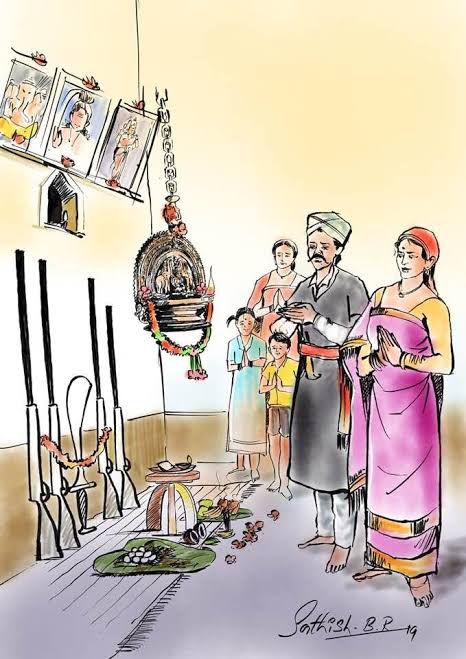
Featured image: A brush stroke painting generated to depict a 19th-century customary community hunt scene in Coorg during Kailpodh, where men and youth once participated. Since hunting is now banned, the Kodavas, respecting the law, no longer follow this custom.
A hallmark of Kodavamme and for that matter Kodava festivities was simplicity, mutual respect, community involvement, oneness with Nature and elegance.
The priest had no role (which changed at Igguthappa and Talekaveri over a period of time – but the Kodavas are purportedly still in charge). All of the three major festivals – Keilpodh, Kaveri Changrandi and Puthari were fairly simple and so were all our celebrations from birth, marriage to death. No ostentatious display of oneupmanship.
 Things have changed radically – time to pause, think and act.
Greetings to all CLN readers on this important day of Kailpodh (Keilpodh).
A few interesting nuggets from our past:
In her scholarly work The Vanishing Kodavas, Kaveri Ponnapa highlights a very important significance of the festival, which we have reproduced below:
Even more importantly, it once celebrated the coming of age of the young men of the Okka, when the fully armed Kodava made his appearance in the society. At the age of 16, on this day, a boy would pay his respects to the ancestors, gods, the elders, and the arms set out before him. The pattedara of the Okka fixed a peechekathi at his waist, on the right, and a Odi Kathi on the back, and gave him an arrow in the right hand, a bow in the left.
Once the boy was armed, he was blessed and instructed in the code of conduct of a Kodava warrior:
“Until today, you were a boy, and spent your days in play and sport. Now you are a man, and fit to be both a huntsman and warrior, with bow, arrow, sword and gun. I have given you the arms according to our tradition. Now go to an Aruva, with this arms and with your brothers, learn how to use them. Live long and win fame as a hero does.”
Celebratory dates across Kodagu
As we all know, the festival of Keilpodh is celebrated at different dates across Kodagu. It is first celebrated in Surlabbinad on 19th August; then in Nalnad on 28th August and finally in Kiggatnad on 3rd September.
Apparently this practice came into existence during the rule of Haleri Rajas. The Kings sent their soldiers from Surlabbinad first to their Nad to celebrate Keilpodh. After their return to duties, the soldiers from Nalnad were sent – following their return came the turn of soldiers from Kiggatnad. The staggered celebration was to make available the soldiers for duty at all times, so that the palace and barracks are not empty during festivities. Even today the same strategy is maintained by the Indian Armed Forces.
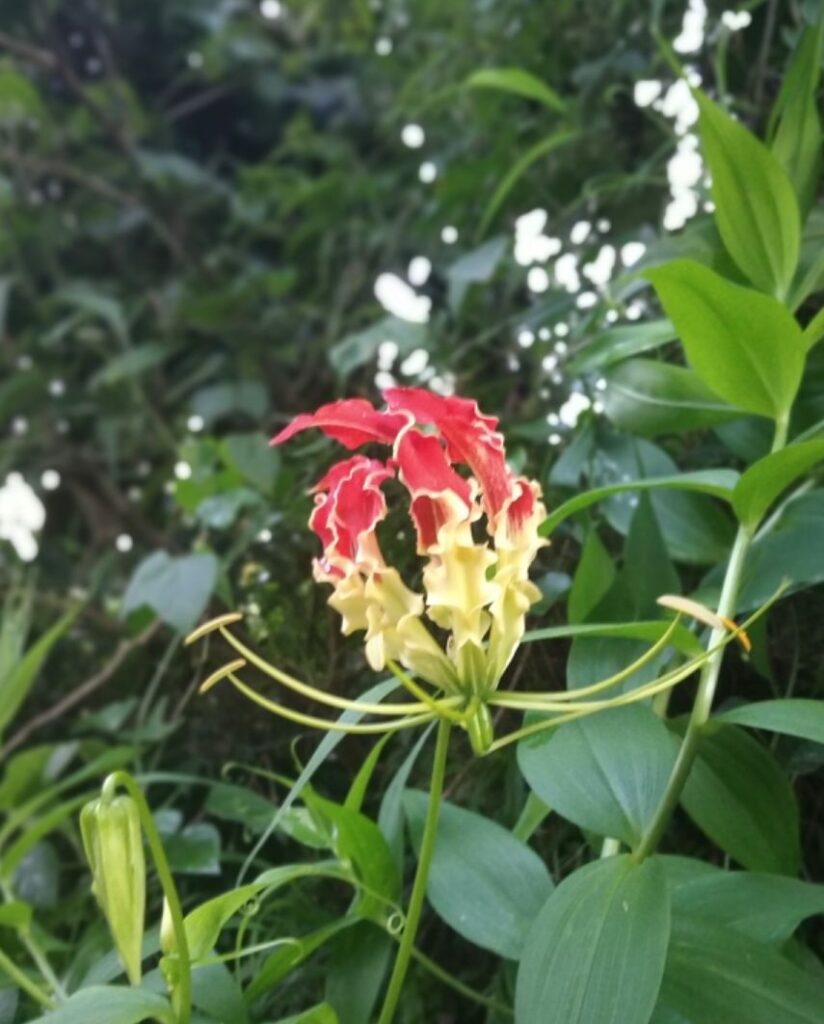
Lastly, the only day when the Glory lily aka Thok poo (Gloriosa superba) is allowed inside the house is on Kailpodh.
The festival is celebrated with great grandeur and variety of games and sports are held in the fields on this occasion. Shooting targets, running race (Naati otta) etc, are conducted on this day. In olden days the tribe used to set out on the hunt for game and as hunting is prohibited shooting competitions are organized.
Join our WhatsApp Group for News and Article Alerts



.
.
.
.
.
Happy Kailpodh to all!
Times have surely changed, but the essence of our festivals must never fade away. It’s our responsibility to remind the younger generation about the significance, rituals and joy behind each celebration. Only then can traditions continue to live on, not just as memories, but as practices that bind us together as a community.
.
.
Best wishes on Keilpodh to all 🙏🏼
.
.
.
Happy Kailpoud to all!
Kaveri Ponnapa’s long years of research into the roots of Kodava culture have given us an invaluable treasure. Her epic work The Vanishing Kodavas is not just a book but a cultural record, one of the most authentic references to understand and preserve the essence of Kodava heritage.
Very interesting and informative writeup by Kaveri Ponnapa. Appropriately put out extract by CoffeeLand today.
Appreciate the article highlighting the culture, significance and sequence of celebrations in different naads.
Sharing a online short story for children, about Kailpodh from the The Coorg Odyssey
https://www.thecoorgodyssey.com/the-coorg-odyssey-collection/the-spirit-of-kailpodh
A very well-written and concise article with valuable content.
ಕೊಡವು ನಾಡ್ ರ ಮಾಜನಕೆಲ್ಲ ಕೈಲ್ ಪೋಲ್ಲ್ಧ್ ನಮ್ಮೆರ ನಲ್ಲರಿಮೆ…
ಅಧ್ಯಕ್ಷ , ಕಾರ್ಯಕಾರಿ ಮಂಡಳಿ, ಕೇಂದ್ರೀಯ ಸಮಿತಿ, ಪಿಞ್ಞ ಪೊಮ್ಮಕ್ಕಡ ಪರಿಷತ್.
ಅಖಿಲ ಕೊಡವ ಸಮಾಜ
ವಿರಾಜಪೇಟೆ
Best wishes to all my friends from Kodagu. This is a medicinal plant commonly seen in our village with no superstitious beliefs of instilling quarrels!