

Over the past few weeks, CLN has kept its readers engaged with thought provoking articles on the essence of Kodava culture, including the Theerthodbava at Talekaveri.
Interestingly in my article this week I would like to turn my attention to a lesser known aspect of celebrations at individual villages. In this instance it happens to be the unique yet fascinating Boad Namme, which coincidentally is the first of such sacred festivals, especially in south Kodagu.
Our sacred landscape holds the mysterious power to shift our perception of time. This aspect gets lost as we are consumed by the materialistic world, but then a single deep breath instantly brings the magical hills back to mind. It is not just the beautiful and captivating views but the overpowering innate rootedness of the power of the hills.
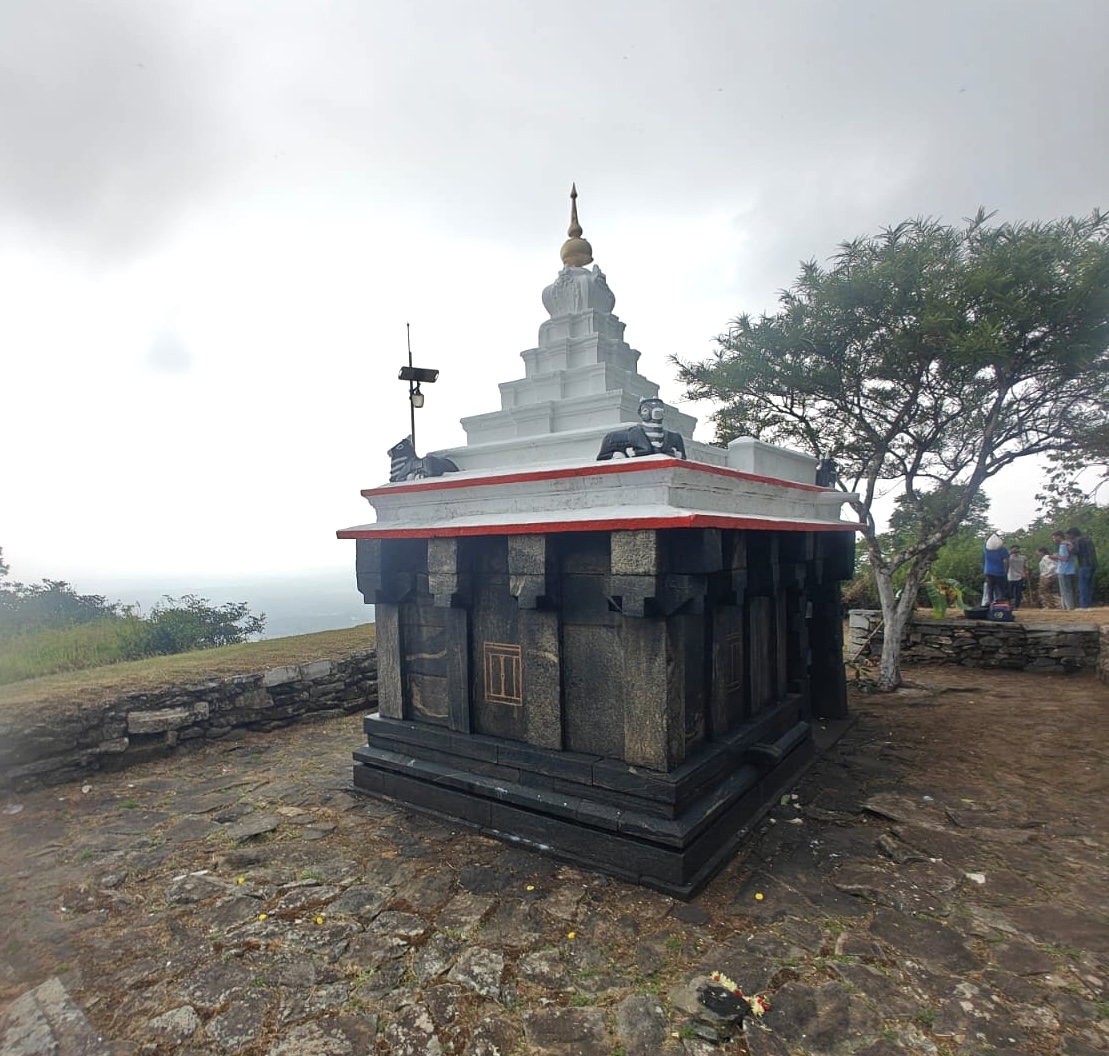
Nestled in the cultural landscape of Kodagu, Kunda is a village whose identity is deeply intertwined with its most sacred hill, ancient temple and fascinating legends passed down through generations. The name Kunda itself means “Hill” that towers the landscape that has shaped the village’s identity and its traditions. Kunda is situated close to the towns of Ponnampet and Gonikoppal. Kundath bott offers panoramic views of the surrounding area. Right atop the hill is a beautiful and simple temple – a place of worship of great antiquity.
To put things in perspective, from ancient times the Kodavas have celebrated three well established main festivals – Kailpodh, Kaveri Changrandhi and Puthari, which marked the rhythm of the agricultural cycle associated with rice cultivation. It held major spiritual significance with the Bothh being placed in the paddy fields during Changrandi in praise of Kaveramme and Kadd offered to our ancestors and the Nellakibode in the Ainemane during Puthari. These are living expressions of our unique bond with nature, ancestry and the divine.
Moving on to the individual village level Nammes, at Kunda, at the heart of our unique local heritage stands the Kundath Eshwara-Ayappa temple, affectionately known as Bottlappa/Kundlayyappa/Kundlappa Shrine. At the bottom of the hill, Nāḍlayyappa/Nāḍlappa Ishwara-Ayyappa shrine exists. The hilltop temple holds a special place in the lives of the people, and its significance extends beyond religious worship. It is closely connected to the identity of the region, which is known as “Bottiath naad” named after “Bottlappa”. In the Deva kaad nearby – Aayira bill Ayyappanḍa kaad, about an acre in size, on Maneyapanḍa land, Ayyappa has a sthaana in a clearing, and annual offerings of are made. Besides this, there are forests up the Kunda hill, with many deities established there – Ishwara-Ayyappa, Subrahmaṇya etc.
The main temple is steeped in myth and associated oral folklore which dates back to the period of exile associated with the Pandavas. It is believed that the Pandavas visited Kunda betta or Kundath bott and this temple was constructed in a single night by Bheema (the second amongst the Pandava brothers). However, he was not successful in building the doors before sunrise hence this temple lacks doors to this day. A few unique features of the rather simple complex on top of the betta:
Charate kallu: A very small platform that barely stands on the edge of the cliff – which too has religious belief, as one takes three rounds on this platform as part of prayers offered to the deity.
Bheema Kallu: A huge stone boulder on one side of the hill is believed to be placed by Bheema during the construction of the temple. One can see finger prints and foot marks on the stone. These huge stones (around 10 feet) is placed on the edge of the hill with support of smaller stones.
Nariale – (tiger cave) A small cave atop which is believed to be connected to the base of the hill, locals do say that long ago Tigers lived on these Hills and would reach the base through these caves.
What quickly comes to mind is that there are similar stories at surroundings that mirrors our hilltop, the most prominent being the temple at Kotebetta, near Mandalpatti.
There is an alternate and more endearing story.
Long ago, the Maneyapanḍas went hunting for a tiger that was attacking their cattle, and chased it to the top of the Kunda hill, close to the sheer drop on one side of the hill, and shot it. But they could not find the tiger at the spot where it fell. Instead, they found a nanda deepa (lit lamp) on a rock. An enlightened old Maneyapanḍa man realized that the tiger belonged to a deity, and vowed to build an Ayyappa sthaana there. But he died before it could be built. Work did not progress because it was difficult to carry building material to the top of the hill and villagers were scared of wild animals.
After some years, an eight year old boy, Maneyapanḍa Nachappa who used to play with his friends in that area, insisted that the shrine be built. When villagers could not carry stone pillars up the hill he gave them a hand, and the Bottlappa (Ishwara-Ayyappa) temple on top of the Kundath Bott hill was completed. This is believed to have happened about 500 years ago. Nachappa had vowed to build the temple in one night – but when day broke, the entrance door and doorframe were unfinished. That is how it remained for a long time, before a door was fixed to keep the sacred shrine safe from unwanted elements. There is puje in this temple only during the Kundath Bott namme, which is held on Kaveri Sankramana day and on every Monday in the (lunar) month of Karthik.
And there are many more related stories which will have to be reserved for another day, especially that of Guru Thimmaiah, who went to Kashi (Benares) with his brother-in-law Sannuvanda Bollayya and became a Sanskrit scholar, returned with a linga, entered Lingaraja’s court in Madikeri and was instrumental in getting the Omkareshwara temple built in 1820. The shiva linga from Kashi is at the Puje Mane near the Maneyapanda Ainemane.
The Reconstruction of the Old Temple
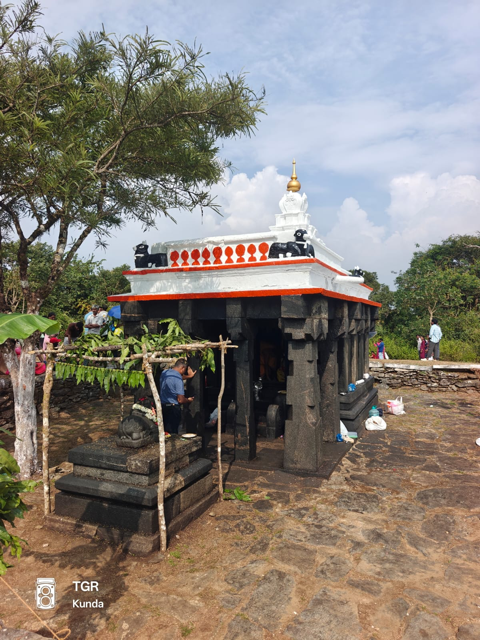
Prior to 1854, an ancient, deteriorating store-temple of Mahādeva existed at the site and required complete renovation to be rebuilt properly as a formal Śivālaya (Shiva temple). Based on Inscription No. 99 (29) from B. Lewis Rice’s Epigraphia Carnatica Volume 1, the reconstruction of the Kundadayyappa temple on Kunda Hill was a highly coordinated, community-driven project spanning from 1854 to 1857 A.D.
Instead of relying on a single wealthy royal budget, the regional administrator organized localized family sponsorships/crowdfunding for different building phases – a true spirit of community effort that vindicates that spirituality is not just about “beliefs” but in community work.
- The General Fund was initiated where numerous local citizens rendered service by paying the direct value of materials.
- Structural Material Endowments by prominent regional families stepped up to supply physical components:
Maneyapanda-Nachaiya (the Parupatyagara / administrator) directly managed logistics for the construction; Kodandera-Medayya family the structural resources for the door; Sanuvanda-Bōlaiah, Maneyapanda Timmayya, and Chinnappa’s son Changappa jointly supplied the roofing slabs and the stone steps leading up the hill; Hayātkhānsābi, a local Muslim resident from Kunda-grāma, gracefully commissioned and gifted the sacred image of Nandinīvara (the Nandi bull statue) to sit in the front courtyard.
Two Horses, Two Okkas.
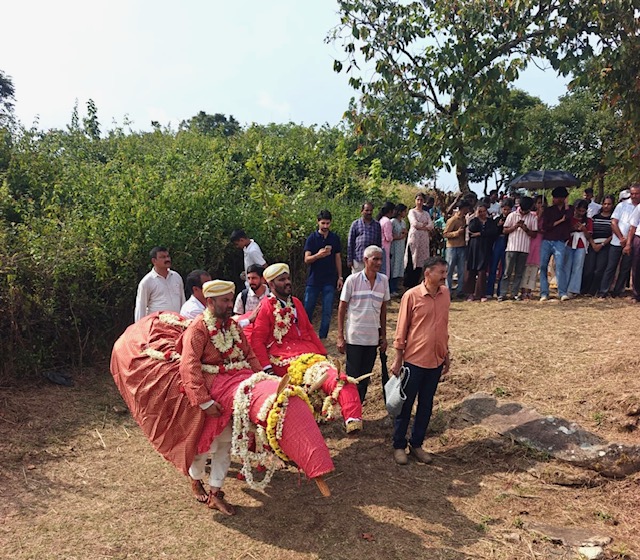
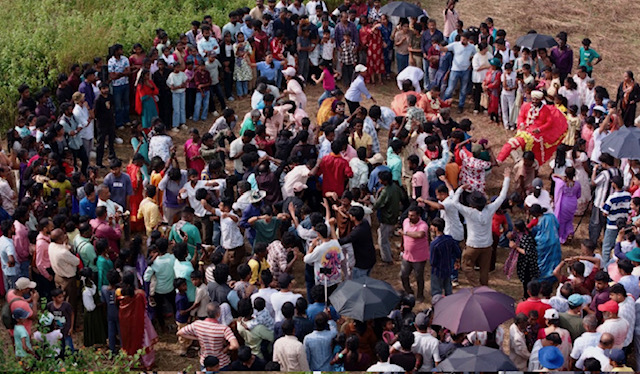
The traditions associated with Kunda Boad Namme are equally significant. Two Horses are ceremoniously brought up to the shrine as part of the proceedings. Each belonging to a different okka – one from Manyepanda okka, who from time immemorial shouldered the responsibility as Deva Thakka. The other from Sannuvanda okka, who are the Bandara Thakka. The Aruva’s for the Maneyapanda family were from the Sannuvanda Okka and heir association is from time immemorial. In keeping with tradition, both Horses come running around the temple completing three rounds in obeisance.
It must be noted here that the kudres are somewhat uncommon and is rooted only in South Kodagu nammes. One of the most prominent appearances is at Kakkotparambe where Kakkoachaya comes riding to the mandh and temple on his horse. A similar practice happens at the Chembebeloor Boad namme – which is also a spectacular community affair which binds the different participants to form an interdependent and cohesive group. At this Namme, according to local belief, those regarded as divine beings were believed to wander on white Horses. This age – old belief is said to be the reason why the tradition of bringing Horses continued even today, during Kunda Boad Namme. The Horses are not merely part of a festival, they represent a connection with the beliefs and customs passed down through generations.
Kundath Botte is a reminder that around every village there are old “forces” (Choundi, Gulliga, Natha…) who protect the land and, in some instances, as in the case of Kunda, a sacred Hill with an ancient temple that holds ancient memories. Inevitably every tradition carries the footprints of generations before us.
A quick reminder – It is only after this Bod namme that the nammes in other parts of (South) Kodagu are held, ending with the Bod namme with kudre in Pāraṇa mand in Rudraguppe. Hence the saying “Kundath Bott’l Nendha Kudre” marks the start of the festival season, and “Parana Manel, Alinja Kudure“.
(With inputs from Maneyapanda Nischal Iyanna, Sannuvanda Sudesh, Sanketh Pujari & T G Rajesh and source references from brief account of Maneyapanḍa Family History written by M. A. Poovaiya)
Join our WhatsApp Group for News and Article Alerts



A truly fascinating account of Kodagu’s rich cultural heritage. The history, folklore and unique traditions surrounding Kundath Bott and the Boad Namme beautifully reflect the deep-rooted faith, community spirit and ancestral connections that define Kodava culture. Particularly interesting is the tradition of the two horses representing the two Okkas. Documenting and preserving these lesser-known village festivals is essential to ensuring that our heritage continues to inspire future generations. A wonderful and enlightening article!
It was a huge privilege for me to be involved in the photography for this this article. It is experiences such as this which reinforces my belief in everything that the beautiful and sacred land of Kodagu represents along with the unique Kodava way of life.
The _Namme_ was a truly memorable experience and once we understand the nuances it is apparent that the Kodava Ajjas’ were extremely wise in creating such a legacy, forging community bonding – where all the communities living in Kodagu at that time were involved in the week long festivities. I feel truly blessed an privileged.
I have to recall my experiences on on the landscape photography for Coorg the Cookbook written by Kaveri Ponnapa. It was one of my best professional experiences in shaping me to become the person that I am . I read in her previous book The Vanishing Kodavas what she wrote about _Kodavaame_ in the Chapter The Kodava World:
_Personal honour, bravery, loyalty to, and upholding the honour of one’s Okka and Nad at all costs was the Kodava code. Physical prowess and skill at sport; bravery; respect for the counsel of elders, their wisdom and experience; acknowledging the role of women and holding them in high esteem; courtesy and etiquette towards one’s kinsmen; reciprocity in all matters, and generous hospitality to guests were the foundations of the Kodava world, summed up in the term *kodavamé_.
I truly felt all of this while working on this project and was blessed to experience the hospitality of Pran and Mamatha Subbaiah and the professional affection of the CLN news desk. I saw and experienced numerous communities assembled with devotion, hope and gratitude at the hilltop that provides a majestic view of South Kodagu.
Very interesting article with similarities in the stories as it relates to Botlappa, Botekara Aiyappa and the mythological construction of the stone temple by the Pandavas on Kotebetta. The one big difference is that we have no “kudres” which is perhaps a direct influence from neighbouring Kerala. In North Kodagu, we tend to carry out all the ceremonies by Kodavas with minimal external influence.
When the old Thakkame existed, everyone knows what their roles were and worked together for a cause. Sadly, with the deteriorating acceptance of old customs, it is increasingly becoming difficult to adhere to the old rules of work allocation. Unless there is order, the youngsters will find it even more difficult to follow past traditions.
Mamatha I always thought that you are a wonderful writer but this article also goes beyond just writing skills and shows that you also are a good researcher of history. I had heard about the Pandavas side of the story of KundaBetta but the unfinished door part is new to me. Thanks for sharing your thoughts and enlightening all of us. Bodd Nammes have lot of interesting stories to be unfolded just keep them coming.
Bringing together History, legends, traditions and oral narratives is not an easy task it requires patience, curiosity and above all a deep respect for one’s culture and heritage. I am so proud of your journalism and the sincere effort you put into Bringing such meaningful stories to your readers. Your research, passion and commitment to preserving kodagu’s History, culture and heritage through your writing are truly admirable. Please continue Bringing more of these forgotten stories to the younger generation.
Thank you for your generous appreciation of the effort it takes to put together material to publish an article with this content. It requires a lot of networking and at the end it feels that there is so much more to be added.
Hello Mamatha.
Read your lovely article about Boad Namme .waiting to get there after reading your comprehensive and elaborate write up. Thank you so much for the research that you have done carrying the most important points. Wish you all the best for your future publications. God bless you.
A beautiful and deeply informative article on Kundath Bott. The author deserves sincere appreciation for bringing to light this lesser-known chapter of Kodagu’s rich cultural heritage.
Articles like this do more than simply describe a place or a festival — they preserve the stories, beliefs and traditions that have travelled from one generation to another. The fascinating history of Kundath Bott, the significance of Bottlappa, the sacred horses and the legends surrounding this historic hill were beautifully brought together.
In a time when many of our oral traditions risk being forgotten, such writing becomes extremely valuable. The author has made a wonderful effort to remind readers that Kodagu’s heritage is not found only in books, but also in its hills, temples, villages, customs and the stories preserved by our elders.
Thank you to the author for taking readers on this beautiful journey into the heart of Kodagu’s history and culture. May more such forgotten stories be brought into the light and preserved for future generations.
We look forward to feedback, and your words of encouragement is what makes our efforts worthwhile. This was a team effort from networking with families, coordinating for visuals and most importantly maintaining the integrity of the content. We always make it a point to take permission from the families and Thakkas involving them in the process and giving credit to the sources of information. Looking forward to your continued support Monnappa.
Thank you, Ms.Mamatha, for such an engaging article! Reading about Kunda Hill, the traditions, and the sacred horses instantly brings back memories of the unique spirit of Kodagu festivals. It’s heartening to see how community bonding from centuries past continues to exist. Kunda Boad Namme starts the festivities of Kodagu, especially in the South.
Regarding my personal experience of trekking uphill, my friend, Kodandera Pran, advised me to wear footwear with a good grip. However, while returning, it started raining, and the footpath became slippery. My rubber footwear gave away, so I finally trekked down barefoot, which was actually fun!
Uphill near the temple, there is a great view of almost all of South Kodagu—a panoramic view for miles together.
The Bhima stone supported by a small stone is something that has to be seen to be believed.
The Sannuvanda and Maneyapanda Kudure climbing uphill and starting the festivities is in another visual experience of its own.
Thank you, Coffee Land, for publishing articles which will help youngsters to know about our Kodava culture.
Your enthusiastic support is hugely appreciated Rajesh and it feels like you are now part of our village! Interacting with Sanketh was also special.
Kodagu is replete with such ancient beliefs, stories and festivals that ultimately makes us who we are. It is important to document and bring it to the wider knowledge of the interested public so that they not only become aware, but respect these traditions, help preserve them and not make it a tourist spectacle.
It is a joy to read about the culture and stories associated with small communities and I have to blatantly state that the Kodavas have an abundance of them! What strikes me when I read about the past writings on cultural, the Kodavas were steeply rooted in secular existence, with a genuine concern for all the communities that lived in Kodagu. As a consequence, the leadership they provided was accepted as the norm and without exception all those who decided to take abide in this blessed land by and large spoke Kodava thakk, followed their customs, dress code and celebrated all the key festivals together. The Thakkas took it upon themselves to assiduously give a shared responsibility to all that ensured harmony in their collective existence.
I was struck by the reference to ….. a local Muslim resident from Kunda-grāma, gracefully commissioned and gifted the sacred image of Nandinīvara (the Nandi bull statue) to sit in the front courtyard. For those who remember, there was a similar response by the local Muslim community when the Kodavaame Balo Nadp took place last year. All such participation should be encouraged by the community leaders to align and support the unique Kodavaame culture that has made the land prosper with peaceful coexistence.
Thank you for this eye opening article. With the advent of social media we get to see videos of these festival being celebrated but rarely does anyone explain in such detail. Looking forward to more articles covering these temple festivals involving our culture, traditions and roots!!
Your support means a lot. Like the work you do for CWS, most of us contributing to CLN Online are contributing our time for quality upliftment of the content being published in the local media. This is the only quality English Newspaper/platform in Kodagu, and we have to do our bit in sustaining its relevance with quality content. We are encouraged by the response, engagement and the growing number of contributors (especially youngsters). Thanks again!
God bless you, Mamtha, for all your efforts in rewriting and bringing this folklore to life for our people.
I am truly overwhelmed reading it once again, as we Maneyapandas are familiar with these stories and facts that have been passed down through generations of our family history.
Maneyapanda Nachaiah’s grandson is my husband’s great-grandfather. We feel immensely proud of the rich heritage he has left behind, not only for our family but also as an important part of the history of Kodagu.
Thank you for preserving these stories and reconnecting us with our roots. Such efforts ensure that our legacy and history continue to live on for generations to come.
Thank you for the support and encouragement Vivin – especially given the direct lineage and connection that your family has with the legendary Maneyapanda Nachaiah. These are the icons that make up the pantheon of our ancestors who have made this sacred land of ours what it is.
There is a famous Native American quote – “Our Ancestors outnumber our fears. Feel their Power”. This is so relevant for us Kodavas and it requires just a few likeminded amongst us to provide the impetus to create a strong platform for the community to protect our identity. Awareness is the first step!
What a lovely article, very thoughtfully written by Mamatha Subbaiah and a pat on the back of CLN Online for nurturing and posting such stories.
In Ooty and Coonoor, village festivals are celebrated with grand fervor and passion, by both the Badagas and and the local Tamils. Documenting these festivals is of utmost significance, especially with the changing demographics of such pristine places with unique cultures.
has quietly earned herself a solid reputation of a credible raconteur.
The community effort that went into the building of the temple atop the hill is a clear demonstration of the pride and devotion in upholding a “belief”. At the end of the day, we are all a “story” and it is up to us to make it worth remembering. In the same vein, happiness gets created when the hearts are filled with gratitude and such festivals are indeed an expression of thanks to our ancestors.
Thank you for your powerful and beautiful lines in support:
At the end of the day, we are all a “story”, and it is up to us to make it worth remembering. In the same vein, happiness gets created when the hearts are filled with gratitude and such festivals are indeed an expression of thanks to our ancestors.
People from North Coorg are not fully aware of these important nuggets of our cultural history. For instance, this is new to me and very interesting. The Botlappa/Iswara connection exists in the villages surrounding Kotebetta. The celebrations atop the majestic flat hilltop with active participation by the villagers – especially the Botekara Aiyappa temple at Mukkodlu is spectacular.
I have travelled extensively across Coorg and seen places of historical interest and had the privilege of being invited by my Kodava friends to many festivals at their Ainemanes. However I didn’t get the opportunity to attend this festival at Kunda which has been explained by Ms Mamatha – in an interesting and graphic manner. I have to thank her for this exposure. I can well imagine the fund of fascinating local folklore that rolls up into one platform that makes the community so unique.
The History Speaks itself….A Great Presentation With A Great Hard work…By the Entire Community… Which is Carried out to the Current and Next Generations to Act…And to Carry on with the Upholding History Forever…My prayers to the Deities to keep the Community Active and Prosperous Ever…
Thanks Mamatha, for such a wonderful and enlightening article. The way you beautifully narrated the history and traditions, while connecting them to our cultural heritage, made it both engaging and insightful.
Jammada Ganesh Ayanna had written a memorable article but on a different aspect of the Namme in Kaikeri village.
https://clnews.in/2024/06/03/kunde-namme-the-festival-of-tribes-involving-lord-aiyappa-for-breach-of-promise/
The key takeaways from these festivals are relevant and worth reiterating:
– participation by all communities in festivals to forge bonding and interdependency. In many such festivals, Kodavas are the thakkas providing administrative and financial support with responsible leadership.
– discipline, integrity and respect go hand in hand. Even the Gods are no exception to this rule!
– it is important that these protocols are continued with the full involvement of the younger generation. The festival of disguise is a great equalizer, especially if conducted with the decorum that it is meant to be.
A truly fascinating and evocative account of one of Kodagu’s lesser-known cultural treasures. Kundath Bott is not merely a sacred hill or a temple; it is a living repository of faith, folklore, history and ancestral traditions. Particularly fascinating are the stories behind Bottlappa, the historical reconstruction of the temple and the unique tradition of the two horses representing the two okkas.
What makes this article especially meaningful is its reminder that Kodava heritage extends far beyond our major festivals. Our village-level Nammes are equally important expressions of our identity, community bonds and spiritual connection with the land.
Heartening to see such invaluable traditions being documented for future generations. A wonderful contribution to preserving the living heritage of Kodagu.
It is heartening to see the flow of comments, and you have rightly picked out an important aspect of local nammes being important to sustaining all that Kodavaame stands for at the grass roots level. The heart and soul of our culture is nurtured and sustained in our Okkas (Ainemane) and Nad. The mushrooming of Kodava Samajas and their pressure to attends functions at the Samaja instead of at the Ainemane does not help.
Thank you for bringing out the lesser-known history of Kunda and the significance of the Boad Namme. A beautiful piece of old Coorg history – where spirituality was not just belief, but love, service, and togetherness. Kudos to all contributors for keeping this sacred heritage alive for the next generation.
What a fascinating and educational post! I had no idea this remarkable tradition existed. The rich folklore, ancestral customs and centuries-old history of Kundath Bott are truly captivating. As someone unfamiliar with many of Kodagu’s traditions, I found this particularly enlightening. Thank you, Mamatha, for introducing me to another beautiful facet of India’s extraordinary cultural heritage.
As Anil has mentioned in his comment, most tribal communities have their unique customs and festivals – mostly venerating their elders and local deities (who have been appropriated by the majority religious groups). It’s common to see Native American female spirits/deities renamed as Maria. In the South it is not uncommon for the local deities to have been renamed as BhadraKali, Mariamman and so on.
An article of substance – as is the norm associated with Ms Mamatha Subbaiah’s CLN writings. The importance of “local” centric festivals across Kodagu is of great importance as it keeps the diversity quotient alive. The Kundath Bott namme is both unique and very special as it incorporates an evolution of spirituality without diluting the inherent age old beliefs of our prime veneration of our Guru Karona and Ayyappa. And nowhere is their religious beliefs imposed on the community at large.
The close symbiotic relationship that the Maneyapanda Okka had with the Sannuvanda Okka is apparent – the two “kudres” speak a thousand words! There are numerous stories about the hilltop and the shrine that should be preserved for posterity.
Well done Mamatha for this engrossing explanation to the start of the village level nammes.
Thank you for your kind appreciation and support always – it is always a source of encouragement. It did take a lot of coordination and effort to put this together.