

Large scale devastation of forests and tree cover were the norm by Colonial powers who occupied lands in Asia, Africa and South America to source raw materials and crops for the Empire. Coorg was no exception. To quote from the Chapter on Coffee from The Vanishing Kodavas – Hopeful European planters arrived in the district, particularly from Ceylon (Sri Lanka), and literally thousands of acres of prime forests were swept away, in what George Birdie termed “the perfect mania for planting, and the extravagant idea of the profits to be reaped from it”. Such whole scale clearing has had the most disastrous effect on the local climate and there is no doubt that it caused the droughts of recent years to tell on the district with tenfold force. Bidie concluded, like many observers who followed, that the early failure of coffee in Kodagu was due to the indiscriminate felling of forest, resulting in drastically altered, hotter, drier climate in which the borer thrived. This was termed the fatal Ceylon system.
Ironically, large corporate plantations did similar acts of large scale timber extraction in recent years to boost their bottom-line for profits (and bonuses), local planters followed course. Sacred forests (Devarkadus) were indiscriminately encroached, reserve forests predictably found valuable tree cover missing (read escalation of human-animal conflict). Large resorts are alarmingly appearing at a frightening pace across the landscape on a fragile land that simply cannot bear the indiscriminate growth of (irresponsible) tourism. So when peak summer temperatures are witnessed in February and drought like conditions prevail within a week of the rains stopping in the district – it should not come as any surprise. Large scale irrigation of coffee depletes the ground water and “pollarding” of trees which reduces the shade “cover” to shade “poles” – is a sight for sore eyes.
Dr Pete Poovanna’s article is a timely reminder of the need to preserve tree cover. Perennial streams of Kodagu have turned seasonal, wells have run dry, deforestation has caused rainwater to run of the surface of the land (a cause for landslides), instead of “lodging in the woods to feed the springs and streams, and render the air cooler in the hot weather”. – CLN Newsdesk
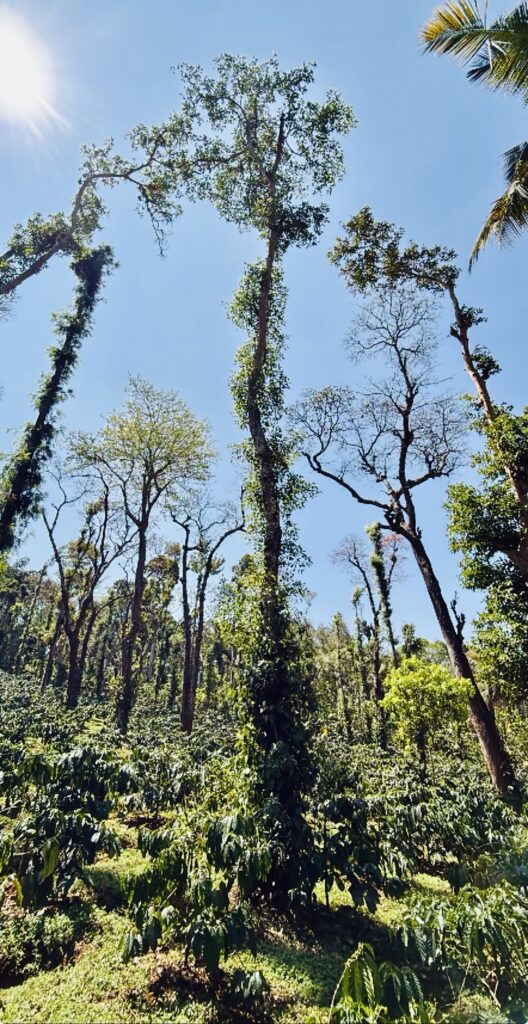
Last week, I walked through several coffee farms in Coorg. I saw rows of coffee standing fully exposed to the sun. Trees that had protected those plants for decades were gone.
I did not feel angry. I felt worried.
Because I understand why farmers are doing this.
More sunlight can increase yield. When prices are uncertain and costs keep rising, every farmer looks for ways to produce more. This is not greed. This is survival.
But shade was never the enemy.
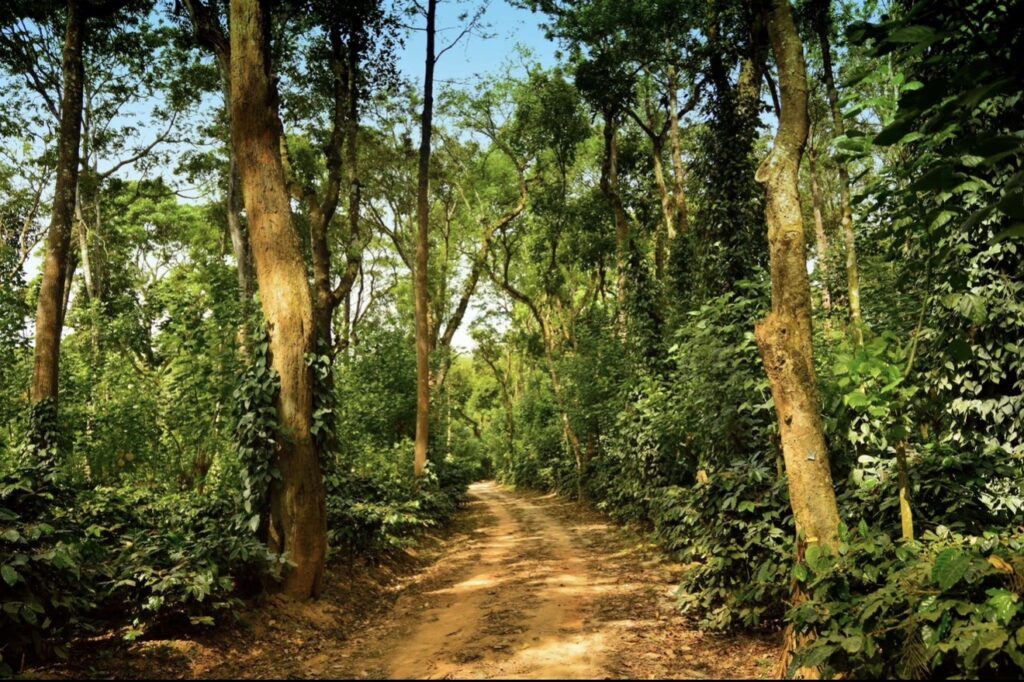
Shade is what protects the soil when the rains fail. Shade is what keeps the roots cool when temperatures cross 35 degrees. Shade is what protects the plant during the bad years and farming is defined by bad years, not good ones.
Our ancestors did not grow coffee under shade by accident. They learned, often the hard way, that coffee without protection becomes fragile.
Today, the climate is no longer predictable. Summers are harsher. Rainfall is either too early or very late, or all at once. In these conditions, shade is not reducing productivity. Shade is reducing risk.
Removing shade may increase output for a few seasons. But it also exposes the farm to permanent damage. Once large trees are cut, they cannot be replaced in our lifetime. It takes 20 to 30 years for a tree to become real protection again.
This is the difference between farming for this year and farming for the next 30 years.
India coffee built its reputation not on volume, but on stability. The shade system protected soil, water, and the farm itself. It made coffee resilient.
That balance is no longer invisible. Buyers can now see it. With new European regulations, every coffee farm is being mapped and verified using satellite images. They can see which farms still have tree cover and which do not. This is no longer about claims. It is about proof. In the coming years, coffee grown without shade will quietly lose access to the best markets and best prices. The world is beginning to reward farms that protected their trees. And it will slowly move away from those that did not.
If we remove that protection, we may gain today. But we also accept greater uncertainty tomorrow.
Every farmer has the right to decide what is necessary for survival. But every farmer also knows that some decisions cannot be reversed.
Because once protection is gone, we cannot bring it back quickly.
And farming has always been about protecting what we cannot easily replace.
Dr. Cheppudira Pete Poovanna is a Coorg born, Canadian writer and founder of Forest Bean Coffee, a tech-enabled regenerative coffee enterprise connecting Indo-Pacific farmer cooperatives with global consumers. He holds a PhD in energy and climate systems and has worked internationally on climate policy, clean transportation, and sustainability. His writing and media appearances draw on both global climate expertise and firsthand observation of changes taking place across India’s coffee landscapes.
Join our WhatsApp Group for News and Article Alerts



With a deep understanding of Kodagu’s land and legacy, the author reminds us that shade- grown coffee protected not just the crop but the soil and the future. This article deserves appreciation for bringing ancestral wisdom back into today’s climate conversation.
Reading Poovanna’s article reminded me of my own write-up here in CLN about the EUDR REGULATION sometime back. Poovanna’s article hits the bullseye on how we manage our shade in our coffee estates. Kodagu coffee is Internationally recognised for its shade grown condition which fetches premium price. Well, off late as Poovanna mentions many estate owners are drastically cutting shade in coffee estates which has contributed to increase in temperatures and global warming which could have disastrous irreversible consequences in near future.
The critical question now, going forward is what is the ecologically sustainable model for Kodagu Coffee. Are we going to chase short term monetary gains or do we invest in longterm ecological sustenance for future???