

For those of us associated with CLN and interacted extensively with Jeppu Uncle – he was a thorough gentleman and the very epitome of good conduct. Prof Nayana Kashyap has written eloquently about all of this and more in her message that has been reproduced verbatim.
Mr Uthappa was a gifted raconteur with a formidable ability to quote from the classics, scriptures, poems and just about anything. He loved Nature and marveled at recounting the humming of rock bees, sighting the miracle of fireflies, shooting stars at Manasarovar… and yet was always willing to “learn” and acknowledge contributions to his eternal quest for knowledge. His zest for life was phenomenal, his extensive network was praiseworthy and penchant for community service was unparalleled. While talking to Vani Aunty and Dr Nanda it occurred that we Kodavas should celebrate his life, achievements and conduct.
We pray and wish that Vani Aunty, who sets the highest standards of elegance combined with humility, gets all the strength to cope with the loss of his physical presence. In a very positive sense, the return of the prodigal son, Dr Nanda would mean a lot to her.
A Life of Quiet Grace and Enduring Values
A Personal Tribute to Sri Koothanda P. Uthappa
Some lives are remembered for what they achieved; a rarer few are remembered for how they lived. Sri Koothanda P. Uthappa—affectionately known to everyone as Jappu—belonged unmistakably to the latter category. I consider it a privilege to have known him, for he embodied a way of being that quietly taught those around him about dignity, discipline, humility, and compassion.
At first glance, he carried the unmistakable presence of a coffee planter—impeccably dressed, composed, and dignified. Yet beneath that outward elegance lay a deeply reflective mind and a profoundly spiritual temperament. Coffee, for Sri Uthappa, was never merely a crop or a commercial enterprise. A coffee estate was, in his understanding, a living ecosystem—a space of harmony, responsibility, and contemplation. Even in his nineties, he followed developments in the coffee world closely, guiding younger planters with patience and generosity, never with condescension.
From my very first interaction with Sri Uthappa, one thing was clear: he had little interest in mundane small talk. His conversations were invariably anchored in larger questions—of purpose, values, and ethical living. The speeches of Abraham Lincoln, the teachings of Sri Ramakrishna and Swami Vivekananda, and reflections from philosophical thinkers came to him effortlessly. He firmly believed that “there is a purpose and a season for everything”, a conviction he lived by with remarkable equanimity.
His intellectual life was as rich as his professional one. A scholar of the Bhagavad Gita and a lifelong devotee of Sri Ramakrishna Paramahamsa and Swami Vivekananda, his spirituality was never loud or performative. It was lived—quietly, consistently, and with balance. Educated at Loyola College, Madras, and shaped by both Indian and Western experiences, he possessed a clarity of thought that came from reading deeply and reflecting honestly.
This love for learning found its most visible expression in his extraordinary personal library at his Pollibetta home. Books were not objects of display for him; they were companions. He read everything he owned and could effortlessly cite references from memory. Travel, for him, meant returning with suitcases full of books, not souvenirs. Conversations with him were enriching because they seamlessly blended lived experience, scholarship, and ethical reflection.
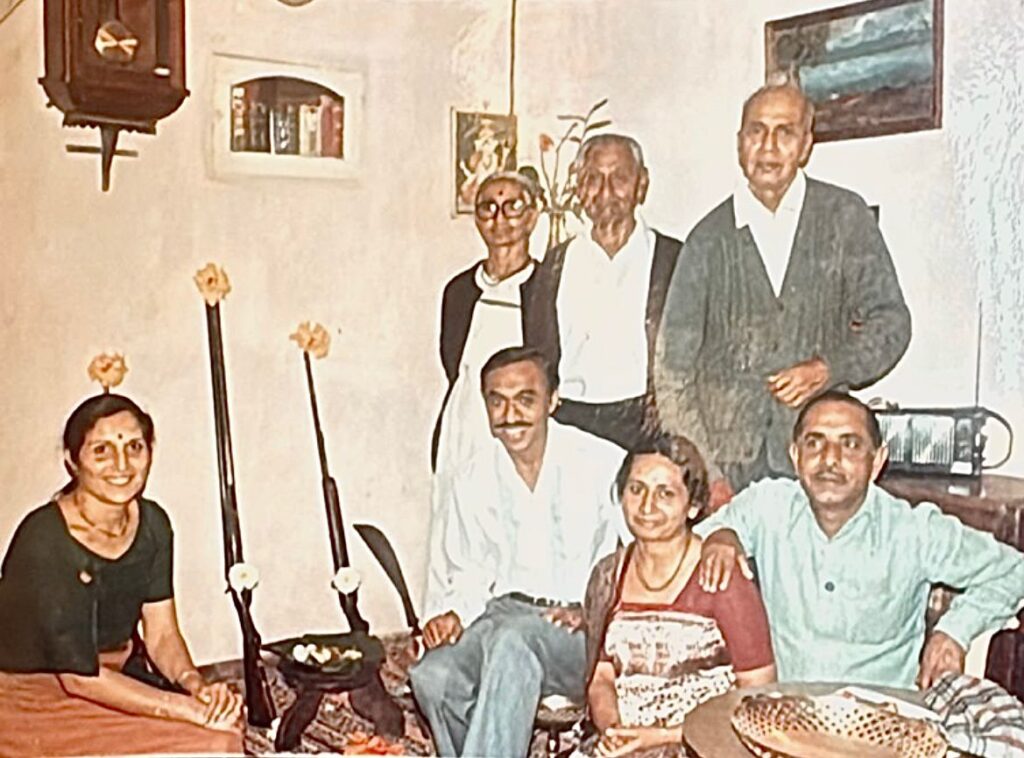
Much of this intellectual and moral grounding came from his family background. Born to parents Smt. Parvati and Sri Koothanda Poovaiah who were deeply rooted in values, literature, and public service, Sri Uthappa carried forward that legacy with quiet pride. His mother, Smt. Koothanda Parvati Poovaiah—Kodagu’s first woman freedom fighter and the first Kodava woman writer—was a towering influence in his life. An embodiment of love and patience, she lived by the principle of simple living and high thinking. After being blessed by Mahatma Gandhi during his visit to Coorg in 1934, she followed Gandhian values throughout her life.
Sri Uthappa often spoke of how deeply his mother shaped him. Though she never formally taught him the Ramayana or the Mahabharata, she narrated them to him in their entirety when he was barely in the third and fourth grades, instilling in him a moral and philosophical foundation that stayed with him forever. Despite overwhelming personal responsibilities—managing the estate during his father’s illness, walking long distances daily, working with the Red Cross during the Second World War, and founding the Mahila Samaja of Pollibetta—she continued to write, paint, sing, and compose hymns.
It was Sri Uthappa’s heartfelt wish that his writer-mother’s place in the lineage of Kodagu’s women writers be preserved and recognised. The book ‘Avva’ in English that emerged from this vision stands as a testament to that filial devotion. I remain deeply grateful to him, his wife Smt. Vani, and his sisters—Gangamma, Kaveri, Kamavva, Mayamma, and Akkamma—for entrusting this noble responsibility to me. Working on this project gave me the rare opportunity to engage deeply with the life and works of a Kodavati who chose, against all odds, to articulate and preserve the stories she had witnessed.
My interactions with Sri Uthappa grew more frequent during the translation of his mother’s biography and short stories. It was a special blessing when he and Vani aunty visited our home simply to share their joy over the work in progress. His involvement was not distant or formal; it was warm, participatory, and deeply emotional. He read and reread his mother’s letters, shared them generously, and spoke of her with reverence and quiet pride. Through him, one could see how values travel across generations—not as instruction, but as lived inheritance.
Professionally, Sri Uthappa’s long association with Consolidated Coffee (later Tata Coffee), which he joined in 1957 after a brief stint in England and from which he retired as Executive Director in 1995, was marked by integrity and humanity. He treated colleagues as friends, remembered employees and their families by name, and cared deeply for plantation workers. Leadership, for him, was never about authority; it was about responsibility.
After retirement, his public life expanded further. As the founder-Chairman of Bharatiya Vidya Bhavan, Kodagu Kendra; President of the Coorg Planters’ Association; President of the Coorg Education Fund (Kodava Vidya Nidhi); and President of the Coorg Foundation, he worked tirelessly to strengthen educational and cultural institutions. Through these organisations, he extended meaningful financial support to underprivileged students and honoured excellence within the community—always quietly, always without seeking recognition.
Under his guidance, Bharatiya Vidya Bhavan Kodagu Kendra in Madikeri became a vibrant cultural space. He attended programmes from beginning to end, encouraging artistes with genuine interest. Despite his stature and achievements, there was not a trace of arrogance in him—a quality that endeared him to everyone, from students to senior professionals.
One personal experience remains especially close to my heart. In 2009, when my husband and I organised a pilgrimage to Kailash Manasarovar, Sri Uthappa expressed his desire to join us. We were initially apprehensive, given the harsh terrain, extreme weather, and physical demands of the journey. Those concerns were quickly laid to rest. He turned out to be one of the most adaptable and uncomplaining members of the group—content with whatever was available, serene in the face of discomfort, and effortlessly at ease with everyone.
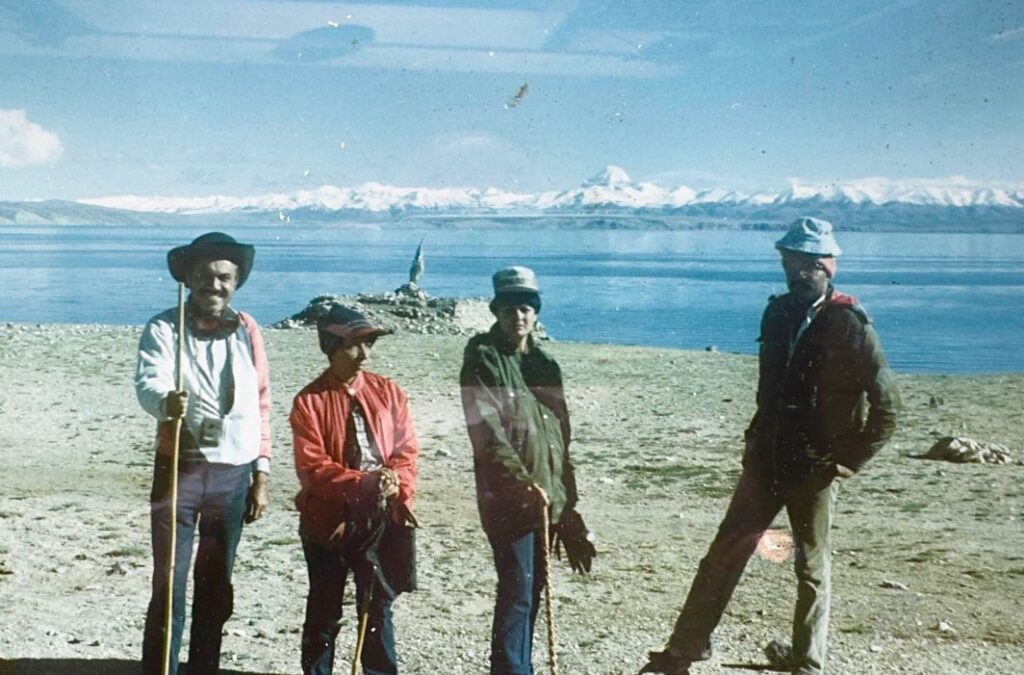
One unforgettable night at Manasarovar, as we sat beneath the vast Himalayan sky, he spoke with quiet enthusiasm and scholarly clarity about the stars and distant galaxies above us. An ardent sky-watcher, he spoke not merely with knowledge, but with reverence. In that moment, science, spirituality, and wonder came together seamlessly—just as they did in his life.
Equally integral to his journey was his wife, Smt. Vani—Vani aunty to all of us—whose quiet strength and unwavering support anchored his life. She stood beside him through every phase with calm resilience, matching his energy with grace and understanding. Their partnership reflected mutual respect, shared values, and deep companionship.
Within his family, Sri Uthappa was a devoted husband, a loving father to his sons Vivek and Dr. Nanda, and a cherished annaiah to his sisters—dependable, affectionate, and quietly strong. As a mentor and speaker, he addressed students across Kodagu, often drawing from the Gita to speak about purpose, discipline, and ethical living. Free of ego and excess, he embodied saintliness not by withdrawing from the world, but by engaging with it meaningfully.
Just fourteen days before his passing, he called my husband and me to wish us for the New Year. The wisdom of a long, reflective life was distilled into a single, unforgettable message: “Remember, health and good memories are the only treasure in life. Everything else will come and go.” Those words continue to guide us, quietly and steadily.
Sri K. P. Uthappa lived many roles—educationist, planter, institution builder, philosopher, environmentalist, and humanitarian. Yet above all, he lived as a good human being. His life reminds us that true greatness lies not in display, but in consistency, humility, and service.
Kodagu has lost a rare soul. For those of us who knew him, his presence will continue to guide and inspire—quietly, gently, and enduringly.
May his noble soul rest in eternal peace.
Prof. Nayana Kashyap is Head of Dept. of English at Field Marshal K. M. Cariappa College, Madikeri.


A deeply moving and beautifully written tribute. It captures not just the life of K.P. Uthappa, but the values he lived by grace , dignity, humility, and quiet wisdom. Rarely do words mirror a life so faithfully. This peice reminds us that true greatness lies not in loud achievements, but in the gentle influence one leaves behind. A life well lived, lovingly remembered.
What a magnificent tribute to a great soul a gentleman of the first order and a legend whom we all will miss May the departed soul rest in peace and pray to God almighty to give the strength to his family to bear the irreparable loss I s our sincere prayers Dr Anil Chengappa and Rena